
REVIEW · GABALA & TUFANDAG DAY TRIPS
2-day Shamakhi-Gabala-Shaki Private Tour
Shamakhi and Sheki in two days, smart sprint. I like the private vehicle pace, and I really enjoy how an art historian guide ties together mosques, caravanserais, and palaces without making it feel like a classroom. The Shabaka stained glass in Sheki is one of those details you can’t miss, but plan for a possible drawback: the overnight stay and meals are not included, and one day includes a fortress climb that is not for everyone.
You start at 8:30 am and the route runs in all weather, so dress for cold or rain even if the forecast looks friendly. You also get practical extras like bottled water and coffee or tea, which matters when the day moves fast and you do not want to waste time hunting for snacks.
What seals it for me is the human touch. In the feedback I saw, the guide name Suleyman came up for a reason, his explanations are clear, and he also helps you find clean local places to eat and stop by sweet shops.
In This Review
- Key points to know before you go
- Why this two-day Shamakhi-Sheki route is so efficient from Baku
- Day 1: Shamakhi highlights, mosques, lake views, and a mountain-resort finish
- Diri Baba Mausoleum, where legends meet architecture
- Juma Mosque, early Transcaucasia architecture in one huge prayer hall
- Nohur Lake, a mountain reflection break after the religious sites
- Tufandag Mountain Resort, snow-and-cloud views at a high point
- Overnight logistics, and how you handle the one missing piece
- Day 2: Sheki Khan Palace, caravanserais, sweets, then a fortress with real limits
- Palace of Shaki Khans, stained glass called shabaka
- Karvansaray, trade-route guesthouses that shaped the town
- Aliovsat Sweets House, tea and homemade desserts
- Sheki Fortress on Garatepe Mountain, with important health cautions
- The guide factor: why art history makes the route better
- Price and value: what $459 gets you, and what to budget for
- Getting the most out of the hike and what to pack
- Who should book this tour (and who should choose something else)
- Should you book this private Shamakhi-Gabala-Shaki tour?
- FAQ
- What is included in the 2-day private tour from Baku?
- Is accommodation included for the overnight part?
- Are meals included in the tour price?
- What is the start time and how long is the tour?
- Does the tour include admission tickets for all stops?
- Does the tour operate in all weather conditions?
- Is there any health or mobility restriction for the Sheki Fortress stop?
Key points to know before you go
- Art historian guide: You get context for each site, not just dates and names.
- A well-paced 2-day loop: Shamakhi culture by day, Sheki architecture by day two.
- Silk Road stopovers: Caravanserai ruins and khanate-era spaces connect the dots.
- Nature time with real altitude: Tufandag Mountain Resort gives you big mountain views and a ski-resort vibe.
- A hands-on food stop: A sweets house stop is built into the schedule, with tea and local desserts.
- Fortress caution: The Sheki Fortress visit is not recommended for back problems, pregnancy, or serious heart issues.
Gabala done differently
- Shamakhi And Gabala Tour (All inclusive)
★ 5.0 · 815 reviews - From Baku: Gabala and Shamakhi Tour (Free Baku City Tour)
★ 4.8 · 695 reviews - Baku: Guided Day Trip to Gabala with Hotel Pickup & Drop-off
★ 4.7 · 139 reviews - Gabala & Shamakhi Nature Tour (Group or Private)
★ 4.5 · 121 reviews
Why this two-day Shamakhi-Sheki route is so efficient from Baku
This is the kind of trip that works because it compresses a lot of Azerbaijan into a realistic timeline. You leave Baku in the morning, hit Shamakhi sights that feel old in both setting and detail, then you shift gears toward Sheki, where khanate-era design and trade history show up clearly.
The private vehicle is a big deal for value. It saves you from time spent coordinating taxis between far-flung stops, and it keeps you comfortable while you bounce between towns. For first-timers, that comfort also makes the history easier to process, you are not exhausted before you even arrive at the main sights.
The other value point is that the day is built for variety. You do not just tour stone and windows. You also get a manmade lake in the mountains, and you end day one at a high-altitude resort area. That mix keeps the itinerary from feeling repetitive.
Day 1: Shamakhi highlights, mosques, lake views, and a mountain-resort finish
Day one centers on Shamakhi and the area around Gabala. It is the cultural warm-up, and it sets the tone for how you will read the second day in Sheki.
Diri Baba Mausoleum, where legends meet architecture
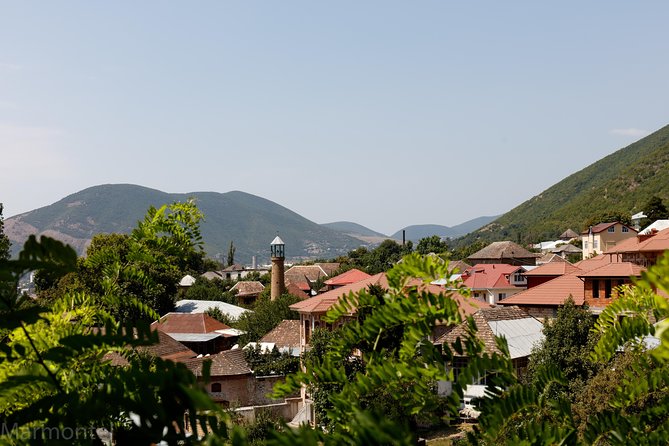
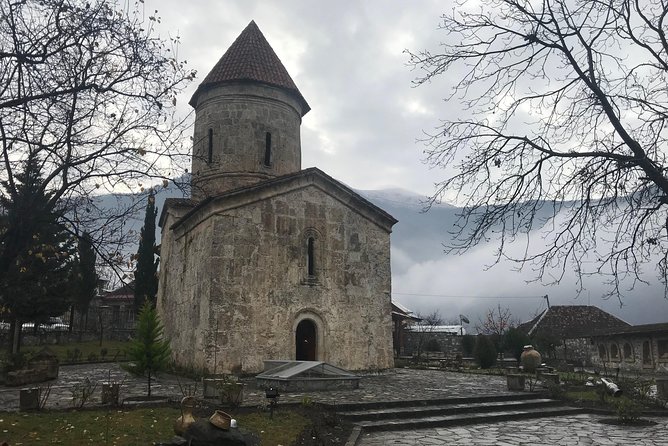
Your first stop is the Diri Baba Mausoleum in the village of Maraza, on the way from Baku to Shamakhi. The wow factor here is not only the tomb itself, it is the setting and the architecture. There are also legends attached to the monument, which means your guide can give you a sense of how locals understand the place, not just what a sign says.
One practical tip: plan on spending a short but focused block of time here. It is listed at about 25 minutes, which is enough to see the structure, soak up the atmosphere, and ask a few questions before moving on.
Juma Mosque, early Transcaucasia architecture in one huge prayer hall
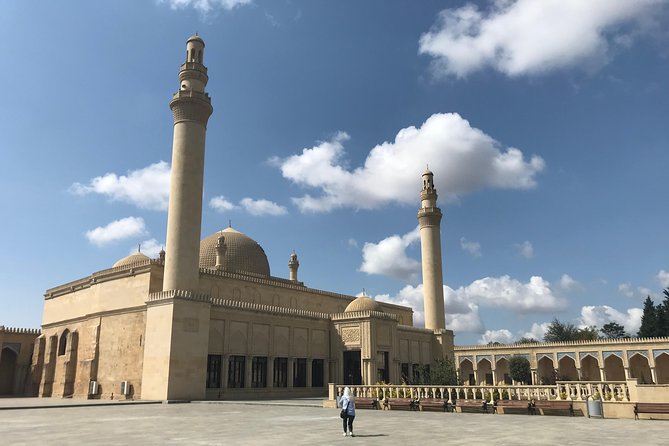
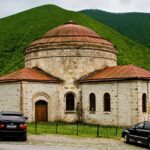
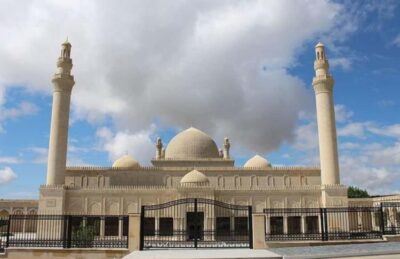
Next comes Shamakhi Dzhuma, described as the oldest and largest mosque in Azerbaijan. The timing matters here because the legends place its origin in the 8th century, including an inscription tied to 744. Whether you treat that as exact history or as part of the mosque’s storytelling, it gives the building weight.
What you will notice is how the prayer hall is organized. The huge interior is divided into three independent sections, connected by wide open doorways. That layout is the kind of detail you will only catch if you look carefully, and an art historian guide helps you see it instead of rushing past.
This stop is free for admission, so it is a good place to take your time without worrying about extra ticket costs.
More on the Shamakhi and Lahij road
Nohur Lake, a mountain reflection break after the religious sites
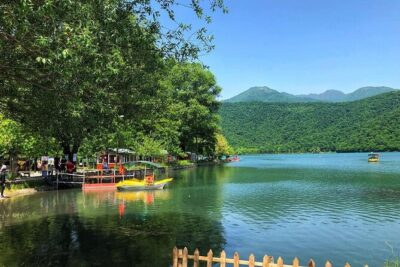
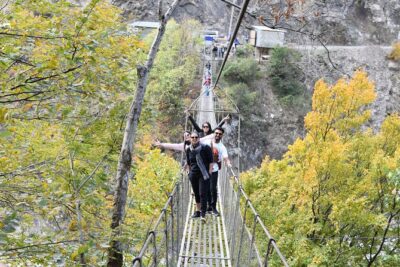
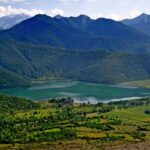
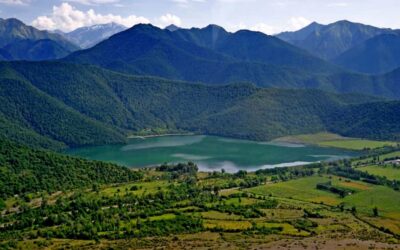
After mosques and tombs, you get a breather at Nohur Lake. This one is manmade, created after World War II to supply nearby villages with water. Today, the lake functions as a recreation spot with tree-lined edges and mountain views from the Greater Caucasus area.
What I like about this stop is that it gives you a visual reset. You shift from architectural detail to wide open scenery and cleaner air. It is also listed as about 30 minutes, long enough for photos and a slow walk around, not long enough to feel like you are stuck in transit.
Tufandag Mountain Resort, snow-and-cloud views at a high point
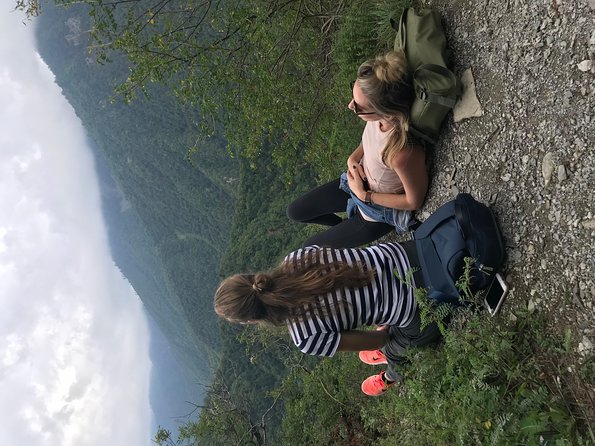
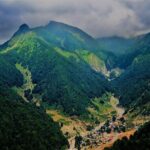
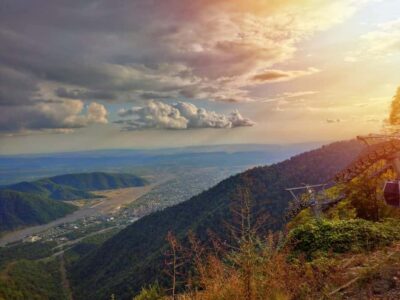
Day one ends at Tufandag Mountain Resort. This is the wild card stop in the best way. You are going to a ski resort setting, and it has a reported height of 4,191 meters for Tufandag Mountain. That means even if you are not skiing, the views can feel dramatic, with cloud wisps and white snow depending on season and weather.
Two things to plan for:
- Admission is not included, so budget for that ticket cost.
- Your time here is about 1 hour 30 minutes, which usually feels short if the weather is perfect, so dress in layers and make it count.
If you are sensitive to cold or quickly get uncomfortable, this is where you will either love the mountain air or wish you packed better gloves. The tour runs in all weather, so treat warm clothing as part of the plan, not an afterthought.
Overnight logistics, and how you handle the one missing piece
Accommodation is not included, and that is the main logistical gap in an otherwise smooth itinerary. The good news is that the operator says they provide full support to help you find decent places to stay and suggest local restaurants for Azerbaijani cuisine.
In practical terms, this means you should be ready to commit to a hotel choice quickly once you arrive, or at least to share your preferences right away. If you know you want something very specific, like quiet rooms or a certain budget level, bring that up early.
Also, meals are not included. That does not mean you will be stranded without food, it means you will need to plan lunch and dinner on your own during free time, based on the restaurant guidance you get.
Day 2: Sheki Khan Palace, caravanserais, sweets, then a fortress with real limits
Day two focuses on Sheki, the khanate city where trade routes and skilled crafts left visible traces. The pace is still active, but the stops feel tighter and more connected.
Palace of Shaki Khans, stained glass called shabaka
The top attraction is the Palace of Shaki Khans. This is where you see how power and craftsmanship mixed in the late 18th century khanate era.
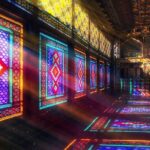
The big visual highlight is the colourful stained glass windows known as shabaka (şəbəkə). When you are standing in front of those windows, it helps to think like the original builders: light, color, and geometry were part of how the palace made a statement.
Admission is not included here, so this is one of the main extra costs to expect. It is also listed at about 1 hour, enough time to see the rooms and absorb the window design without feeling like the palace swallows your whole day.
Karvansaray, trade-route guesthouses that shaped the town
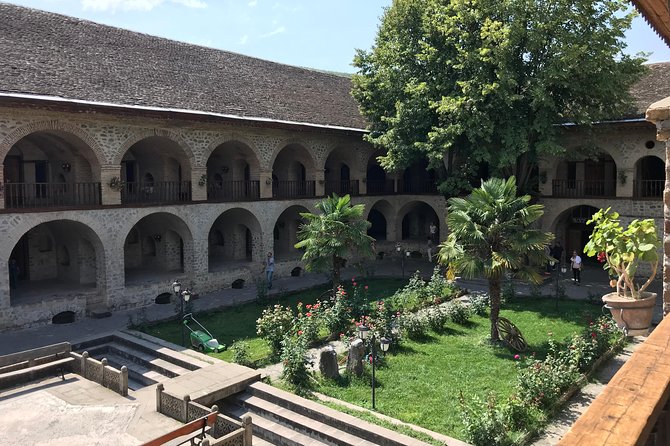
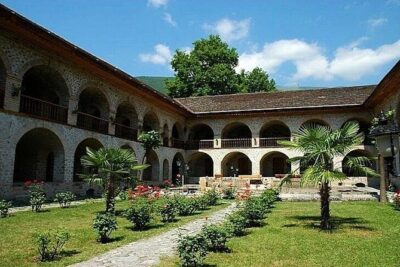
Next is Karvansaray, a caravanserai, basically a guesthouse built along trade routes. Sheki was a trade and craft center, and caravanserais supported traders and goods movement.
Only two of the original five large caravanserais from the 18th and 19th centuries have reached modern times, and this visit is aimed at what is still there. If you want to understand Sheki beyond a single palace, this stop is key. It shows how the city functioned, not just how elites lived.
Admission is free for this stop, and it is about 1 hour. That time is useful for stepping back and imagining how travelers entered, unloaded, and moved on.
Aliovsat Sweets House, tea and homemade desserts
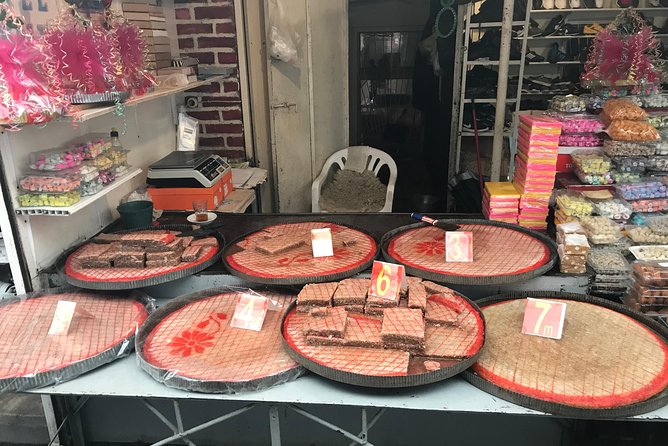
Then you get a stop that is easy to love: Aliovsat Sweets House. A sweets house is one of those very local experiences that feels small until you realize it is also cultural. You sit, you drink Azerbaijani tea, and you get a range of local home-made desserts.
This stop is listed as about 30 minutes and admission is free. It is also a smart break after the more structured museum-like sites. If you are trying to keep your energy steady for the fortress portion later, this is the perfect moment to slow down.
In feedback, the guide support for finding good food came up strongly, and this kind of stop fits that pattern. You get a built-in place to eat well without guessing.
Sheki Fortress on Garatepe Mountain, with important health cautions
Finally, Sheki Fortress. The ruins sit about 4 kilometers from Shaki city on the summit of Garatepe Mountain, near the coast of the Kish River. Construction is dated back to the 8th or 9th century, and it was consolidated and used for defense.
This is also the stop with the most practical limitations. The tour explicitly notes that it is not recommended for travelers with back problems, pregnant travelers, or anyone with heart problems or other serious medical conditions.
It is listed at about 1 hour 30 minutes, and the very setting suggests uneven terrain and uphill time. If you have any doubt about your comfort level, talk to your guide early. You might find an adjusted pace, but the caution is there for a reason.
The guide factor: why art history makes the route better
This tour is led by a professional art historian guide, and that matters more than you might think. The sites here are not just pretty. Each one has a design logic, a cultural meaning, and a story wrapped around it.
With the right guide, you start connecting details:
- How religious architecture organizes space
- How palace design uses light, including the shabaka windows
- How trade structures like caravanserais shaped daily life
- How a fortress location reflects defense thinking
And in the feedback I saw, Suleyman was singled out for both his history knowledge and his practical local instincts. You do not just get facts, you also get help finding clean local eating places and fitting in sweet stops that feel like part of the day instead of an afterthought.
Price and value: what $459 gets you, and what to budget for
At $459.00 per person, this is not a cheap trip, but it is also not just a bus ride. You are paying for private transport between regions, a professional art historian guide, and door-to-door hotel pickup and drop-off, plus bottled water and coffee or tea.
Most admissions on day one are free, including Diri Baba Mausoleum, Juma Mosque, and Nohur Lake. On day two, Karvansaray and Aliovsat Sweets House are free, and Sheki Fortress is listed as free too. That said, two major admission items are not included:
- Tufandag Mountain Resort
- Palace of Shaki Khans
So the smartest way to think about the total cost is:
- Base price covers travel, guiding, and a lot of site time
- You still need a separate budget for accommodation and meals
- You will likely add the tickets for the two sites marked as not included
One more value angle: the itinerary is built so you do not lose hours to transit confusion. If you tried to stitch together the same route on your own with taxis and separate timing, you would likely spend a lot of time coordinating, and you would miss the context that makes these places click.
Getting the most out of the hike and what to pack
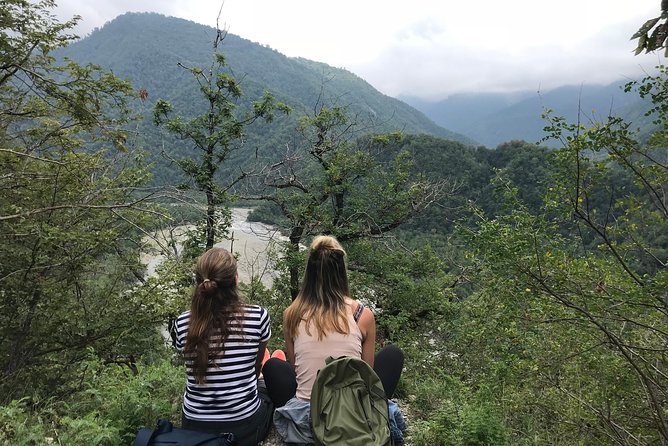
This tour asks for moderate physical fitness, which is a polite way of saying you should be comfortable walking and moving through uneven ground at least sometimes. The fortress is the main concern, and the operator is clear about who should skip it.
For comfort, I suggest you pack like you are going to the mountains:
- Layers for changing temperatures
- Sturdy shoes with grip
- A light rain layer since the tour operates in all weather conditions
- A small plan for the cold if you go to Tufandag (it is a mountain resort area)
If you are sensitive to altitude-style cold air, that mountain stop is where you will feel it first. For many people, it is still worth it, but being prepared keeps it fun.
Who should book this tour (and who should choose something else)
This private tour is a great fit if you want:
- A tight two-day history-and-nature combination
- A guide who can explain architecture and design choices
- Private transport so you can actually enjoy the stops instead of racing logistics
- A built-in sweets and tea break rather than hunting for food
You might consider a different option if:
- You need a fully flat, low-stress itinerary. Sheki Fortress is specifically not recommended for back problems, pregnancy, or serious heart conditions.
- You hate the idea of choosing lodging yourself. Accommodation is not included, though support is offered.
- You are on an ultra-tight schedule and cannot handle an active day two.
Should you book this private Shamakhi-Gabala-Shaki tour?
If you want a smart, efficient way to see Shamakhi and Sheki with real context, I think you should strongly consider booking. The big wins are the art historian guide, the mix of architectural highlights and nature breaks, and the private transport that keeps the pace comfortable.
The main reasons to pause are practical: accommodation and meals are on you, and the fortress portion comes with health cautions. If you can handle moderate walking and you are comfortable arranging lodging, this route offers a lot of Azerbaijan for the time you spend.
If you are the kind of traveler who likes details, like why a prayer hall is arranged a certain way or what stained glass windows reveal about a place, this tour is built for you.
FAQ
What is included in the 2-day private tour from Baku?
It includes transport by private vehicle, hotel pickup and drop-off, a professional art historian guide, bottled water, and coffee and/or tea.
Is accommodation included for the overnight part?
No. Accommodation for the overnight is not included, though the provider says they can support you in finding a decent place to stay.
Are meals included in the tour price?
No. Meals are not included.
What is the start time and how long is the tour?
The start time is 8:30 am, and the duration is about 2 days.
Does the tour include admission tickets for all stops?
No. Admission is listed as not included for Tufandag Mountain Resort and the Palace of Shaki Khans. Other listed stops show free admission, including Diri Baba Mausoleum, Juma Mosque, Nohur Lake, Karvansaray, Aliovsat Sweets House, and Sheki Fortress.
Does the tour operate in all weather conditions?
Yes. It operates in all weather conditions, so dress appropriately.
Is there any health or mobility restriction for the Sheki Fortress stop?
Yes. The Sheki Fortress visit is not recommended for travelers with back problems, pregnant travelers, or those with heart problems or other serious medical conditions.
Still Thinking About Sheki?
Shamakhi, Lahij and the Old Road
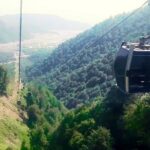
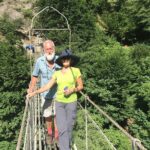
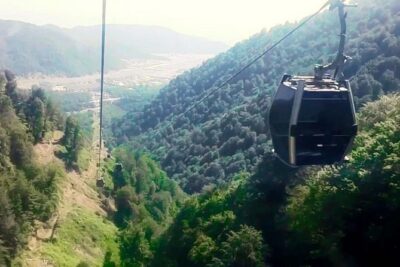
Gabala and the Tufandag Cable Car
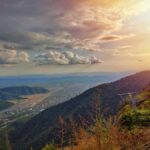
More of Azerbaijan we have been out and written up
- The Magnificent Baku Night Tour★ 5.0 · 3 reviews
- Small-Group Day Trip to Gobustan, Mud Volcanoes, Ateshgah & Yanar Dagh★ 4.5 · 3 reviews
- Private Sheki Tour – Four Regions of Azerbaijan in one day★ 5.0 · 3 reviews
- Full Day Guided Tour of Shamakhi and Gabala★ 5.0 · 3 reviews
- Qobustan Absheron Full Day Tour★ 5.0 · 3 reviews
Gabala & Tufandag Day Trips, compared.
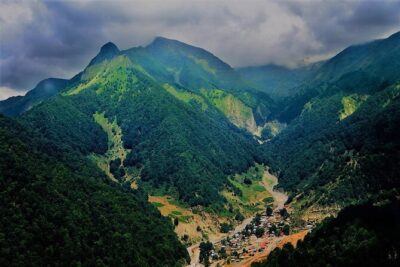 ★ 5.0Shamakhi And Gabala Tour (All inclusive)From $39815 reviews
 ★ 4.8Gabala and Shamakhi Tour (Free Baku City Tour)From $28695 reviews
 ★ 4.5Gabala + Shamakhi tour (by Old City Tours)From $59198 reviews
 ★ 4.7Guided Day Trip to Gabala with Hotel Pickup & Drop-offFrom $39139 reviews
 ★ 4.5Gabala & Shamakhi Nature Tour (Group or Private)From $59121 reviews
 ★ 4.5Gabala & Samakhi Tour/ All Entrance Fees Included TourFrom $39113 reviews
 ★ 3.9Shamakhi, Ismailli, Gabala and Sheki Day TourFrom $59112 reviews
 ★ 5.0Gabala-Sheki Tour 2 Days, 1 Night (All Inclusive)From $19088 reviews
Browse the lists this tour appears in