
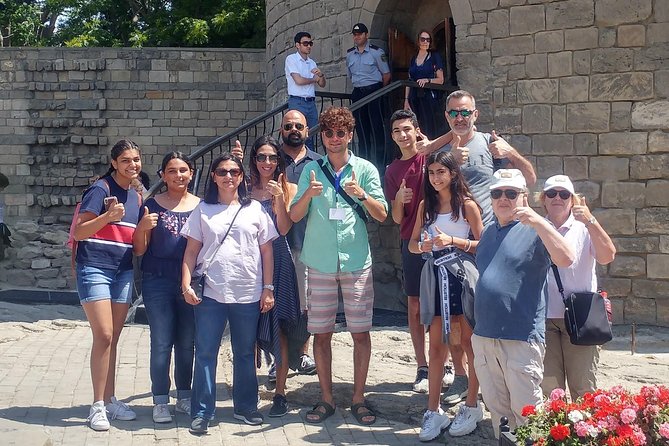
REVIEW · BAKU CITY TOURS
The Best Baku City Tour
Baku hits you fast, then teaches you as you walk. This half-day city tour is built around Baku’s Old City (İçərişəhər) and the story behind major landmarks, from the mystery of the Maiden Tower to how later buildings reflect power, faith, and money. I especially like the way the stops connect, one scene leading to the next, and I also like that it mixes famous sights with quieter corners where you can actually absorb the setting. One drawback to plan for: the pace is tight, so if you want long museum time or lots of photo stops, you may feel a bit rushed in a few places.
You’ll spend about 3 to 4 hours on foot, plus short orientation breaks. The tour uses a mobile ticket, and it’s described as a private activity, so it should feel less like a cattle herd and more like a guided walk with your own group. Still, it’s designed for moderate physical fitness, so bring comfy shoes because several stops live on uneven Old City streets.
If you want a first-pass overview that helps you understand what you’re seeing, this is a strong choice. Just make sure you’re okay with a walking itinerary that includes both indoor and outdoor sights, and that not every listed entrance is guaranteed to be included.
In This Review
- Quick Hits Before You Go
- Getting Oriented in İçərişəhər Without Wasting Your Time
- Maiden Tower to Shirvanshahs Palace, the Old City’s Story Core
- Muxtarov’s Valentine Palace and Taghiyev School That Became a Parliament
- Museum of Miniature Books and Muhammad Mosque, Small Scale, Big Meaning
- Downtown Detours, Fountains Square, and a Look at Church History
- Executive Power Building, Philharmonic Hall, and Baku’s Art-Politics Link
- Juma Mosque, Baku Boulevard, and Highland Park Views That Close the Loop
- Price and What You Actually Get in 3 to 4 Hours
- Should You Book This Baku City Tour?
- FAQ
- How long is the Best Baku City Tour?
- How much does the tour cost?
- Where does the tour start and end?
- Are museum and monument tickets included?
- Is this a private tour?
- What is the cancellation policy?
Quick Hits Before You Go
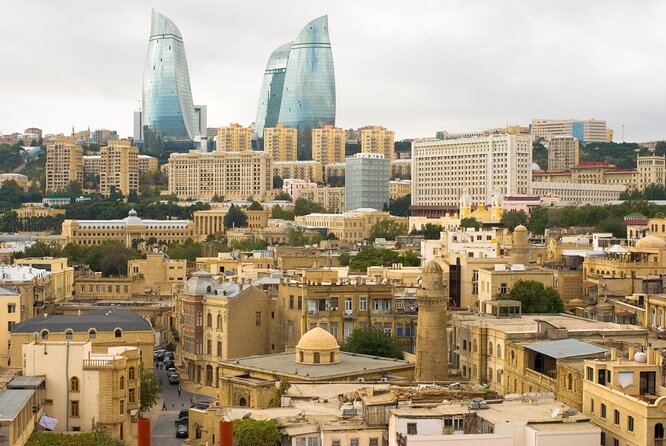
- İçərişəhər UNESCO core: You get the walls, courtyards, and landmark focus without turning it into a slog.
- Clear, story-driven guiding: Names that show up often include Abdullah, Mohammad, and Huseyn Ourbakli, with explanations tied to daily life and major events.
- Miniature book museum stop: The Museum of Miniature Books is one of the most unusual collections in Baku, and it’s timed so you can actually enjoy it.
- Multiple mosques, multiple eras: Muhammad Mosque and Juma Mosque let you compare architecture and layered religious meaning.
- Waterfront payoff: Baku Boulevard plus Highland Park gives you views after the Old City stonework.
- Tight timing: The itinerary is packed, so set expectations and ask your guide how much time you’ll have at each site.
Other people showing you the same city
- From Baku: Gabala and Shamakhi Tour (Free Baku City Tour)
★ 4.8 · 695 reviews - Old and Modern Baku Tour ( Day & Night Time)
★ 5.0 · 400 reviews - Full Day Sightseeing Tour of the main Attractions around Baku
★ 4.5 · 388 reviews - Baku: Stunning Walking Tour of Historical and Modern City
★ 4.9 · 270 reviews
Getting Oriented in İçərişəhər Without Wasting Your Time
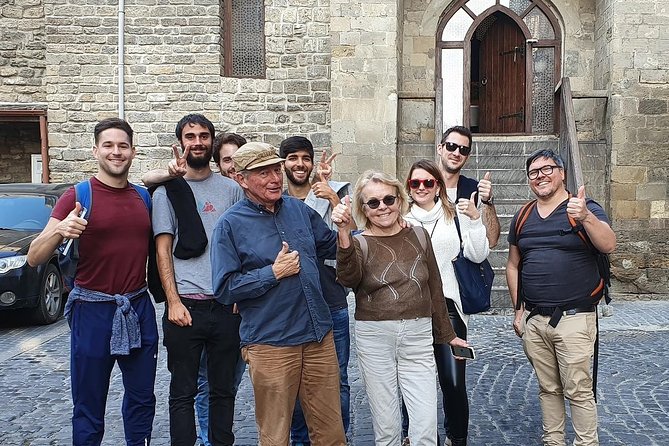
The tour starts in the İçərişəhər area, where Baku’s historic core feels compact and self-contained. That matters because first-time visitors often lose time by wandering the wrong direction or treating each stop like a separate trip. Here, you move from one landmark to the next with context, so the Old City walls stop looking like background scenery and start acting like a timeline.
I like that the route keeps you mostly within the places you’ll want to return to later on your own. If you come early in your trip, you’ll leave with a mental map you can use for independent walking. If you come later, you still get the sense of how the city’s old and new parts connect, which is the difference between collecting photos and actually understanding Baku.
One practical note: the Old City streets can feel uneven and tight. The tour is rated for moderate fitness, so I’d plan on steady walking and avoid wearing anything that makes your feet unhappy by hour two.
Maiden Tower to Shirvanshahs Palace, the Old City’s Story Core
Your first major anchor is the Maiden Tower, one of Baku’s most loved symbols. It sits on the southern edge of the walled Old City by the sea, and what makes it so compelling is that the basics are still fuzzy. Origins and purpose are shrouded in mystery, and the lack of surviving written sources leaves the tower with a real sense of unanswered questions.
From there, you work deeper into İçərişəhər, which is the oldest part of Baku. It’s surrounded by defensive walls, and it became UNESCO-listed with key parts like the Palace of the Shirvanshahs and the Maiden Tower. That UNESCO angle is not just a label. It helps explain why these buildings were preserved and why the streets here still feel different from the rest of the city.
Later, you’ll reach the Palace of the Shirvanshahs, and this is a stop I’d recommend even if you usually skip palaces. The complex includes multiple buildings inside the walls, and you get to see how spaces link together, including courtyards, palace rooms, a crypt, cistern, bath areas, and a mosque. The tour description emphasizes recent restoration too, which means you’re not just peeking at ruins. You’re seeing an effort to keep the lived-in feel of the complex.
Ticket detail matters here: the Palace of the Shirvanshahs is listed as admission free in the tour information. The Maiden Tower, though, is listed as admission not included, so if you plan to go in fully, budget for that separately.
Muxtarov’s Valentine Palace and Taghiyev School That Became a Parliament
Stop two takes you to the Palace of Happiness, a building with a very human origin story. It was commissioned by the millionaire Muxtarov as a surprise Valentine gift for his wife, and the construction is linked to famous Italian-style inspiration. The story isn’t just romance trivia either. It’s a window into how oil wealth reshaped the city, and how Baku’s rich outsiders wanted to leave physical reminders of their lives.
What I like is that the guide framing helps you connect money to architecture. You’re not just looking at a quirky palace name. You’re seeing how cultural ambition and personal life showed up in stone.
Then you shift to the Former Taghiyev School for Girls, which is now the Institute of Manuscripts of Azerbaijan. This stop is more than an old-school building. It changed roles as history changed. Under the Russian Empire, it functioned as Empress Alexandra’s Russian Muslim Boarding School for Girls. After Azerbaijan’s first Democratic Republic era, it became the first European-style Parliament in the Muslim world, before the Bolsheviks invaded Azerbaijan and the fledgling republic collapsed.
That kind of building timeline is rare in a walking tour. Even if you don’t consider yourself a politics person, the walls here are doing the teaching. You’re watching a single location shift from education to governance, which gives you a better sense of why Baku’s modern identity is tied to the past rather than separate from it.
In the tour info, admission for the Former Taghiyev School is listed as included, which makes the time you spend there feel like it’s getting “paid for” in the schedule.
Museum of Miniature Books and Muhammad Mosque, Small Scale, Big Meaning
One of the most distinctive parts of the tour is the Museum of Miniature Books. It’s described as the only museum of miniature books in the world, and it’s based in the Old City area. That alone makes it worth planning around because you’re not likely to find a museum like this in any other city.
The collection connection is also clear: miniature books were collected over decades by Zarifa Salahova, who collected more than 6,500 miniature books from 64 countries. The exhibits include post-revolutionary Russian and Soviet-era publications, plus rare editions of authors like Chukovsky, Barto, Gogol, Dostoyevsky, and Pushkin. Even if you’re not a book collector, you’ll probably enjoy the sheer craftsmanship of how much content fits into tiny formats.
The tour info lists admission here as included, so you can go in without that extra “do I want to pay for this?” calculation.
Next you’ll head to Muhammad Mosque, also called Siniggala Mosque. It’s said to have been built in the 11th century in the Old City, and it’s associated with a minaret name tied to damage, Siniggala meaning damaged tower. The story goes further into the Russo-Persian War period, when a Russian squadron approached, bombarded the city after refusal to surrender, and a shell hit the minaret. A storm reportedly drove the warships away, and locals interpreted the wind as divine punishment.
I like how this stop blends architecture with folklore. It’s not just the shape of the building that matters. It’s the local memory attached to it.
Muhammad Mosque is listed as admission included, which is helpful because mosques can sometimes have variable access based on day and prayer schedules.
Other city outings in Azerbaijan
Downtown Detours, Fountains Square, and a Look at Church History
After the Old City work, you move toward central areas and the city’s public rhythm. One key waypoint is Fountains Square, a downtown gathering place with dozens of fountains traced to Soviet-era construction. The tour framing emphasizes that it’s busy in a natural way, a place where locals stroll after work hours and on weekends. For you, this is a breathing pause between major heritage stops, and a chance to watch daily life at street level.
Then there’s the Armenian Church of Baku (St. Gregory the Illuminator’s Church). The tour information notes it was built in 1887 and survived Soviet atheism when many other churches did not. It also survived through periods of conflict, but it’s important to know that it is no longer open to the public, especially after the 1990 closure during the exodus and deportation of Baku’s Armenian population tied to Nagorno-Karabakh conflict.
So what do you do with this stop? Treat it as a “read the building” moment. You’re not getting a typical visit inside. You’re seeing a piece of history that has been shaped by politics and population change.
This stop is listed as admission not included, and that aligns with the note that it’s not open.
Executive Power Building, Philharmonic Hall, and Baku’s Art-Politics Link
One of the more surprising stops for design lovers is the Executive Power of Baku City building on Istiglaliyyat Street. It was under construction from 1900 to 1904 and is noted as using baroque style with classic construction methods. The façade includes red brick brought from Italy and colored marble, and the emblem on the central part of the façade includes golden torches symbolizing Azerbaijan as the land of fire.
Why this matters on a walking tour is simple: Baku’s power structures are visible. This is not a generic government office. It’s architecture trying to broadcast identity.
Admission for this stop is listed as included, and you’ll likely get a short but informative exterior focus time.
The itinerary also references the Azerbaijan State Philharmonic Hall, described as built between 1910 and 1912. It’s tied to Italian Renaissance style on the exterior and German Rococo inside, with design inspiration linked to Monte-Carlo Casino. The building’s purpose also shifted over time, from a club for wealthy society for banquets and entertainment to a venue organized around Azerbaijani classical and folk music.
If you’re thinking, that sounds like a lot for one city walk, you’re right. The tour seems designed to make quick stops that still carry enough context to stick.
Juma Mosque, Baku Boulevard, and Highland Park Views That Close the Loop
You finish the story of layered Old City faith with Juma Mosque. It’s described as functioning since the 12th century, built in 1899 with support from philanthropist Khadja Shikhali Dadashev. The tour notes something especially interesting: the mosque was built on a site associated with fire worshipers, and archaeological interpretations suggest the earlier pagan sacred center existed there. Later, in the 14th century, a temple was converted into a mosque, creating a site with multiple eras packed into one location.
This is a stop that helps you see Baku as a city of overlapping chapters, not a single-layer museum. Even if you’re not studying archaeology, the idea of one site shifting meanings over centuries changes how you look at the Old City streets.
After the Old City, you shift to the waterfront with Baku Boulevard. This is one of the best “reset your eyes” moments in the itinerary. The boulevard is described as a promenade established in 1909 running parallel to the Caspian Sea, with history connected to oil barons building mansions along the shore and to seafront construction work done inch by inch. The description also gives you a practical sense of size, about 3 km and 750 m, running from National Flag Square to Freedom Square.
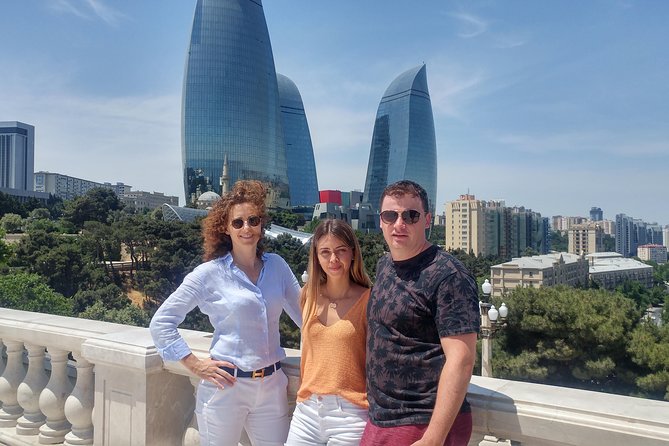
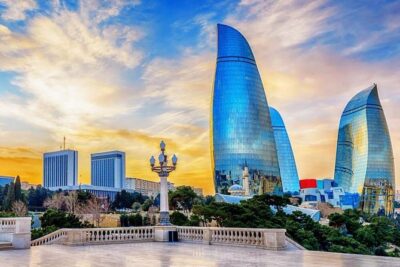
You’ll also visit Highland Park (Upland Park) for panoramic views. It’s the highest point in the city and offers a bird’s-eye look over Baku and the bay. The tour info notes you can reach it by cable railway (funicular) in 7 to 8 minutes from the boulevard, or by climbing the stone stairs. It also suggests the better approach is to enter from the top via the square near the country’s parliament, Martyrs Alley, and the Flame Towers symbol of modern Baku.
The Highland Park stop is listed as admission free, which is a great way to end a ticketed mix of monuments. For most people, this view moment is where Baku finally makes total sense as both old walls and modern skyline.
Price and What You Actually Get in 3 to 4 Hours
At $22.10 per person, the value mainly comes from how the itinerary is structured around paid access. Several stops include admission in the tour information, including the Palace of Happiness, Former Taghiyev School for Girls, Museum of Miniature Books, Muhammad Mosque, Baku Old City, Executive Power building, and Baku Boulevard. The Palace of the Shirvanshahs is listed as free. Highland Park is also listed as free.
Meanwhile, the Maiden Tower is listed as admission not included, and the Armenian Church is also listed as admission not included. That’s not a dealbreaker, but it is a reason to check your preferences in advance. If Maiden Tower interior access matters to you, you’ll pay extra. If you were hoping for church interior access at St. Gregory, the tour info suggests it is no longer open anyway.
The tour is set as private, meaning only your group participates. That can be a real plus in Baku because walking tempo matters. It’s also why people mention guides by name, including Abdullah, Mohammad, and Huseyn Ourbakli, with the same theme of clear explanations tied to what you see.
One more timing reality: the schedule is built for a short window. You’ll get to see a lot, but you won’t have hours in any single site. If you love deep museum time, you’ll want to plan a follow-up visit on your own.
Should You Book This Baku City Tour?
Book it if you want a fast orientation to Baku with a guide who connects landmarks to the stories behind them. It’s especially good for your first visit if you want to understand Old City landmarks like Maiden Tower and the Shirvanshahs complex, plus you also want a museum detour at the Museum of Miniature Books and an ending with Boulevard and Highland Park views.
Skip it or be cautious if you know you need long, slow time inside monuments, or if you’re strictly planning around included admissions for the sites marked as not included. Also, because the tour is weather dependent and requires good conditions, plan to keep your schedule flexible.
FAQ
How long is the Best Baku City Tour?
It runs for about 3 to 4 hours.
How much does the tour cost?
The price is $22.10 per person.
Where does the tour start and end?
The tour starts at Icherisheher, Baku, Azerbaijan, and it ends back at the meeting point.
Are museum and monument tickets included?
Some entrances are included, such as the Palace of Happiness, Former Taghiyev School for Girls, Museum of Miniature Books, Muhammad Mosque, Baku Old City, Executive Power building, and Baku Boulevard. Others are listed as not included, like Maiden Tower, and Armenian Church tickets are not included. The Palace of the Shirvanshahs and Highland Park are listed as free.
Is this a private tour?
Yes, it is described as a private tour/activity, and only your group participates.
What is the cancellation policy?
You can cancel for a full refund if you cancel at least 24 hours in advance. If you cancel less than 24 hours before the experience starts, the amount paid is not refunded.
More Azerbaijan Trips We Reviewed

The Rest of Our Azerbaijan Reviews

Baku, Start to Finish

More of Azerbaijan we have been out and written up
- The Magnificent Baku Night Tour★ 5.0 · 3 reviews
- Small-Group Day Trip to Gobustan, Mud Volcanoes, Ateshgah & Yanar Dagh★ 4.5 · 3 reviews
- Private Sheki Tour – Four Regions of Azerbaijan in one day★ 5.0 · 3 reviews
- Full Day Guided Tour of Shamakhi and Gabala★ 5.0 · 3 reviews
- Qobustan Absheron Full Day Tour★ 5.0 · 3 reviews
Baku City Tours, compared.
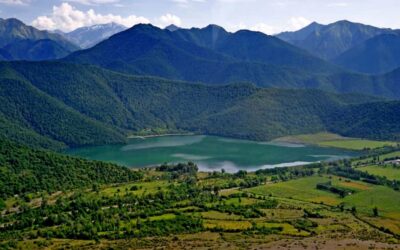 ★ 4.8Gabala and Shamakhi Tour (Free Baku City Tour)From $28695 reviews
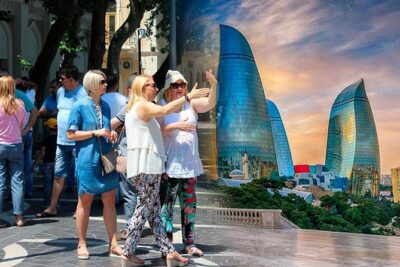 ★ 5.0Old and Modern Baku Tour ( Day & Night Time)From $29400 reviews
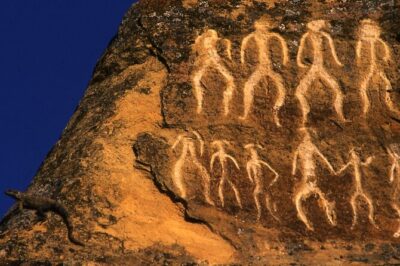 ★ 4.5Full Day Sightseeing Tour of the main Attractions around BakuFrom $60388 reviews
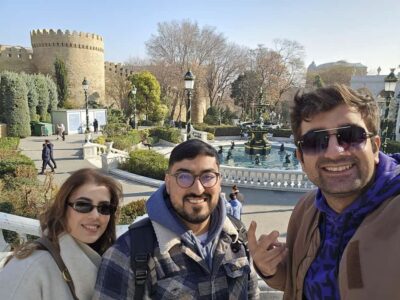 ★ 4.9Stunning Walking Tour of Historical and Modern CityFrom $33270 reviews
 ★ 4.5Guba Khinalug & Candy Cane Mountains tour (by Old City Tours)From $79208 reviews
 ★ 4.5Gabala + Shamakhi tour (by Old City Tours)From $59198 reviews
 ★ 4.9Baku City Group TourFrom $3197 reviews
 ★ 5.0City Tour in BakuFrom $70180 reviews
Browse the lists this tour appears in