
REVIEW · 1-DAY TOURS
Lankaran – Lerik Day Trip
Tea, towers, and mountain air in one long day. This ATI day trip takes you from Baku across the Mugan Plain to Lankaran and Lerik, with a guide making each stop make sense. I love that your day includes breakfast and lunch so you are not hunting for food all day, and I love the constant tea and coffee rhythm built into the route. One drawback to factor in, this is a long day (about 10 to 11 hours, and it can feel even longer), so bring comfy shoes and mentally budget for lots of time in the car.
You also get a small group, capped at 16, which helps keep the pace realistic and the guide’s attention on you. If the weather cooperates, you get a mix of coastal history, mountain views, and a proper tea stop at Khanbulan in the Hirkan National Park area.
In This Review
- Key highlights you will feel right away
- Why Lankaran and Lerik work as a day trip from Baku
- The Mugan Plain drive: what you gain (and what you should expect)
- Breakfast at Haji-oglu in Salyan: a caravanserai-style start
- Lankaran tea symbolism, station-square history, and an active lighthouse
- The Round Tower and Tower of Zindan: prison history without the lecture wall
- Khanbulanchay Reservoir tea party in Hirkan National Park
- Tea plantation time in Lankaran: watching tea grow, not just tasting it
- Lerik lunch and alleys: Astara rice, Astara tea, and an oxygen-style stroll
- Longevity Museum in Lerik: what the day is saying about health
- Boy and Girl waterfalls plus Buzeyir Caves: nature stops built for photos
- Lerik observation deck: the last photo fix before heading back to Baku
- Food and drinks: included meals, and what to do if you are picky
- Price and value: what $42 covers on a 10 to 11 hour route
- Group size, comfort, and timing: small choices that make or break a day like this
- Who should book this Lankaran and Lerik day trip, and who might skip it
- Should you book it?
- FAQ
- How long is the Lankaran – Lerik day trip?
- How much does the tour cost?
- What is included in the price?
- Is there a mobile ticket?
- Where does the tour start and end?
- What is the maximum group size?
- What meal options are included for lunch?
- Is breakfast included?
- Does the tour require good weather?
- What is the cancellation policy?
- What happens if the minimum number of travelers is not met?
Key highlights you will feel right away
- Car comfort for a full day: air-conditioned vehicle for the long drive, plus guided stops so you do not waste time guessing.
- Lankaran tea culture, on purpose: from a samovar and armudu tea sculpture to a tea plantation visit.
- Khanbulan lake tea party: shade, oaks and chestnuts, and a walk along the reservoir shoreline.
- Lerik altitude and longevity focus: high air, a Longevity Museum, plus easy walking around town.
- Big photo stops: Boy and Girl waterfalls, Buzeyir Caves, and a Lerik observation deck.
More single days across Azerbaijan
- Baku: Gobustan, Volcanoes, Fire Temple and Yanardag Day Trip
★ 4.7 · 433 reviews - Baku: Guided Day Trip to Gabala with Hotel Pickup & Drop-off
★ 4.7 · 139 reviews - Baku : Gobustan, Absheron Sights Guided Day Trip Lunch included
★ 5.0 · 120 reviews - Full Day Trip in Baku (Gobustan & Absheron)
★ 5.0 · 72 reviews
Why Lankaran and Lerik work as a day trip from Baku
Lankaran and Lerik are a great contrast to Baku. You start in the capital’s urban rhythm, then cross the wide Mugan Plain and gradually shift toward the Talish Mountains and the Caspian Sea coast. The result is a full-day sampler platter, not a rushed drive-by.
What makes this route practical is that it is structured around time-saving comfort. You get transport to and from Baku, and your guide handles the storytelling at each stop. That matters because the region is not built for quick self-guided hop-ons, hop-offs.
The day also has a clear theme that keeps it fun: tea. You are not just told tea is important here, you see it, taste it, and even sit down for a tea party by the water.
The Mugan Plain drive: what you gain (and what you should expect)
You leave Baku and head across the Mugan Plain, using a modern highway that cuts through steppe country. This is not just scenery for scenery’s sake. The drive is framed as part of local culture, because the region’s road tradition is tied to caravanserais and travel stops, the same idea that shaped how people moved and traded for centuries.
Your vehicle is air-conditioned the whole way, which is a real value on a long day. It is also why this works even if you are not in peak hiking shape. You will get short walks, but you are not doing a full-on trek.
Expect the tradeoff: this is a 10 to 11 hour day on the move. Some versions of this tour can run closer to 14 hours, so you should plan for a long sitting day, not a quick outing.
Breakfast at Haji-oglu in Salyan: a caravanserai-style start
Before you ever reach Lankaran, you stop in Salyan for breakfast at Haji-oglu, 130 km from Baku area-wise. The setting is described as an oasis restaurant between the Kura River and the Mugan Water Channel, with that classic Eastern travel-stop feel.
This is the first moment where the tour gives you a “no extra payments” win. Breakfast is included, and the stop is also a cultural breather before the long stretch of driving continues. You get the best kind of included meal on a road day, it is filling enough to keep you going until lunch.
A fair caution: the breakfast can feel simple. One past guest flagged it as basic, bread, eggs, and black tea. If you know you eat more than that in the morning, consider adding something at your own cost later in the day when the tour has included lunch.
Lankaran tea symbolism, station-square history, and an active lighthouse
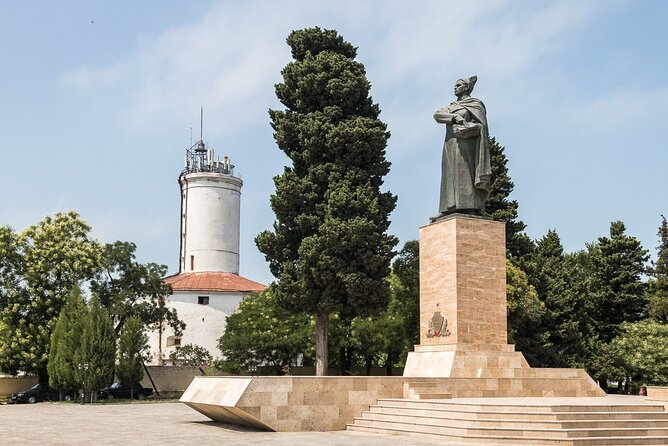
Once you reach Lankaran, the tour starts with a small but memorable tea nod: in the town’s road circle, there is a sculptural composition showing a samovar and an armudu glass filled with tea. It is a quick photo moment, but it also tells you what the day will keep repeating.
From there, you head to the Lankaran Railway Station Square near the Caspian Sea. This is a smart choice for two reasons. First, it puts you near the coast for a pleasant walk. Second, it bundles multiple historical points close together.
You can take in:
- A monument to Major General Azi Aslanov, a local hero of World War II
- The Lankaran Lighthouse, dating to the first half of the 18th century, and still active
- A walk along the shore, which is a good way to reset your legs after travel
This section is also a good example of what a guided loop does. Without a guide, you might see buildings and monuments, but you would probably not get the meaning behind them quickly.
The Round Tower and Tower of Zindan: prison history without the lecture wall
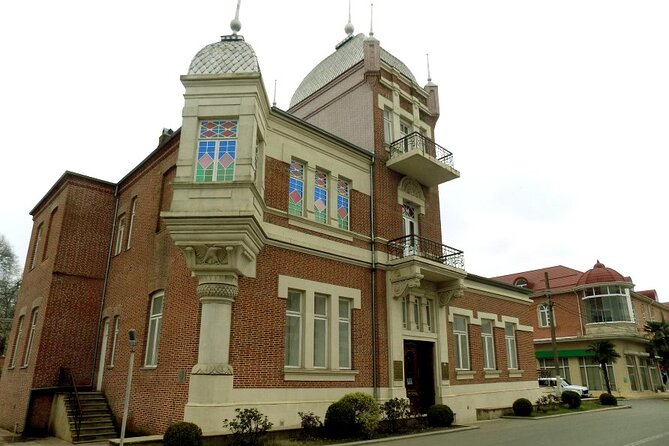
The tour includes the Zindan story through the Round Tower, an architectural monument from the beginning of the 18th century. It was part of a fortress that was almost completely destroyed, and it served as a prison, which is why Zindan translates as prison.
You get an external look at the tower, then a short walk along a pedestrian bridge over the Lankaran River. That bridge walk is small, but it is valuable because it gives your brain a break from “standing and listening.”
If you are sensitive to heat or long sun exposure, this is where you will want to keep an eye on comfort. The bridge walk is short, but it is outdoors, and the day is long overall.
Also, note the phrasing in the program: the overview highlights a Tower of Zindan element. In practice, you should think of this as that prison tower stop, tied to the fortress story.
Khanbulanchay Reservoir tea party in Hirkan National Park
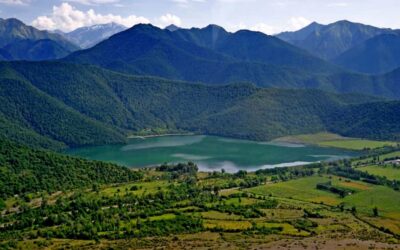
Now you get the payoff stop for many people: Khanbulanchay Reservoir and the nearby Khanbulan lake area in the Talish Mountains. The tour describes dense forests around the water and points you toward shade trees like oaks and chestnuts. Then you get a tea party on the approaches to the shores.
This is not just a drink stop. It is timed to make sense in the route: you are shifting from city and town sites into protected nature, then you get a slow-down moment where you can actually walk a bit along the shoreline.
Why this matters for value is simple. The tour is packed with sightseeing, but this is one of the few times you are not only moving. You sit down, sip tea, and do a gentle walk, so your brain catches up.
What to watch for: the program says the experience requires good weather. If conditions are poor, outdoor nature stops like this may be affected.
Tea plantation time in Lankaran: watching tea grow, not just tasting it
Lankaran’s tea isn’t treated like a souvenir topic. The tour points out that tea is grown here and then takes you to a tea plantation stop so you can see how it works. It is brief (about 30 minutes), but it is direct and useful.
If you are the type who likes to connect food to place, this is a highlight. Tea culture can feel like a repeat of the same drink, but plantation time helps you understand why locals treat tea like part of daily life, not a special occasion only.
You also get to connect it to what you saw earlier, the town tea sculpture. That tiny motif suddenly feels like a clue, not a random decor detail.
Lerik lunch and alleys: Astara rice, Astara tea, and an oxygen-style stroll
After Lankaran, the route turns toward Lerik. You have lunch included in Lerik, served at a local restaurant set among forest scenery. The meal is described with specific items: pilaf made with a rare variety of Astara rice from Lavangi, plus Astara tea, and a set lunch spread that includes chicken lavangi options and other dishes across the tour’s meal menu.
Lunch is where the tour gives you the strongest “I do not want to pay extra” value. You get food and tea, and you do not have to coordinate restaurants in a mountain town.
After lunch, you walk through the alleys of the Cenub Tourism and Holiday Centre. This is presented as an oxygen-style break, and the main benefit for you is pacing. You are shifting from sitting in the car to gentle movement before the next round of nature stops.
Longevity Museum in Lerik: what the day is saying about health
Lerik sits high, almost 1200 meters above sea level, and the tour frames the area around clean air, water, and food. Then you visit the Longevity Museum, founded in 1991, described as unique and without a similar place elsewhere.
This stop is short, about 30 minutes, so treat it as a focused curiosity rather than a long museum day. You are learning about longevity as the region sells it, and how locals explain why people live well there.
If you like human stories tied to place, you may enjoy this one more than the typical “look at a building” stop. The tour turns it into a theme you can carry to later viewpoints and waterfalls.
Boy and Girl waterfalls plus Buzeyir Caves: nature stops built for photos
Next comes the Talysh-Chay river area, where the tour highlights two rapids turned into waterfalls: Boy and Girl. They are about a couple of kilometers apart, and they are a classic “two stops, one theme” nature pattern for a day trip.
The tour also mentions fragrant tea brewed with mountain herbs and jam near one of the falls. That may sound like a small detail, but it is the reason these nature stops feel different. You get a setting, a taste, and a moment to take photos without rushing.
Then you head to Buzeyir Cave, still in the Lerik district. You enter the natural caves and enjoy the surrounding views. This is a good stop for variety, because caves give you a different kind of cool than you get outdoors.
Practical note: caves and outdoor waterfalls are weather-dependent. The tour requires good weather, and conditions can change the experience.
Lerik observation deck: the last photo fix before heading back to Baku
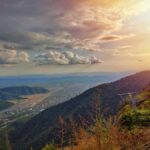
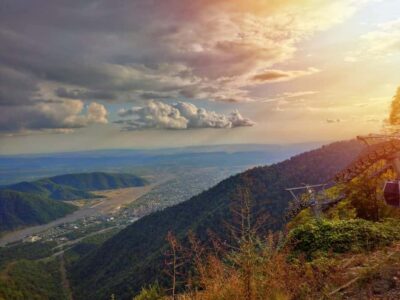
At the end, you visit a Lerik observation deck for pictures and mountain views. The time is brief, about 15 minutes, which keeps the schedule from dragging while still giving you a “close the loop” scenery moment.
This is also where you can reset your mood before the drive back. You have been moving through tea, towns, museums, caves, and waterfalls. The deck gives you a clear, wide view and a chance to breathe.
Food and drinks: included meals, and what to do if you are picky
One big value point here is that you get both breakfast and lunch included. Lunch includes a specific set of dishes listed in the tour menu, including chicken lavangi, eggplant lavangi, kuku lavangi, pilaf, choban salad, compote, and tea. That is a lot of variety for an included meal on a day trip.
You also get several cups of included coffee and tea along the way. That matters because it reduces your spending and it keeps your energy steadier during a long day.
The only hesitation is breakfast quality and size. Since one guest flagged breakfast as basic, I’d set expectations accordingly. It should work, but do not assume a big brunch spread.
If you have dietary needs beyond what is stated, you should plan your expectations around the listed menu items and be ready for the fact that this is a group meal.
Price and value: what $42 covers on a 10 to 11 hour route
At $42 per person, the best way to judge value is to list what you are not paying for. Your package includes:
- Transport to and from Baku by air-conditioned vehicle
- Professional guides
- Breakfast and lunch
- Coffee and tea stops across the day
- All fees and taxes
- A mobile ticket
Also, many stops list admission ticket as free in the program, which can save you from surprise charges. Even if not every minute is “museum time,” the guided stops and included meals are where you feel the cost.
Because you are capped at 16 travelers, you also get a more personal guide experience than you would on a huge bus. For a day trip, that’s a practical advantage.
So if you are the type who hates spending time organizing transport, arguing about directions, and hunting for lunch in an unfamiliar region, this price starts making sense fast.
Group size, comfort, and timing: small choices that make or break a day like this
With a maximum of 16 travelers, you can generally expect a quieter group and easier movement between stops. That helps especially on outdoor walks like the shoreline near the Caspian Sea, the bridge walk, and the waterfall viewpoints.
Timing is the main factor you should respect. This is not a light afternoon tour. It is a full-day loop that includes multiple towns and nature stops, and you might feel the day run long.
My practical advice:
- Wear shoes you can walk in for short outdoor stretches.
- Plan layers. Even if Baku feels warm, mountain and forest areas can feel cooler.
- Bring a phone charger or power bank if you want photos. The schedule has several camera-friendly moments.
- Have a little cash for personal expenses. The package covers meals and stated inclusions, but you will likely want extras at some point.
Who should book this Lankaran and Lerik day trip, and who might skip it
This is a great fit if you want variety in one day. You get tea culture, coastal history around the Lankaran lighthouse and station square, then nature around Khanbulan lake, Lerik waterfalls, caves, and viewpoints.
It is also a good choice if you like guided explanations. The tour is built around learning at each stop, and you are paying for that guidance plus the logistics.
You might skip it if:
- You hate long car days and want a shorter outing.
- You prefer one or two stops at a slower pace instead of many.
- You are extremely sensitive to weather, since the program requires good weather and outdoor stops are part of the core plan.
If you want Baku to feel less like the whole trip, this one-day escape is a strong way to do it.
Should you book it?
I’d book this if you want an efficient, guided day that mixes tea culture with real mountain scenery. The included breakfast and lunch, the constant tea and coffee rhythm, and the guided stops that help you understand what you are seeing make the $42 feel fair.
Just go in with one expectation set: it is a long day, and one part of it, breakfast, may be on the simple side. If you can handle a packed schedule, you will likely come away with both photos and new context, not just a list of places.
FAQ
How long is the Lankaran – Lerik day trip?
The duration is listed as about 10 to 11 hours.
How much does the tour cost?
The price is $42.00 per person.
What is included in the price?
It includes all fees and taxes, professional tour guides, an air-conditioned vehicle, breakfast on the way to Lankaran, lunch in Lerik, and multiple cups of included coffee/tea along the route.
Is there a mobile ticket?
Yes, the tour includes a mobile ticket.
Where does the tour start and end?
It starts at 1 Azərbaycan Prospekti, Bakı 1005, Azerbaijan and ends back at the meeting point.
What is the maximum group size?
The tour has a maximum of 16 travelers.
What meal options are included for lunch?
Lunch is listed as chicken lavangi, eggplant lavangi, kuku lavangi, pilaf, choban salad, compote, and tea.
Is breakfast included?
Yes. Breakfast is included at Haji-oglu on the way to Lankaran.
Does the tour require good weather?
Yes. The experience requires good weather, and if it is canceled due to poor weather, you are offered a different date or a full refund.
What is the cancellation policy?
Free cancellation is available. You can cancel up to 24 hours in advance for a full refund, and cancellations within 24 hours are not refunded.
What happens if the minimum number of travelers is not met?
If the minimum number of travelers is not met, the tour may be canceled, and you are offered a different experience or a full refund.
One Azerbaijani Day, Start to Finish

The Rest of Our Azerbaijan Reviews

More of Azerbaijan we have been out and written up
- The Magnificent Baku Night Tour★ 5.0 · 3 reviews
- Small-Group Day Trip to Gobustan, Mud Volcanoes, Ateshgah & Yanar Dagh★ 4.5 · 3 reviews
- Private Sheki Tour – Four Regions of Azerbaijan in one day★ 5.0 · 3 reviews
- Full Day Guided Tour of Shamakhi and Gabala★ 5.0 · 3 reviews
- Qobustan Absheron Full Day Tour★ 5.0 · 3 reviews
1-Day Tours, compared.
 ★ 4.7Gobustan, Volcanoes, Fire Temple and Yanardag Day TripFrom $29433 reviews
 ★ 4.7Guided Day Trip to Gabala with Hotel Pickup & Drop-offFrom $39139 reviews
 ★ 5.0Gobustan, Absheron Sights Guided Day Trip Lunch includedFrom $16120 reviews
 ★ 4.0Full day Tour to Sheki: 4 regions of Azerbaijan in 1 dayFrom $7183 reviews
 ★ 5.0Full Day Trip in Baku (Gobustan & Absheron)From $18072 reviews
 ★ 5.0Baku Guba Shahdag resort and Candy Cane mountain Day tripFrom $3035 reviews
 ★ 5.0Gobustan+Absheron Day TripFrom $6021 reviews
 ★ 5.0Khinalig – Gleykhudat 1 day hiking tourFrom $25812 reviews
Browse the lists this tour appears in