
REVIEW · GOBUSTAN ROCK ART & MUD VOLCANOES
Baku: Gobustan and Absheron Adventure Tour
Gobustan and Absheron mix 40,000-year history with literal fire from the ground, and it makes for a day that feels like two trips at once. I like how the tour brings you to UNESCO-grade petroglyphs at Gobustan and then keeps the energy going with Ateshgah and Yanar Dag. One thing to plan for, though, is that the headline price does not automatically include all site entrance fees.
You’ll also like the way the day is paced: pickup in Baku, air-conditioned transport, and an English-speaking local guide who can connect the sites to the wider story of Azerbaijan’s land and people. If you want a low-stress way to hit multiple sites without figuring out logistics, this format works.
The main drawback is cost creep if you do not budget for tickets. Gobustan, Ateshgah, Yanardagh, and the Mud Volcanoes have separate fees, and the mud stop uses a mandatory fee that still applies even in rain.
In This Review
- Key moments you should care about
- Why Gobustan and Absheron feel like two different worlds
- The smooth 6-7 hour flow, from hotel pickup to fire sites
- Gobustan National Park, UNESCO petroglyphs, and the 40,000-year human thread
- Mud Volcanoes Complex, the mandatory fee, and how to pack for the “mud souvenir”
- Ateshgah Fire Temple, natural gas flames, and why this shrine drew visitors
- Yanar Dag, the burning hillside, and the Land of Fire idea made physical
- Bibi-Heybat Mosque, why it belongs in this fire-and-history day
- Price and logistics: what $9 covers, and what you must budget
- Guides, transport, and the small comforts that change the experience
- Who this tour suits best, and who may want a different plan
- Should you book Baku Fire Tour’s Gobustan and Absheron Adventure?
- FAQ
- How long is the Gobustan and Absheron adventure tour?
- What are the main stops on this tour?
- Is the entrance fee included in the $9 per person price?
- What are the entrance fees for the sites?
- Is lunch included?
- Do you get hotel pickup and drop-off?
- What happens if it rains?
- What should I bring or wear?
Key moments you should care about
- Gobustan’s 6,000+ petroglyphs: see prehistoric rock carvings linked to daily life tens of thousands of years ago
- Mud Volcanoes fee rules: the mud stop is mandatory and paid in cash, even if the weather turns
- Ateshgah’s gas-fed fire: a 17th-century shrine connected to natural gas flames and travelers’ faith traditions
- Yanar Dag’s burning hillside: a continuously lit hillside that gives you the reason behind Azerbaijan’s land of fire nickname
- Hotel pickup, air-conditioned rides, English/Russian guides: less hassle, more time at the stops
Other ways to do the petroglyphs and the bubbling mud
- Baku: Gobustan, Mud Volcano, Fire Mount, Temple Lunch Entry
★ 4.9 · 3,246 reviews - BEST Gobustan, Volcanoes & Absheron Fire Tour (Group or Private)
★ 5.0 · 1,254 reviews - Gobustan and Absheron tour (All inclusive)
★ 5.0 · 1,014 reviews - Baku: Gobustan, Volcanoes, Fire Temple and Yanardag Day Trip
★ 4.7 · 433 reviews
Why Gobustan and Absheron feel like two different worlds
This tour works because it jumps between “human time” and “earth time.” Gobustan is about people long before writing, where survival and art lived on the rock. Then Absheron flips the scale toward geology, with bubbling mud and flames that burn because the ground feeds them.
I especially like the contrast between Gobustan’s carvings and the later “fire sites.” The petroglyphs make you look outward, at animals, hunting, and early communication. The fire stops make you look down and wonder how something underground becomes a visible part of daily life and belief.
The smooth 6-7 hour flow, from hotel pickup to fire sites
The tour runs about 6-7 hours and starts with free hotel pickup in Baku. You travel by modern, air-conditioned transport, which matters here because the sites are spread out and the driving can take a good chunk of the day.
You’ll be traveling with an English-speaking local guide (Russian is also available). Guides are part storyteller, part logistics manager, so you’re not just seeing signs. You get context and the kind of practical direction that helps you move from one stop to the next without feeling rushed.
One realistic planning note: lunch is not included. The day is arranged so you can fit eating in, but you will need to sort lunch yourself (or coordinate with your guide on the day, depending on timing).
Gobustan National Park, UNESCO petroglyphs, and the 40,000-year human thread
Gobustan National Park is the anchor stop. This UNESCO World Heritage site is famous for over 6,000 petroglyphs, with carvings dating back roughly 40,000 years. Even if you are not the type who reads every plaque, the carvings do something visual and immediate. You see marks that were made for a reason, not decoration.
You’ll likely spend time around rock art areas and nearby features like ancient caves. The big value here is how your guide frames the carvings as evidence of real life: hunting, movement, and how early humans left messages when there were no languages as we know them.
What to watch for
- Look for the patterns in animals and scenes, not just single carvings.
- Bring your attention to how the guide connects these markings to survival and routine.
- Wear shoes that can handle uneven ground, since some paths do not feel like paved walking.
Potential drawback
If you want an ultra-active day with long hikes, Gobustan can feel more like thoughtful walking and observation. It’s worth it, but it’s not the same vibe as a mountain trek.
Mud Volcanoes Complex, the mandatory fee, and how to pack for the “mud souvenir”
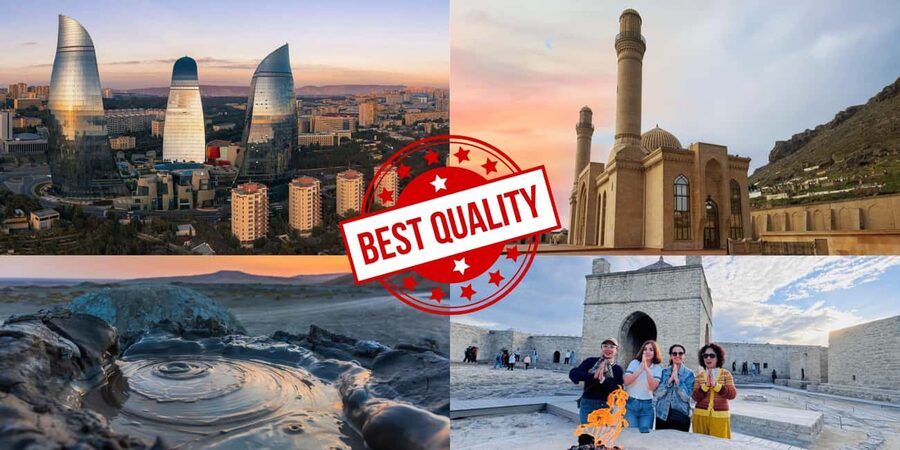
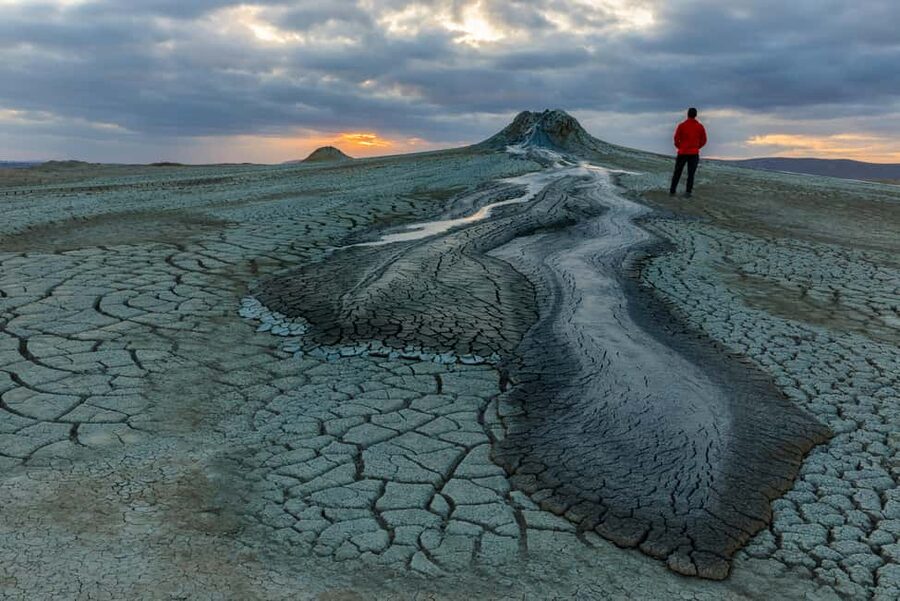
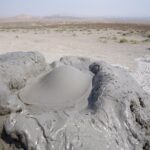
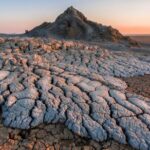
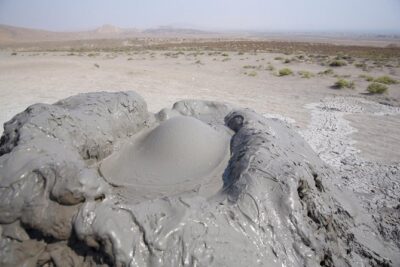
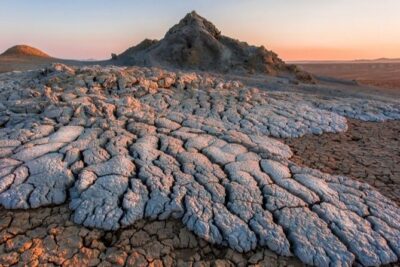
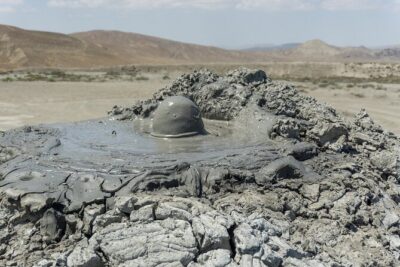
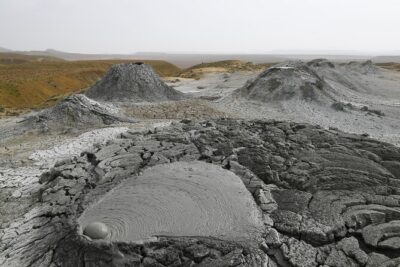
Then comes the part that feels like another planet: the mud volcanoes. In Gobustan, the ground bubbles and hisses as gases rise from deep within the Earth. This is one of the largest mud volcano fields in the world, and the surface looks odd in a way photos cannot fully explain.
The practical takeaway is that the mud volcano stop is mandatory and has a 30 AZN cash fee. It is paid in cash, and the fee applies even in rain when you visit the Mud Volcanoes Complex.
The souvenir rule
One of the clever, practical tips is to bring an empty bottle if you want to collect mud as a keepsake. It’s a simple way to take home a physical reminder of what you saw, without buying something questionable on the roadside.
Shoes matter
You should also plan for uneven terrain. Comfortable, sturdy shoes are the difference between enjoying the walking and constantly watching your footing.
Rain plan
Bad weather does not cancel the core mud experience. Rain can redirect the day to the Mud Volcanoes Complex, and the fee stays the same. If you hate muddy logistics, this is the part to mentally prepare for.
The fire sights, run by other operators
Ateshgah Fire Temple, natural gas flames, and why this shrine drew visitors
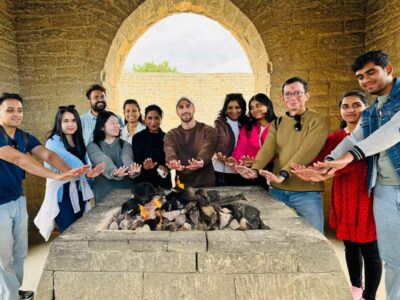
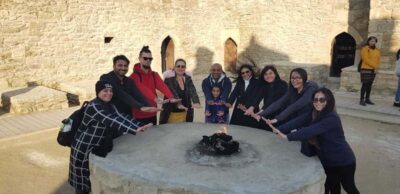
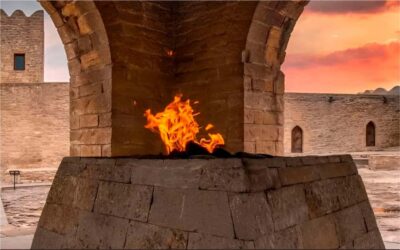
Next is Ateshgah Fire Temple, often described as the eternal flame temple because the sacred fire is fueled by natural gas. The site dates to the 17th century, and it’s connected to worship traditions including Zoroastrianism, and also to travelers like Hindu visitors who were drawn by the flame.
What makes Ateshgah more than a quick photo stop is the way it connects belief to real fuel. You’re standing near something that burns continuously, not because someone keeps lighting it, but because the environment does the work. Your guide should help you understand why that would matter to different groups across time.
What to expect on site
- Time to walk around and see how the flame is presented within the complex.
- Explanations tying the flame to the wider theme of Absheron’s gas resources.
- Plenty of photo opportunities, since the fire is the visual center.
Consideration
If you visit when it’s extremely windy or wet, fire viewing can be less comfortable. The good news is the site is still clearly the “fire stop” in the route, so you’re not losing the main point of the visit.
Yanar Dag, the burning hillside, and the Land of Fire idea made physical
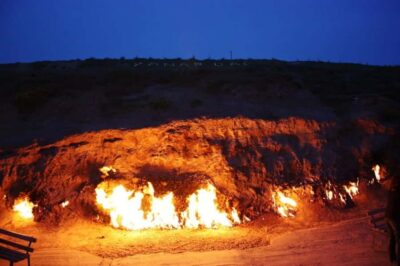
Finally, you reach Yanar Dag, often called the burning mountain. This is a natural gas fire on a hillside that has reportedly been burning for centuries. The flames rise from the ground in a way that makes Azerbaijan’s nickname feel less like marketing and more like physics.
The value of Yanar Dag is that it gives you a bigger picture. At Gobustan you get the evidence of early human life. At Ateshgah you see how people built meaning around something continuous and unusual. At Yanar Dag, you connect it all back to the land itself.
Photo tip
Try to position yourself for the full flame line, not just a close shot. If you’re traveling with people, you’ll get better group photos by taking a moment to step back first.
Bibi-Heybat Mosque, why it belongs in this fire-and-history day
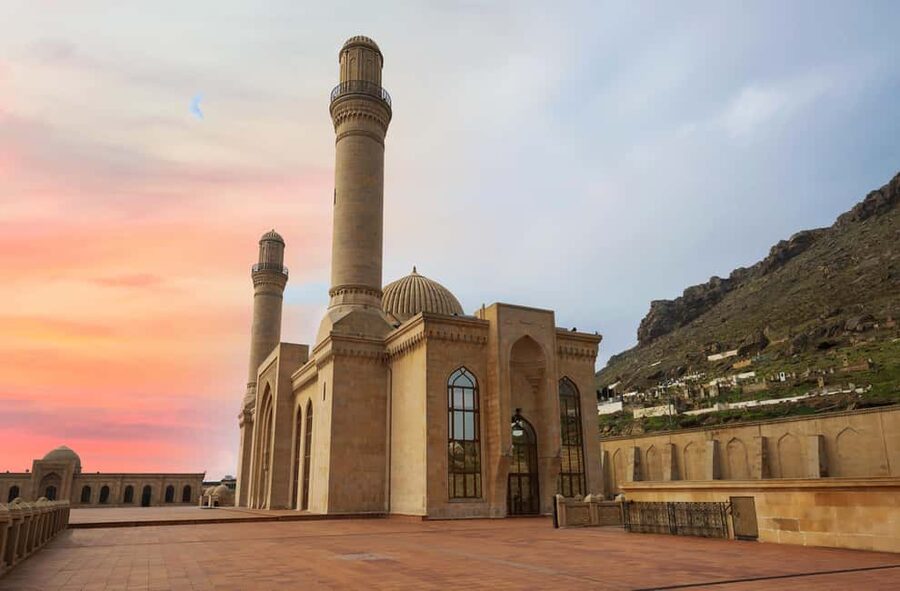
Even though the headline sites are Gobustan and the fire temples, Bibi-Heybat Mosque is a smart early or mid-day stop. It helps you anchor the trip in Baku’s living culture rather than keeping everything in the ancient and natural-world categories.
In a day packed with prehistoric rock art and geological oddities, the mosque offers a more human scale. It also gives you a pause that feels less like “tour mode” and more like understanding where you are right now in Azerbaijan.
What I’d do
If you’re the kind of traveler who likes context, use the mosque stop to reset. Then your brain has room to appreciate how the later fire sites fit into the region’s longer narrative.
Price and logistics: what $9 covers, and what you must budget
At $9 per person, this tour is aggressively priced. The key is knowing what that price includes and what it does not.
Here’s the supported breakdown:
- Pickup from hotel and transport are included.
- A professional guide is included.
- Entrance tickets are not included in the standard price.
If you do not choose an option that includes fees, you should budget for:
- Gobustan National Park: 10 AZN
- Mud Volcanoes: 30 AZN cash, mandatory (fee applies even in rain)
- Ateshgah and Yanardagh: 15 AZN
So the real value question is this: you are paying very little for guide + transport, and then topping up for entry at the sites. For many people, that works great, especially if you are traveling smart and want the flexibility to pay on the day.
Where the “Entrance Fees Included” option helps
The tour data says that if you choose the Entrance Fees Included option, you get convenience and also enjoy a free Baku Old City tour. If you do not want to manage multiple AZN payments during the day, this option may be worth it for your peace of mind.
Lunch
Lunch is not included, so factor in a meal stop. Even with a guide, you’ll still need to pay for food yourself.
Guides, transport, and the small comforts that change the experience
This type of tour lives or dies by the guide. Here, the guiding seems to be a major strength: the tour includes a guide who speaks Russian and English, and you can get English commentary during the day.
I also like that the trip feels organized, with multiple guides and drivers referenced by name in the experience record, including people like Javid, Murad, Kamal, Berkay, Magsud, Aysu, Ayedan, and Emerson as drivers. That points to a team that knows the route and can manage a full day with real explanations, not just directions.
The vehicle setup is also a plus: clean, air-conditioned transport and professional drivers who keep things moving on time. That matters on a day with several separate sites, where wasted minutes can add up fast.
One more practical detail from the tour info: guides are set up to keep you comfortable, and the day includes water stops in the general sense. Even if you bring your own snacks, it’s still helpful to have a guide who thinks ahead.
Who this tour suits best, and who may want a different plan
This is a strong match if you want:
- A single day covering prehistoric rock art plus fire and natural gas sites
- Hotel pickup and transport to reduce stress
- An English-speaking guide who helps connect what you see
You might want a different plan if:
- You get easily bothered by mud and want a clean, dry outing
- You hate managing separate entrance fees, especially cash-based ones
- You expect lunch to be included
If you’re in Baku for only a short time but you want more than city sights, this tour gives you that “outside the city” experience without requiring you to plan transportation yourself.
Should you book Baku Fire Tour’s Gobustan and Absheron Adventure?
If you want a day that mixes UNESCO rock art, surreal mud volcanoes, and the real flame experience at Ateshgah and Yanar Dag, I think this tour is worth booking. The base price is low, and your cost control is mostly about budgeting the site fees separately.
My recommendation is simple:
- Book it if you’re okay paying entrance fees on the day and you want a guided, efficient route.
- Consider the Entrance Fees Included option if you want less hassle and like the idea of a free Baku Old City addition.
- Come ready for uneven walking, and pack an empty bottle if you want the mud souvenir.
You’ll leave with that rare combo of human history and natural spectacle, all in one tight 6-7 hour push.
FAQ
How long is the Gobustan and Absheron adventure tour?
The tour runs for about 6-7 hours.
What are the main stops on this tour?
The highlights include Bibi-Heybat Mosque, Gobustan National Park, Mud Volcanoes, Ateshgah Fire Temple, and Yanar Dag.
Is the entrance fee included in the $9 per person price?
Not in the standard price. Entrance tickets for Gobustan, Ateshgah, and Yanardagh are not included unless you select the Entrance Fees Included option.
What are the entrance fees for the sites?
Gobustan is 10 AZN, Mud Volcanoes has a mandatory 30 AZN fee paid in cash, and Ateshgah and Yanardagh are 15 AZN.
Is lunch included?
No, lunch is not included.
Do you get hotel pickup and drop-off?
Yes. The tour includes pickup from your hotel in Baku, and it is described as a hassle-free experience with hotel pickup and drop-off.
What happens if it rains?
Rain redirects the tour to the Mud Volcanoes Complex. The Mud Volcanoes fee still applies, even in rain.
What should I bring or wear?
Wear comfortable shoes for uneven terrain, and bring an empty bottle if you want to collect mud as a souvenir.
The Rest of Our Azerbaijan Reviews

Ateshgah and Yanar Dag, Keep Reading
Gobustan, Three More Ways
More of Azerbaijan we have been out and written up
- The Magnificent Baku Night Tour★ 5.0 · 3 reviews
- Small-Group Day Trip to Gobustan, Mud Volcanoes, Ateshgah & Yanar Dagh★ 4.5 · 3 reviews
- Private Sheki Tour – Four Regions of Azerbaijan in one day★ 5.0 · 3 reviews
- Full Day Guided Tour of Shamakhi and Gabala★ 5.0 · 3 reviews
- Qobustan Absheron Full Day Tour★ 5.0 · 3 reviews
Gobustan Rock Art & Mud Volcanoes, compared.
 ★ 4.9Gobustan, Mud Volcano, Fire Mount, Temple Lunch EntryFrom $63,246 reviews
 ★ 5.0BEST Gobustan, Volcanoes & Absheron Fire Tour (Group or Private)From $331,254 reviews
 ★ 5.0Gobustan and Absheron tour (All inclusive)From $851,014 reviews
 ★ 4.7Gobustan, Volcanoes, Fire Temple and Yanardag Day TripFrom $29433 reviews
 ★ 4.5Gobustan & Mud, Fire Temple, Burning Mountain (Group & Private)From $10418 reviews
 ★ 4.9Gobustan Absheron Tour Entry Tickets includedFrom $6329 reviews
 ★ 5.0Gobustan-Mud Volcan-Fire Temple and Mountain Tour/Entrance incFrom $30267 reviews
 ★ 4.8Gobustan Mud Volcanoes Temple & Entry tickets includedFrom $9178 reviews
Browse the lists this tour appears in