
REVIEW · BAKU OLD CITY WALKS
Baku Oil Heritage & Old Town Walking Tour
Baku’s oil story is written in stone. This Baku Oil Heritage and Old Town walking tour connects Icherisheher Old City sights with the grand buildings shaped by the oil boom, plus Soviet-era changes you can actually see on the streets. The route is designed to move fast, with explanation stops where you do not lose time lining up.
What I like most is the guided pacing: you get a steady flow of stops in about 2 hours 30 minutes, without the usual dragging that happens on big group walks. I also love that the tour is built for understanding, not just checking boxes, with photo-based context at major UNESCO-area spots. The one thing to weigh is the walking time, because it is a true city walk with multiple short stops rather than a sit-down tour.
In This Review
- Key Points at a Glance
- Why Baku’s Oil Heritage Still Feels Current
- Where You Start, and How Fountain Square Sets the Tone
- Icherisheher Old City: UNESCO Area Stops Without the Inside Rush
- Gosha Gala Gate and Citadel Walls
- Maiden Tower, the Exterior View, and Why It Matters
- Muhammad Mosque and Walking the Narrow Streets
- Shirvanshahs Palace Area and the Photo-Based Context
- Museum of Miniature Books
- Istiglaliyyat Street: Where Oil Money Rewrites the Downtown Map
- Philharmonic Fountain and the Ali and Nino Connection
- Baku Town Hall and Saadet Sarayi: Power and Romance in the Same Day
- Former Taghiyev School for Girls: Modernization You Can Point To
- Ismailiyya Palace and Finishing at Fountains Square
- Price and Value: Getting More Than a Photo Tour for $70
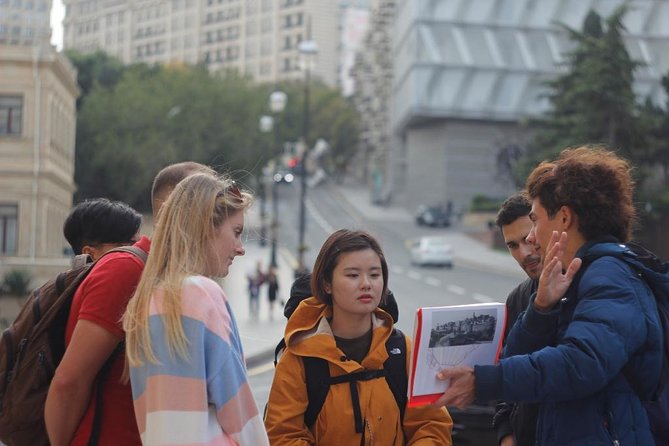
- Pacing, Crowd Size, and What You Should Expect on the Ground
- Who Should Book This Walk, and Who Might Skip It
- Should You Book the Baku Oil Heritage & Old Town Walking Tour?
- FAQ
- How long is the Baku Oil Heritage and Old Town walking tour?
- Where does the tour start and end?
- What is the price per person?
- Is bottled water included?
- Are entrance fees included?
- How many people are in the maximum group?
- Do I need good weather for the tour?
- What is the cancellation refund timeline?
- Is the tour near public transportation?
- Are service animals allowed?
Key Points at a Glance
- Oil boom to modern Baku: you see how oil money shaped streets, institutions, and architecture.
- Old City without delays: you get on-the-spot explanations around key UNESCO-listed landmarks without entering.
- Story-first guiding: guides like Gani are known for clear, funny, and fast-paced storytelling.
- Short stops, big takeaways: 10 minutes at many points, so you cover downtown and the fortress-side areas.
- Good value timing: for $70, you get a 2.5-hour overview that helps you plan the rest of your trip.
More laps of Icherisheher, compared
- Baku Oil Heritage & Old Town Walking Tour
★ 5.0 · 232 reviews - Guba Khinalug & Candy Cane Mountains tour (by Old City Tours)
★ 4.5 · 208 reviews - Gabala + Shamakhi tour (by Old City Tours)
★ 4.5 · 198 reviews - Baku Walking Tour (Old City)
★ 5.0 · 127 reviews
Why Baku’s Oil Heritage Still Feels Current
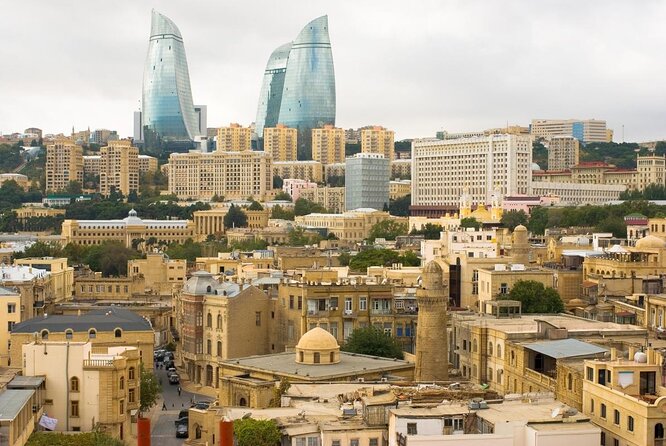
Baku can look like two cities at once. You have the tight, historic lanes of the Old City, and then you step outward to a downtown that was reshaped by oil wealth, European influences, and later Soviet priorities.
This tour is built for that contrast. It helps you read the city like a timeline, from late 19th and early 20th century oil boom days, to how the city grew beyond the fortress wall, to the kind of Soviet-era presence that still shows up in the built environment and street patterns.
What makes it more than a highlights walk is the way the guide connects people and motivations. Oil barons were not just funding projects, they were trying to create legacies. You feel that theme when you move from fountains and squares to schools, palaces, and public buildings.
Where You Start, and How Fountain Square Sets the Tone
The tour begins and ends at Fountain Square, a central downtown hangout and leisure area. It also sits right in the story of Baku’s first oil-boom surge, when this area became a main trading street in the late 1800s and early 1900s.
That matters because you are not starting in a museum. You are starting in the middle of the kind of energetic city life that grew as oil transformed fortunes. You get an immediate sense of why Baku’s streets feel so purposeful, even when they look casual today.
Also, the timing is friendly. The tour includes several small stop blocks of around 10 minutes, so you can keep energy for the full walk without feeling like you’re stuck in one long stretch.
Icherisheher Old City: UNESCO Area Stops Without the Inside Rush
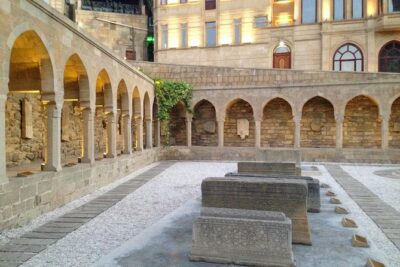
Most people visit the Old City and spend their time scanning the skyline. This tour shifts the focus slightly. You walk through Icherisheher, and you stop for explanations at the gates and landmark exteriors, plus historic photos that help you picture earlier versions of the same streets.
Gosha Gala Gate and Citadel Walls
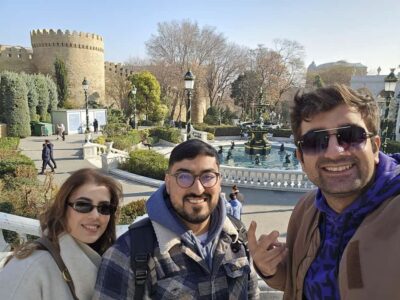
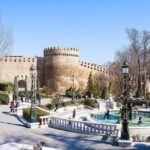
You start in the Old City at Gosha Gala gate, the main entry point. From there you move along the citadel walls, tied to the long fortress story of the area and its UNESCO status.
The value here is perspective. Even if you have seen fortress walls in other places, Baku’s walls look different because they sit inside a living modern city. You get a clearer sense of how the fortress shape and later urban expansion influenced what came next.
On foot, elsewhere in Azerbaijan
Maiden Tower, the Exterior View, and Why It Matters
You also stop at the Maiden Tower area for explanation, with no inside entry. This is a good approach if you want the emotional and historical weight of the place without using up time on tickets.
And because the tour adds historic photos, you are not just looking at present-day stone. You are hearing what the tower and the surrounding space meant in the past, then seeing how that meaning stays visible today.
Muhammad Mosque and Walking the Narrow Streets
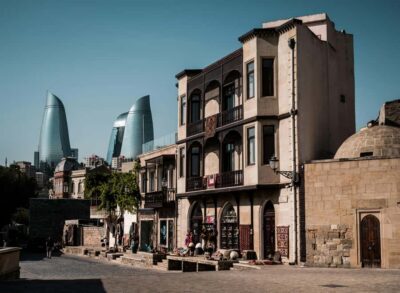
A stop near Muhammad Mosque adds another major landmark layer to the UNESCO-area feel. From there, you move through the narrow streets of the Old City, where the scale changes quickly, and the atmosphere feels different block to block.
This is one of the best parts of the day for people who like to slow down just enough to notice details. You do not get lost on a DIY maze run, because the guide keeps you moving with a clear story.
Shirvanshahs Palace Area and the Photo-Based Context
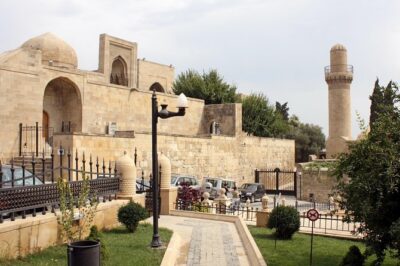
You cover the Shirvanshakh’s Palace area without entering. The guide uses explanation and photos to provide context, so you still get the big “why” without needing to plan museum time.
If you later decide you want to enter on your own, this tour actually helps you know what you’re looking for.
Museum of Miniature Books
The Old City portion also includes a stop at the Museum of Miniature Books. Even if you do not go inside for long, it adds a smart contrast to the monumental architecture. You get a reminder that the Old City was also about learning, collecting, and everyday culture.
Istiglaliyyat Street: Where Oil Money Rewrites the Downtown Map
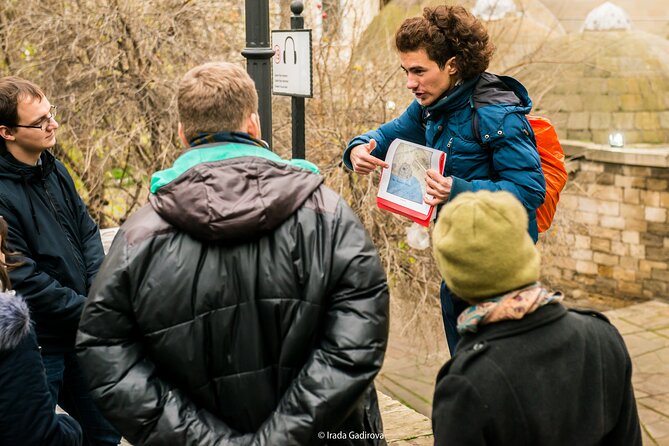
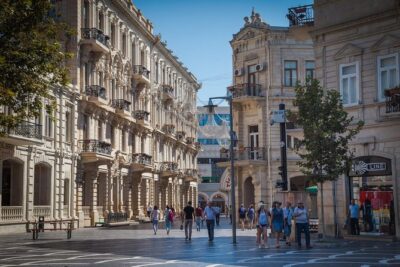
After the fortress-side walk, you move to a wider view of how Baku expanded and rebranded itself through street-level institutions. The route connects to Istiglaliyyat Street, formerly Nikolayevskaya and Kommunisticheskaya, which means you’re literally following street name history as you go.
Here, the tour focuses on urban transformation driven by oil barons and their desire for personal glory and fame. That theme shows up in the kinds of buildings you pass: civic spaces, cultural centers, educational institutions, and a range of architectural styles.
You cover highlights along the street such as:
- Governor’s Garden
- Town Hall
- Philharmonic Hall
- Palace of Happiness
- Institute of Manuscripts of Azerbaijan
- Ismaliyya Palace (Muslim Charitable Society)
- Literature Museum
- A statue of Nizami
It’s a practical stretch for orientation. By the time you finish it, you know where the downtown “anchor” buildings are, which makes it easier to build the rest of your itinerary without guessing.
Philharmonic Fountain and the Ali and Nino Connection
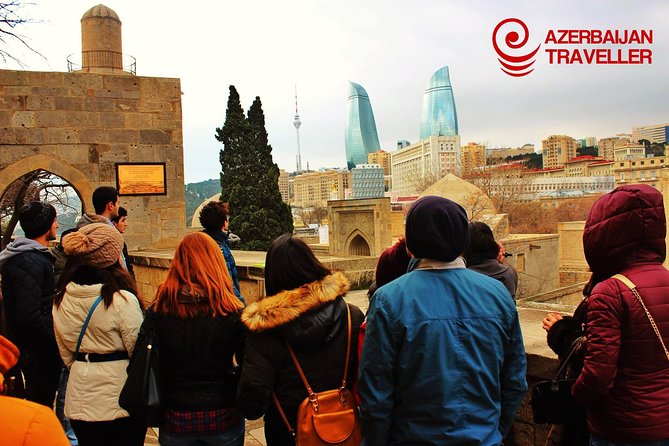
One stop is the Philharmonic Fountain, linked by story to a book titled Ali and Nino. The guide uses this moment to tie garden and expansion themes together, connecting literature and landscape to the way the city grew beyond the fortress wall.
This is the kind of stop that feels small on a map but memorable in real time. A fountain area can be just a quick photo moment, but in this tour it becomes a narrative bridge, helping you understand how people in different eras imagined Baku’s identity.
Baku Town Hall and Saadet Sarayi: Power and Romance in the Same Day
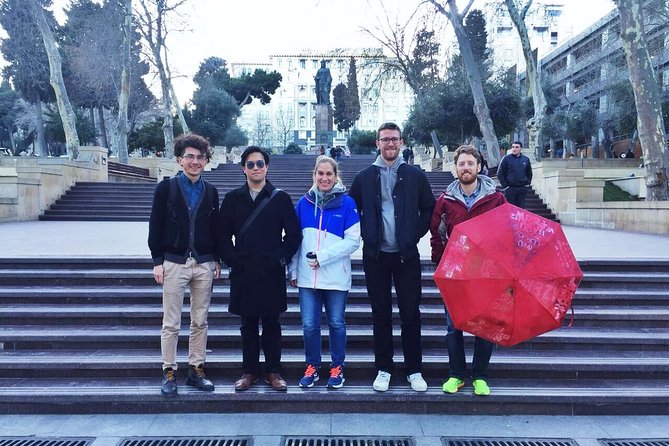
The tour then moves to Baku City Executive Power, with the stop on Baku Town Hall. This building is presented as a monumental architectural landmark from the oil boom era, and it gives you a sense of European influence landing in Baku’s streetscape.
If you like architecture, this is one of your “notice the details” breaks. The guide’s angle is not just style trivia. It’s how architecture reflects cosmopolitan ambition and the impact of diverse communities in the city.
Then comes Saadet Sarayi, a story stop built around an oil baron and his wife. Their love story is retold through weddings held at what is now a marriage registry in the mansion.
I like this kind of stop because it makes oil-era wealth feel human. It’s not abstract. You get the sense that these families used grand homes to express values, relationships, and status.
Former Taghiyev School for Girls: Modernization You Can Point To
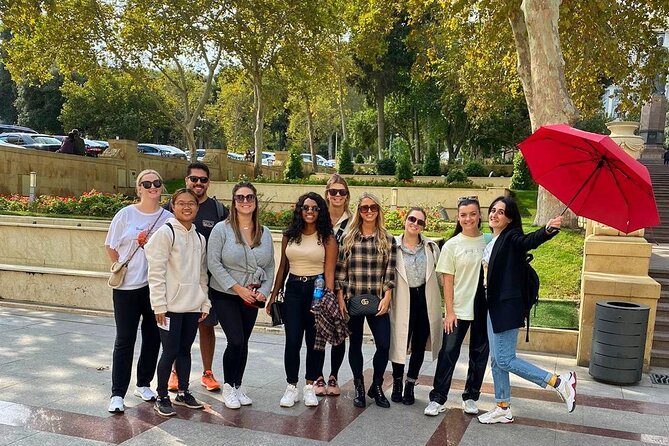
A key moment on this walk is the Former Taghiyev School for Girls, also tied to the Institute of Manuscripts of Azerbaijan. The tour frames it as a story of the first secular school for Muslim Women, which connects to modernization in Baku and Azerbaijan.
Even if you know little about this chapter, the guide’s framing helps you connect education to social change. You are not just seeing a building. You’re seeing why a building like this would matter in a period moving toward independence.
If you’re the type of traveler who wants more than palaces and towers, this stop gives you that needed balance. It shifts the focus from oil spectacle to human progress and institutional change.
Ismailiyya Palace and Finishing at Fountains Square
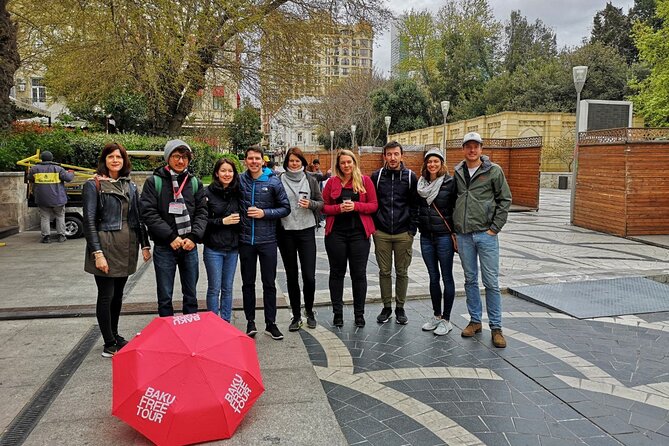
The day wraps with Ismailiyya Palace, described as a palace commissioned in memory of an oil baron’s son. The tour highlights it as an architectural landmark in Venetian Gothic style, which is the kind of detail that instantly changes how you look at a street.
One of the nice things about ending at Fountain Square again is that it feels like a full loop through Baku’s identity. You start in the trading-energy heart of the old oil boom story, and you return after walking through fortress symbolism, downtown power buildings, and education and charity institutions shaped by wealth.
By the end, you will likely understand the city’s logic more than your average “see it then leave” approach. It’s the kind of tour that makes the next day easier, because you have a mental map of what you actually saw.
Price and Value: Getting More Than a Photo Tour for $70
At $70 per person, this is not a budget impulse buy, but it also is not priced like a full-day guided program with transport and museum entries. You are paying for time with a guide and a tight storyline across two and a half hours.
The value comes from three places:
- Focused stops that stack into a clear narrative, oil boom wealth, Old City identity, and later influence
- No wasted time for entering many sites, since the walk emphasizes explanations at key locations rather than long ticket lines
- Bottled water included, so you stay comfortable during the walk
Also, the tour is typically booked about 25 days in advance, which suggests it runs consistently during peak travel periods. And it has a maximum of 30 travelers, so it’s unlikely to feel like a city rally.
If you’re wondering what you get for the money, think “smart orientation with real context.” This is the kind of tour that helps you avoid spending the rest of your trip trying to figure out what you’re looking at.
Pacing, Crowd Size, and What You Should Expect on the Ground
The itinerary is designed around short stops, many around 10 minutes, plus about one hour spent in the Old City portion. That format is good if you want movement and fresh sights, but it means you should not expect long museum-style linger time.
You also should know this tour works best with good weather. It is listed as requiring good weather, so plan flexibility. If rain or bad conditions show up, you will need to accept a change of date or a full refund.
If you prefer to take breaks, bring water and slow down on your own during the gaps between official stops. The tour includes bottled water, but you might want more for later.
The meeting point is specific: KFC9RCP+28F, Nizami St, Baku, and the tour ends back there. Since it runs near public transportation, you can also keep it easy to reposition yourself before and after.
Service animals are allowed, and most travelers can participate, so the overall setup is travel-friendly for a walking tour.
Who Should Book This Walk, and Who Might Skip It
This tour is a great fit if you:
- Want a fast start to understanding Baku’s oil heritage
- Like guided storytelling that turns buildings and squares into an actual timeline
- Plan to spend more days exploring on your own afterward and want a head start
It may be less ideal if you:
- Want to spend a lot of time inside museums or major paid attractions, because the tour focuses on outside explanations and photo context
- Get frustrated by walking, even when each stop is short
If your goal is to see everything, you might need a second plan for ticketed museum time. If your goal is to build the right “what am I looking at” framework, this tour does that job.
Should You Book the Baku Oil Heritage & Old Town Walking Tour?
I think you should book it if you want a guided Baku that makes sense, not just one where you collect landmarks. The storytelling style, strong focus on oil-era transformation, and the Old City route without entrance time make it a smart first or mid-trip move.
One more reason: guides like Gani are repeatedly praised for holding attention with humor, pace control, and clear explanations. That combination matters on a 2.5-hour walk, because you feel the difference between a rushed narration and a guided rhythm.
If you have limited time in Baku, this is the kind of tour that can turn your remaining hours into smarter, more confident sightseeing.
FAQ
How long is the Baku Oil Heritage and Old Town walking tour?
The tour lasts about 2 hours 30 minutes.
Where does the tour start and end?
It starts at KFC9RCP+28F on Nizami St in Baku, and it ends back at the same meeting point.
What is the price per person?
The price is $70 per person.
Is bottled water included?
Yes. Bottled water is included.
Are entrance fees included?
The tour lists admission as free for the stops and emphasizes explanations without entering sights. Admission fees are listed as not included, so if you choose to enter places on your own, you should be prepared for possible tickets.
How many people are in the maximum group?
The tour has a maximum of 30 travelers.
Do I need good weather for the tour?
Yes. The experience requires good weather, and if it is canceled due to poor weather you will be offered another date or a full refund.
What is the cancellation refund timeline?
You can cancel for a full refund up to 24 hours in advance. Within 24 hours, the amount paid is not refunded.
Is the tour near public transportation?
Yes. It is near public transportation.
Are service animals allowed?
Yes, service animals are allowed.
More Azerbaijan Trips We Reviewed
The Rest of Our Azerbaijan Reviews

Deeper Into the Old City

More of Azerbaijan we have been out and written up
- The Magnificent Baku Night Tour★ 5.0 · 3 reviews
- Small-Group Day Trip to Gobustan, Mud Volcanoes, Ateshgah & Yanar Dagh★ 4.5 · 3 reviews
- Private Sheki Tour – Four Regions of Azerbaijan in one day★ 5.0 · 3 reviews
- Full Day Guided Tour of Shamakhi and Gabala★ 5.0 · 3 reviews
- Qobustan Absheron Full Day Tour★ 5.0 · 3 reviews
Baku Old City Walks, compared.
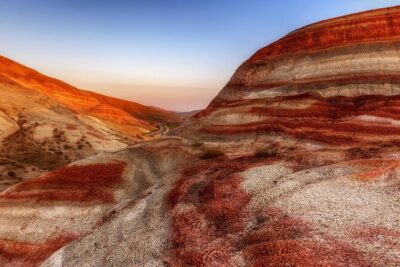 ★ 4.5Guba Khinalug & Candy Cane Mountains tour (by Old City Tours)From $79208 reviews
 ★ 4.5Gabala + Shamakhi tour (by Old City Tours)From $59198 reviews
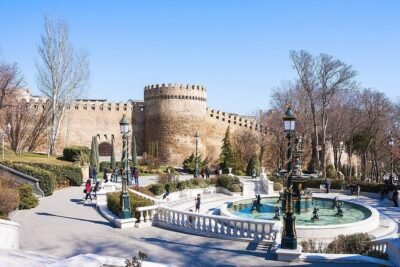 ★ 5.0Baku Walking Tour (Old City)From $18127 reviews
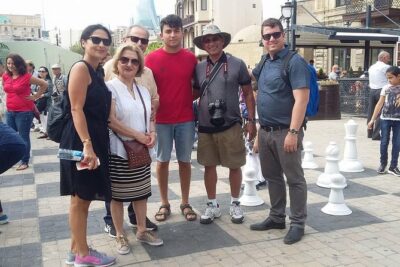 ★ 5.0Baku Old Town Walking Tour with a LocalFrom $7864 reviews
 ★ 4.5Baku Old City Tour (officially by Old City Tours)From $2546 reviews
 ★ 5.0Baku Downtown Original Walking TourFrom $1636 reviews
 ★ 5.0Baku Old City Wonders: A Walking Tour Through TimeFrom $3036 reviews
 ★ 3.9Old City Walking TourFrom $5721 reviews
Browse the lists this tour appears in