
REVIEW · WALKING TOURS
Baku Soviet Architecutre Gudied Walking Tour
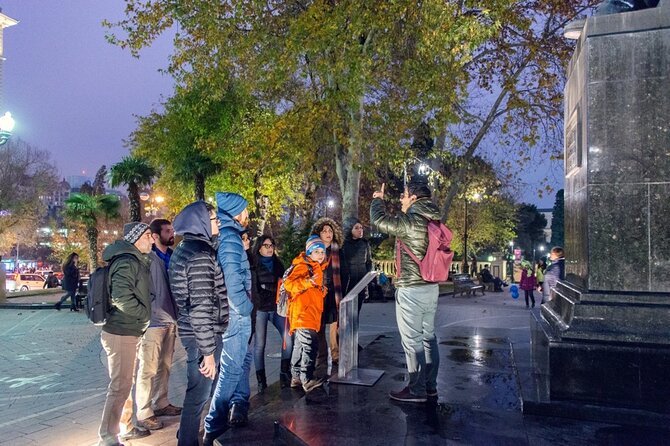
Soviet Baku makes sense on foot. This small-group walking tour turns a city that can feel overwhelming into an easy storyline, with Soviet architecture moments and modern street life stitched together by one guide who keeps things lively. I love how the route hits major spots like Fountain Square and Government House while still making room for lesser-known angles you would likely skip on your own. I also love the guide experience, in particular Gani, who is patient, funny, and willing to answer questions as you go. One consideration: it is a mostly outdoor walk, so bring weather-smart shoes and plan to spend the better part of your afternoon.
You do not just see buildings, you learn how they connect to Azerbaijan’s identity, from oil-boom Baku to the independence-era streets and the Soviet landmarks still shaping the skyline. The stops are short, practical, and designed for an intro day when you want your bearings fast. My one caution is pacing, the tour can feel like a lot of city in a short time, so if you prefer slow museum time, you may want extra breaks afterward on your own.
In This Review
- Key things to know before you go
- Why Soviet Baku works as a walking story
- Price and what you actually get for $60
- Meeting at Karnaval-353 and how the group walk runs
- Fountain Square: where Baku’s oil boom starts to show
- Nizami Street and the pedestrian 800 meters that feel like a reset
- Nasimi Monument and Stalinist angles you might otherwise miss
- Nizami Cinema area: 28 May, independence, and Qara Qarayev
- Opera and ballet crossroads: music, libraries, and Lev Landau
- Khagani Street: Molokanskaya roots and the Russian drama layer
- Taghiyev’s former home turned history museum
- Government House: Soviet scale in one shot
- Baku Boulevard promenade: oil barons and 1909 seaside ambitions
- What made Gani’s tour feel different
- Who this tour suits best
- Should you book the Soviet Architecture Guided Walking Tour?
Key things to know before you go
- Small-group size (max 15) means you can ask questions without shouting.
- Traffic-free walking segments like the Nizami Street pedestrian stretch make the city feel calmer.
- Soviet landmarks with context, not just photos, especially around Government House and Stalinist-era corners.
- Street culture stops include pub street vibes and nightlife-friendly recommendations.
- Free-entry listed stops for each major waypoint, plus a local tea finish.
- Gani’s style is a standout, with humor, patience, and clear English.
On foot, elsewhere in Azerbaijan
- Baku: Stunning Walking Tour of Historical and Modern City
★ 4.9 · 270 reviews - Baku Oil Heritage & Old Town Walking Tour
★ 5.0 · 232 reviews - Baku Walking Tour (Old City)
★ 5.0 · 127 reviews - Baku Old Town Walking Tour with a Local
★ 5.0 · 64 reviews
Why Soviet Baku works as a walking story
Baku has layers, and on a first visit those layers can blur together fast. This tour helps you separate eras without getting stuck in a classroom. You walk through the downtown grid and the cultural center, then you land along the waterfront where the city’s oil-era ambition is still visible in the promenade’s history.
What I like is the tour does not treat Soviet-era architecture like a theme park. Instead, you get the human side: the residents, legends, myths, and the way neighborhoods developed during the oil boom. That matters, because buildings only become memorable when you understand why they were built and what people did around them.
The format is also friendly. The tour is about 2 hours 30 minutes on paper, but you should plan around three hours in real life. It is enough time to feel like you did something meaningful without stealing your whole day.
Price and what you actually get for $60
At $60 per person, this is not the cheapest option in Baku, but it is also not priced like a private guide. For the money, you are paying for three things that add up: a guided route through the center, short stop explanations that keep you moving, and local tea at the end.
You also get practical benefits. The tour is a small group, and you get a mobile ticket, which is useful when you are juggling maps, translation apps, and a schedule. If you are traveling with limited time, a guided walk can be better value than spending hours trying to stitch together history from signs you cannot fully interpret.
My other value check: many stops are listed as admission ticket free, so your day stays predictable. You will still want snacks for the walk, but you are not facing surprise entry fees at each waypoint based on the itinerary.
Meeting at Karnaval-353 and how the group walk runs
You meet at Karnaval-353 Istiglaliyyat in Baku 1005, and the tour ends back at the same point. It starts at 1:00 pm, which is a smart slot if you want a late morning free for museums, old-city wandering, or a slow coffee.
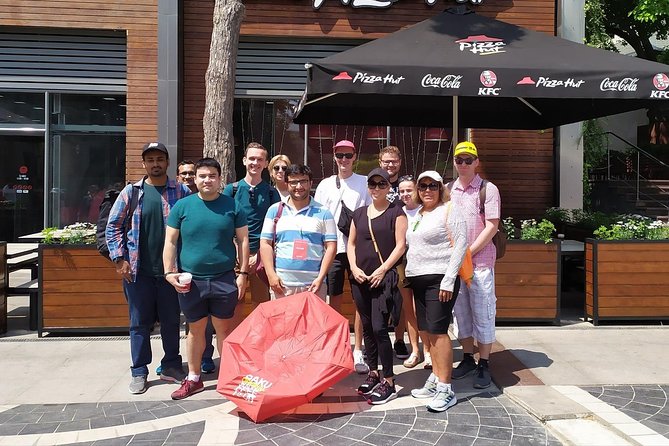
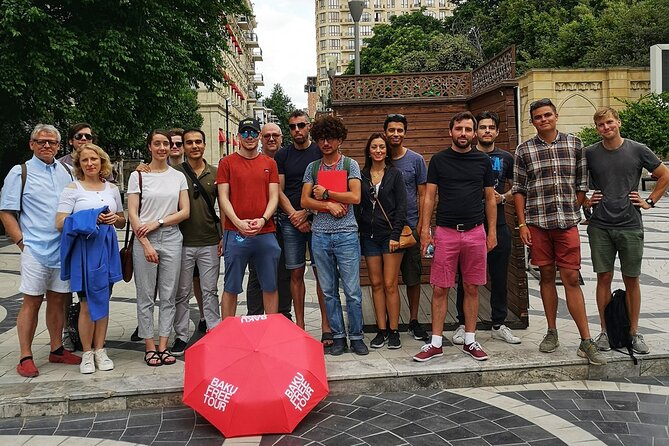
Because the group tops out at 15 people, it feels conversational. The guide can slow down for questions, and you can actually hear the explanations without fighting the crowd. Reviews specifically highlight that Gani adjusts pace to the group, never rushing, which is exactly what you want on a city-walk that includes multiple architecture styles.
Logistics are also straightforward. The meeting point is near public transportation, and service animals are allowed. Most travelers can participate, but do not ignore the basic reality: it is still a walking tour, so comfortable shoes matter.
Fountain Square: where Baku’s oil boom starts to show
The tour begins at Fountain Square, and it is also where you finish. This is downtown’s entertainment and leisure hub today, but the key is what it used to be. In the late 19th and early 20th century oil boom, the area grew into a main trading street of a boom town.
Why this matters for you: it gives context to the rest of your walk. If you understand why the downtown core expanded when oil money poured in, you can start seeing the logic behind streets, public spaces, and the grand civic buildings you will pass later.
One practical tip here is to use this stop to reset your photo framing. You will see a lot of buildings in the hours ahead, but Fountain Square is a natural anchor for your memory. When you return at the end, it also makes the tour feel complete, like you walked a loop through the city’s story.
Nizami Street and the pedestrian 800 meters that feel like a reset
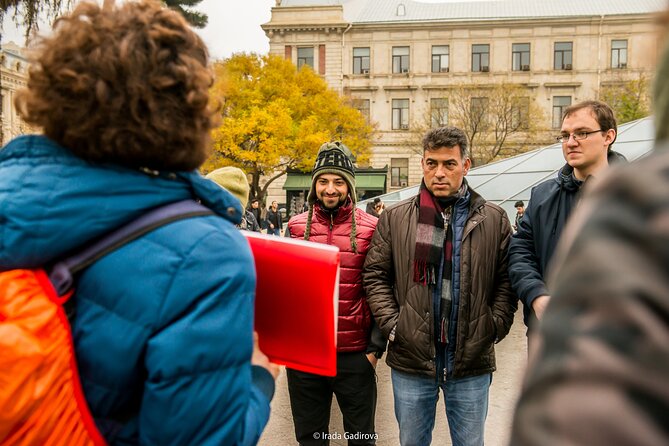
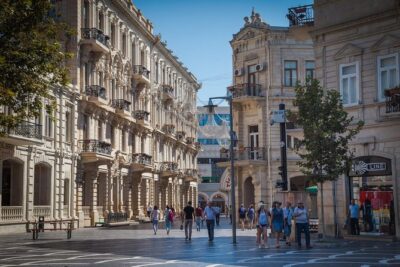
Next up is Nizami Street, the main shopping and entertainment core. One detail I like for planning is that a traffic-free stretch runs for 800 meters out of a 3.5 kilometer street. That means you get the energy of a busy city without the constant stress of traffic.
During this part of the walk, you see what modern Baku looks like after work. The pedestrian area is busy with people taking time to relax at restaurants, shops, and venues like concert halls and theaters. If you have only come to see architecture, this stop is your reality check. Baku is still living, not just historic.
Drawback consideration: because it is popular and central, the area can get crowded. Your guide will still keep things moving, but if you prefer wide-open spaces, plan to duck into quieter side streets when you can after the group passes.
Nasimi Monument and Stalinist angles you might otherwise miss
At the intersection of Samad Vurgun and Nizami streets, you get a view tied to Stalinist architecture from the 1950s. This is one of those stops where you learn how to read a facade. Without context, you might see it as just another impressive building.
With context, you start noticing scale, symmetry, and how the Soviet-era style translated into street presence. The guide’s job is to connect that design to the political and cultural forces shaping Baku at the time, and this stop is a good example of that teaching style.
Since the stop is brief, it works best if you keep your phone camera ready but also keep your eyes open. Look up first, then take photos. You will thank yourself later when you compare images across the day.
Nizami Cinema area: 28 May, independence, and Qara Qarayev
Moving into the 28 May street area, you hit a commemorative layer tied to Azerbaijan’s first independence in 1918. You also discuss Qara Qarayev, a composer of classic music, and how music and literature contributed to nation-building.
For me, this is where the tour shifts from architecture to identity. You start seeing culture as a political tool and a social glue, not just something that happens in theaters. When you connect that to street names and public monuments, Azerbaijan’s modern self-image becomes easier to grasp.
One tip: if you enjoy arts history, this is a good moment to ask your questions. The guide is set up for discussion, and the tour format gives you short, focused explanations you can follow and then follow up on.
Opera and ballet crossroads: music, libraries, and Lev Landau
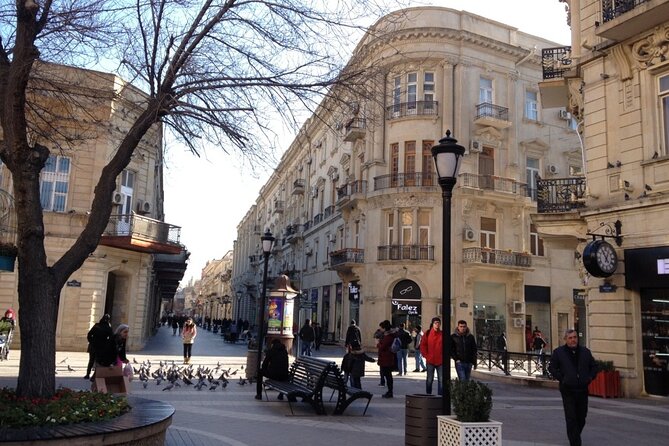
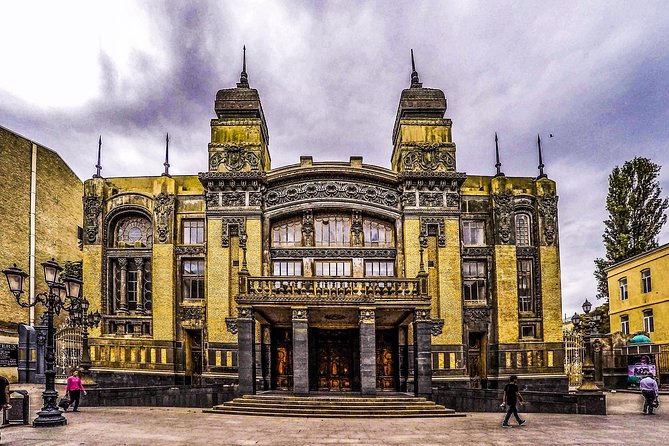
At the Azerbaijan State Academic Opera and Ballet Theater area, the walk covers cultural sections of Nizami Street. You may pass by places tied to song theater, the national library, the opera and ballet theater, and also the story of Lev Landau, a Nobel Prize winner.
This stop helps you understand why Baku’s cultural institutions matter. The buildings are impressive, but the real value is the way the guide connects institutions to Azerbaijan’s ambition to be modern, respected, and intellectually strong.
If you have even a small interest in science and arts, you will like hearing how a figure like Landau fits into the story the city tells. It’s a reminder that national identity is not one narrow lane, it can be arts, research, language, and public life all at once.
Khagani Street: Molokanskaya roots and the Russian drama layer
Khagani Street has a history tied to the name Molokanskaya, linked to spiritual Christians exiled to Azerbaijan from Russia. You also get the Khagani Park and the Russian Drama Theatre as physical anchors.
This is a thoughtful part of the tour because it deals with language and community. You talk about Russians and Russian language and how Azerbaijani society has interacted with that presence over time. Even if you do not speak Russian, the discussion helps you see how neighborhoods can carry mixed heritage for generations.
What you will probably like most is that it does not feel like a lecture. The guide makes it story-driven, and from the feedback you can expect friendly humor and patience. If you like hearing how big historical events show up in everyday streets, this stop delivers.
Taghiyev’s former home turned history museum
At the National Museum of History of Azerbaijan, the tour connects architecture to a personal story. The museum building was the private residence of Haji Zelnalabdin Taghiyev, often described as the father of the nation. The interior is ornate and decorative, with a spatial structure that hosted modern historic events.
This is one of the stops where you may pause a little longer in your head. Even if you only see parts from outside or in a brief window, it helps to know what you are looking at. You are not just looking at a museum box, you are looking at the home of a major figure whose life is framed as a rags to riches story.
If you are the type who loves origin stories, you will likely feel your understanding sharpen here. The guide’s explanations turn what could be a stop you pass by into a reason to care about the building.
Government House: Soviet scale in one shot
Government House is described as a gigantic and iconic Soviet landmark in Baku. Even without deep architectural knowledge, you can feel why this is a tour anchor. Soviet civic buildings were designed to project power through scale, and this one does exactly that.
This stop is useful if you want the Soviet story told in a visual way. Rather than jumping from detail to detail, the guide gives you a big frame, then lets you connect it to the surrounding downtown layout and the city’s earlier oil-boom growth.
Possible drawback: if you dislike big massing and government-style architecture, this may be more photo stop than emotional connection. Still, it is one of the places that makes the tour title make sense.
Baku Boulevard promenade: oil barons and 1909 seaside ambitions
The walk ends with time around Baku Boulevard, also known as Dənizkənarı Milli Park. The promenade was established in 1909 and runs parallel to Baku’s seafront. The interesting part is the history behind it. Oil barons built mansions along the Caspian shore, and the seafront was artificially built up inch by inch.
This is where you get the payoff for the whole tour. You started downtown with trade and leisure shaped by the oil boom. Now you finish with the waterfront, where the same era’s ambition reshaped the coastline.
Practical tip: this is a great time to pace yourself. Take a slow walk, watch the sea line, and let the earlier architecture explanations settle. If you still have energy, it also sets you up to explore more promenade areas on your own.
The tour concludes back at the meeting point, with the included local tea at a local coffee shop. It is a small touch, but it matters when you have walked for a few hours and you want a calm landing.
What made Gani’s tour feel different
A key theme in the feedback is that Gani is more than a person listing facts. He is described as extremely knowledgeable with patience and kindness, plus a genuinely friendly personality. Reviews also call out humor and that he answers questions instead of just powering through the route.
From a practical traveler perspective, those traits change the experience. When you ask why a street is named a certain way, or how an era connects to the next one, you get real answers. When the guide adapts speed to your group, you avoid the feeling of being herded from stop to stop.
The tour also earns praise for being well organized, with a focus on both modern history and pop culture links. That blend is rare in many city walks. It helps you understand not only what happened, but what those influences look like in the way people actually live and spend time now.
Who this tour suits best
This is ideal for you if:
- You want an intro to Baku that connects eras instead of treating Soviet architecture as isolated scenes.
- You like walking with context, and you do not mind a fast-moving route with short explanations.
- You have limited time and want major downtown anchors plus a few lesser-known angles.
- You enjoy culture, from opera and music to language mixing on streets like Khagani.
It may not be the best fit if:
- You prefer long museum stays over walking and quick stop interpretations.
- You get stressed by crowding near central streets like Nizami Street.
- You want a completely quiet, low-stimulation tour. This one is guided, story-focused, and city-centered.
Should you book the Soviet Architecture Guided Walking Tour?
If you are choosing between spending your first afternoon wandering and you want a smarter plan, this tour is an easy yes. The price makes sense for a guided, small-group route through the center, especially because the tour includes coffee or tea and many stops are listed as ticket free. The route also gives you a balanced mix of Soviet-era landmarks, independence-era cultural cues, and modern street life.
Book it if you want fast understanding and strong storytelling, and especially if you value a guide who can handle questions with patience. Skip it only if you know you want slow pacing or you are uninterested in Soviet civic architecture and the street-level cultural history that comes with it.
If you are on your first day in Baku, this is exactly the kind of walk that helps the rest of your trip click.
Walked, Not Driven
More Azerbaijan Trips We Reviewed

The Rest of Our Azerbaijan Reviews

More of Azerbaijan we have been out and written up
- The Magnificent Baku Night Tour★ 5.0 · 3 reviews
- Small-Group Day Trip to Gobustan, Mud Volcanoes, Ateshgah & Yanar Dagh★ 4.5 · 3 reviews
- Private Sheki Tour – Four Regions of Azerbaijan in one day★ 5.0 · 3 reviews
- Full Day Guided Tour of Shamakhi and Gabala★ 5.0 · 3 reviews
- Qobustan Absheron Full Day Tour★ 5.0 · 3 reviews
Walking Tours, compared.
 ★ 4.9Stunning Walking Tour of Historical and Modern CityFrom $33270 reviews
 ★ 5.0Baku Oil Heritage & Old Town Walking TourFrom $70232 reviews
 ★ 5.0Baku Walking Tour (Old City)From $18127 reviews
 ★ 5.0Baku Old Town Walking Tour with a LocalFrom $7864 reviews
 ★ 5.0Baku Old City Wonders: A Walking Tour Through TimeFrom $3036 reviews
 ★ 5.0Baku Downtown Original Walking TourFrom $1636 reviews
 ★ 3.9Old City Walking TourFrom $5721 reviews
 ★ 5.0Coolest Baku Walking TourFrom $520 reviews
Browse the lists this tour appears in