
REVIEW · GOBUSTAN ROCK ART & MUD VOLCANOES
From Baku: Gobustan Half Day Guided Tour
Gobustan makes prehistory feel close. I love how the Gobustan rock art is explained as a timeline, and I also like the hotel pickup and drop-off that protects your schedule. The main drawback is that you spend plenty of time riding between sites, so if you get restless in cars, plan for that.
This half-day style tour mixes two very different time scales. You’ll get active mud volcanoes in Gobustan, then shift to Baku’s oil era with a quick stop at the world’s first mechanically drilled oil well.
Expect about 7 hours total, plus some walking on uneven ground. It’s listed for moderate physical fitness, so comfortable shoes really matter, especially at the rock art area.
In This Review
- Key highlights to know before you go
- A full day in 7 hours: prehistory and oil in one loop
- Gobustan rock art: from goat hunts to first-century AD battles
- Mud volcanoes at Dashgil: active geology without the mystique
- Bibi-Heybat Mosque: a 1990s rebuild with a deep 13th-century link
- First Oil Well and Oil Museum: where drilling history got real
- Price and value: $33.70 can be a deal, if you plan for extra tickets
- Transportation and timing: how to make the car time work for you
- What this tour is best for (and who might not love it)
- Practical tips that make the difference on-site
- Should you book the Gobustan half-day guided tour?
- FAQ
- How long is the Gobustan half-day guided tour from Baku?
- How much does the tour cost?
- Is hotel pickup and drop-off included?
- Is a mobile ticket included?
- Are entrance fees included?
- What about lunch?
- Do I need a certain fitness level?
- How many people are on the tour at most?
- What is the cancellation policy?
Key highlights to know before you go
- Gobustan rock art timeline: From roughly 20,000-year-old images to first-century AD scenes
- Mud volcanoes concentration: Dashgil Group with a high number of active volcanoes
- Bibi-Heybat Mosque context: A 1990s rebuild linked to a 13th-century predecessor
- First Oil Well significance: 1846 drilling, first oil gush in 1847, reconstructed by SOCAR
- Private transportation with guide: Pickup and drop-off, plus a professional guide for the day
- Admissions not fully included: Some stops require tickets, while others are free
Other ways to do the petroglyphs and the bubbling mud
- Baku: Gobustan, Mud Volcano, Fire Mount, Temple Lunch Entry
★ 4.9 · 3,246 reviews - BEST Gobustan, Volcanoes & Absheron Fire Tour (Group or Private)
★ 5.0 · 1,254 reviews - Gobustan and Absheron tour (All inclusive)
★ 5.0 · 1,014 reviews - Baku: Gobustan, Volcanoes, Fire Temple and Yanardag Day Trip
★ 4.7 · 433 reviews
A full day in 7 hours: prehistory and oil in one loop
If you only have limited time in Baku, this tour’s big advantage is its mix. One stretch of the day is about human life before written records, using Gobustan’s famous petroglyphs as your main clue. Then you quickly pivot to the story of oil, with stops that connect Baku to the start of industrial drilling.
I also like the pacing, because it keeps you from bouncing around alone. You have a guide to translate what you’re seeing, plus private transportation that handles the driving so you can focus on the sites. The route is structured as four stops, but the real value is the way your guide connects themes, like how daily life and rituals show up in rock drawings, then how the oil industry becomes part of the city’s identity.
The one thing to keep in mind is that you are not doing a walking-heavy, all-day hike. This tour is more about short, meaningful site visits with road time in between. If you get motion sick, or if tight seating would bother you, it’s worth mentally preparing.
Gobustan rock art: from goat hunts to first-century AD battles
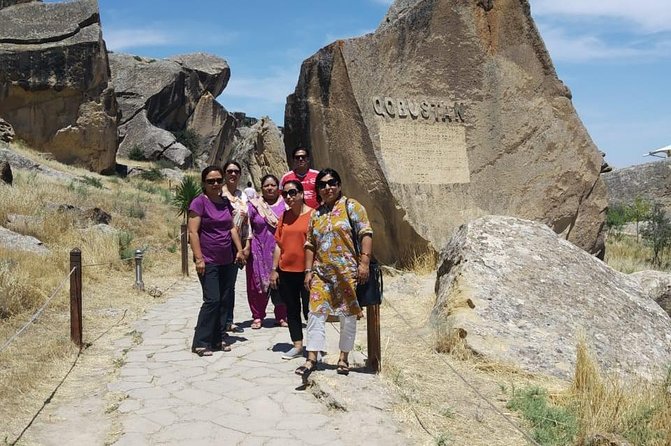
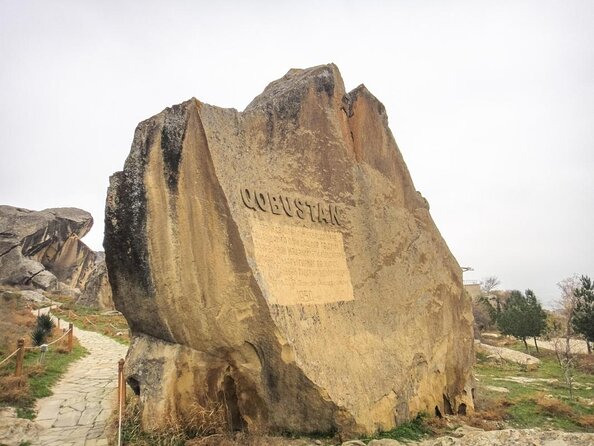
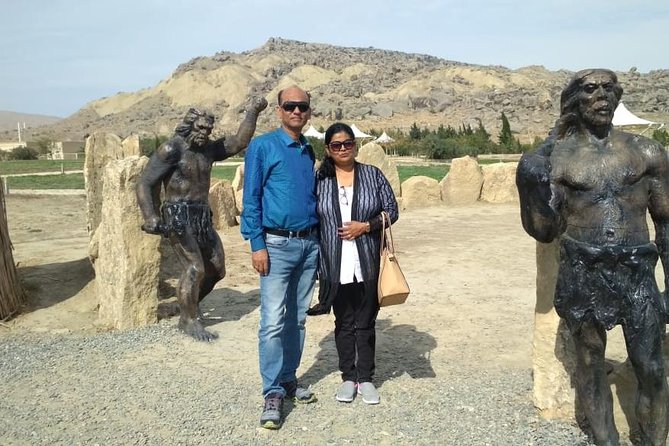
Stop one is Gobustan Rock Art, and this is where the tour earns its name. The setting is dramatic, with craggy rock faces that feel like they’re built for storytelling. Your guide walks you through how prehistoric people used this place, not just for paintings, but also for dwellings and everyday life.
Here’s what makes the rock art especially compelling: the drawings span a huge time range. You’ll see older images dating back about 20,000 years, alongside newer ones from the first century AD. That difference matters, because it turns the site into a visual timeline. You’re not just looking at art. You’re comparing what people were doing, how they organized work, and what they considered important enough to record on stone.
In the older images, expect to see themes like hunting mountain goats and ritual dancing with spears. Later scenes shift toward more collective and conflict-driven imagery, including battle scenes, group labor, harvesting, and women shown by the hearth. That last category is a quiet but powerful reminder that everyday life also got depicted, not only war and hunting.
What you should do to get the most out of this stop:
- Ask your guide to point out how the scenes change by age, not just what they show
- Take a few minutes to compare older and newer carvings side by side, even if it feels repetitive at first
- Bring a light layer if the rocks are windy, because the open terrain can cool fast
One practical note: admission for this stop is not included, so budget for that extra ticket cost when you plan your total day. The time on site is listed as about four hours, which is enough to slow down and actually look, not just rush for photos.
Mud volcanoes at Dashgil: active geology without the mystique
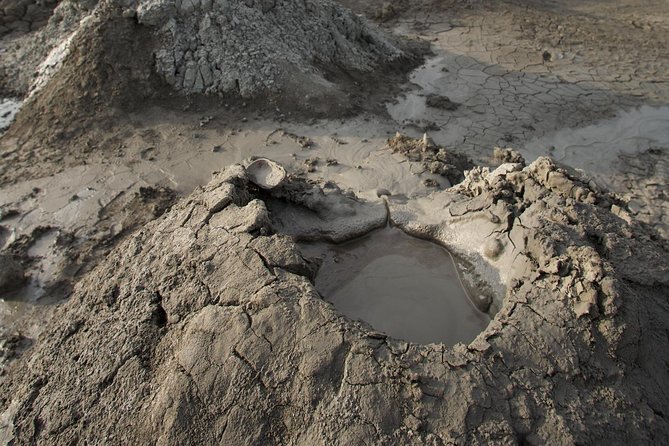
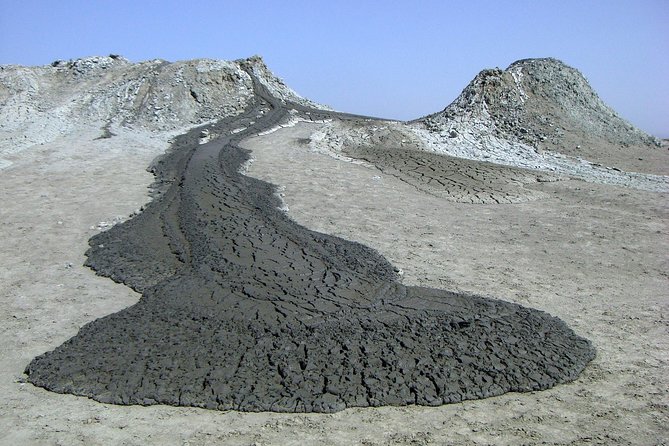
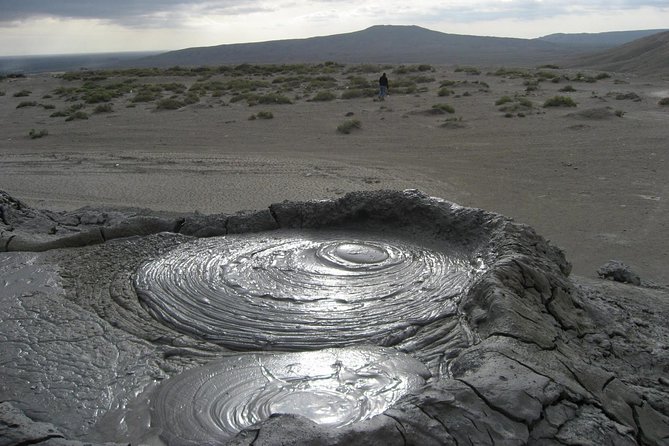
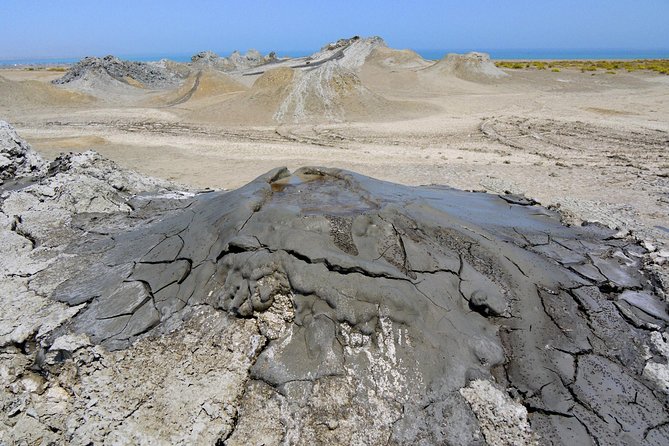
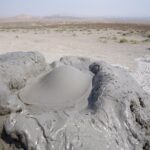
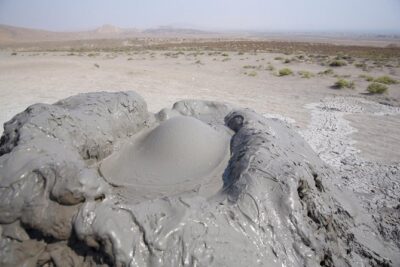
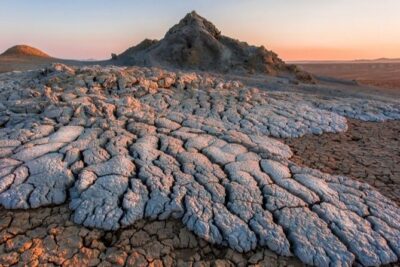
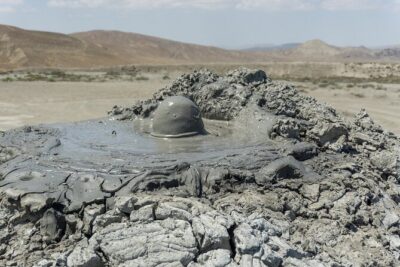
After the rock art, you move to the mud volcanoes. This is a very different kind of attraction, and that contrast is part of why the day works. Mud volcanoes are not a theme park feature, they’re active geological formations. When you see several at once, it helps you understand why Azerbaijan is known for them.
Your stop focuses on the Dashgil Group, east of the Gobustan museum area. Azerbaijan has a major concentration of these mud volcanoes, and the numbers your guide works from are striking: around 350 of the world’s estimated 800 mud volcanoes are in Azerbaijan. That’s not a fun fact for a worksheet. It changes how you interpret the landscape, because the ground itself is still doing something.
You’re there to see active mud volcanoes, so keep your expectations realistic. You may not get a dramatic movie scene with constant eruptions, but you will see the formations and learn why they’re active. The guide’s role matters here, because mud volcanoes can be visually confusing if you’re only looking at shapes. With explanations, you start noticing the patterns your eye might otherwise miss.
The other planning detail: admission tickets for this stop are also not included. You’ll likely pay a separate fee for entry or site facilities, depending on what’s required that day.
Bibi-Heybat Mosque: a 1990s rebuild with a deep 13th-century link
The stop at Bibi-Heybat Mosque is short, about 30 minutes, and it’s designed as a quick cultural reset. This is a historical mosque tied to an earlier structure. The current mosque you’ll see was built in the 1990s as a recreation of a 13th-century mosque.
Your guide will connect it to the original mosque built by Shirvanshah Farrukhzad II Ibn Ahsitan II. That’s a key name to remember, because the story of the mosque is also a story of destruction and rebuilding. The earlier structure was destroyed by the Bolsheviks in 1936, and the mosque you visit now reflects that history.
Also useful: there is no admission fee for this stop. So even if your schedule is tight, this is a low-cost way to add meaningful cultural context to the day.
What I like about this kind of stop is that it’s not trying to replace the big museums or long cathedral tours. It gives you a snapshot of place and continuity, and then moves you along.
More trips with a guide on the day
First Oil Well and Oil Museum: where drilling history got real
Then you head to the Oil Museum and the First Oil Well. This is one of those Baku stops that feels oddly specific in a good way: you’re not just learning that oil matters here, you’re standing at a specific drilling landmark.
The world’s first mechanically drilled oil well was drilled in 1846. It produced the first gush of oil in 1847. At that early stage, the well was just 21 meters deep. Think about what that means in practical terms, early industrial engineering at a surprisingly small depth, and how fast oil became a force in the region.
Your visit also includes the reconstruction story. On 26 April 2017, SOCAR completed a reconstruction of this first oil well. That recent completion detail makes the site feel less like a forgotten artifact and more like a living part of the modern energy story.
This stop is also around 30 minutes and is free to enter, which makes it great value for time. Even if you’re not a hardcore oil-history person, the physical specificity helps you grasp why Baku is tied to global energy history.
Price and value: $33.70 can be a deal, if you plan for extra tickets
The listed price is $33.70 per person. For a tour that includes private transportation and a professional guide, that’s a reasonable figure, especially in a city where getting efficient logistics can cost you time and money.
But here’s the fair warning: entrance fees are not fully included. The tour notes that admission tickets for Gobustan Rock Art and the mud volcano stop are not included. It also lists landing and facility fees as not included. Lunch is not included either.
So the best way to think about value is this:
- You’re paying for guided interpretation and transportation efficiency
- You still need extra cash for certain site tickets
- You save money compared to paying for multiple separate guided entries and dealing with transit on your own
On the plus side, two stops you might have expected to cost money are free: Bibi-Heybat Mosque and the Oil Museum and First Oil Well. That offsets part of the ticket gap.
If you want to keep your budget tight, do this mental math before you go: plan on paying some additional admission fees for the first two stops, then treat the last two stops as built-in bonus content.
Transportation and timing: how to make the car time work for you
This tour includes pickup and drop-off at your hotel, and it runs for about seven hours total. Private transportation is usually the comfort win, but it’s still a car day with road time between sites.
Because you’re spending time in transit, you’ll get more out of the day if you prepare for that rhythm. I like to bring a small checklist:
- Water bottle, even if you are not buying lunch
- Sunglasses and sunscreen for open areas around Gobustan
- Comfortable shoes, since rock surfaces and paths can be uneven
- A light layer, because outdoor sites can shift temperature quickly
Also consider the guide’s schedule. A four-hour Gobustan stop suggests time for slow looking. The two later 30-minute stops suggest you’ll get highlights, not a deep museum session. That’s not bad, it’s just how the tour keeps the day from exploding.
What this tour is best for (and who might not love it)
This experience fits you best if you want a guided introduction that stitches together prehistory and oil heritage. You’ll appreciate it if you like seeing how people lived, hunted, worked, fought, and recorded those moments, and then you want a quick pivot to how Baku became tied to industrial drilling.
You’ll probably enjoy it less if you:
- Hate sitting in a car for stretches of time
- Want a long, museum-style deep dive at one stop instead of short visits across four locations
- Are not comfortable with moderate walking on uneven ground
The tour also has a maximum group size stated as 100 travelers. Private transportation is included, but group caps can still impact how crowded the stops feel. If you strongly prefer quieter touring, time of day and season may matter.
Practical tips that make the difference on-site
A few small habits can make Gobustan and the mud volcano stop more enjoyable.
At Gobustan Rock Art:
- Give your eyes time. Rock scenes can look similar until you slow down.
- Look for changes between older and newer images. The age difference is one of the biggest takeaways.
At the mud volcanoes:
- Don’t only hunt for photos. Ask your guide what makes these mud volcanoes active and how they form.
- Wear shoes you trust on outdoor terrain, because you may need stable footing near the formations.
At Bibi-Heybat Mosque and the First Oil Well:
- Since both are short stops, use the guide time wisely. Ask about the mosque’s original builder names and the oil well reconstruction date, those details help you connect the dots fast.
- Plan for quick viewing rather than a long sit-down. The value is in the context.
Also remember that lunch is not included. If you are sensitive to timing, eat before the tour or carry a small snack if allowed, then rely on the tour stops for short breaks.
Should you book the Gobustan half-day guided tour?
I’d book this tour if you want an efficient, guided sampler that hits the top Gobustan experience plus two major Baku landmarks tied to local identity. The strongest reasons are the guided rock art timeline and the pairing of prehistoric life with the First Oil Well story. You’ll leave with a clearer sense of how Azerbaijan’s past and Baku’s modern energy story connect to place.
I would think twice if your priority is lots of walking or a very flexible day. This is a structured loop with substantial car time, and some ticket costs are extra for the first two stops. If you can handle that, it’s a good use of limited time.
If you do book, go in expecting interpretation, not just sightseeing. Ask questions at Gobustan, especially about how the scenes shift over thousands of years. That’s where the tour earns repeat value, because you start seeing the site as a timeline, not a collection of pictures.
FAQ
How long is the Gobustan half-day guided tour from Baku?
The tour runs for about 7 hours (approx.).
How much does the tour cost?
It costs $33.70 per person.
Is hotel pickup and drop-off included?
Yes. Pickup and drop-off at your hotel is included, along with private transportation.
Is a mobile ticket included?
Yes, the tour includes a mobile ticket.
Are entrance fees included?
No. Admission tickets for Gobustan Rock Art and the mud volcanoes are not included. The mosque and the oil well stops are listed as free.
What about lunch?
Lunch is not included.
Do I need a certain fitness level?
The tour notes a moderate physical fitness level is recommended.
How many people are on the tour at most?
The experience lists a maximum of 100 travelers.
What is the cancellation policy?
You can cancel for free up to 24 hours in advance for a full refund. If you cancel less than 24 hours before the start time, the amount is not refunded.
More Azerbaijan Trips We Reviewed
The Rest of Our Azerbaijan Reviews

Gobustan, Three More Ways
More of Azerbaijan we have been out and written up
- The Magnificent Baku Night Tour★ 5.0 · 3 reviews
- Small-Group Day Trip to Gobustan, Mud Volcanoes, Ateshgah & Yanar Dagh★ 4.5 · 3 reviews
- Private Sheki Tour – Four Regions of Azerbaijan in one day★ 5.0 · 3 reviews
- Full Day Guided Tour of Shamakhi and Gabala★ 5.0 · 3 reviews
- Qobustan Absheron Full Day Tour★ 5.0 · 3 reviews
Gobustan Rock Art & Mud Volcanoes, compared.
 ★ 4.9Gobustan, Mud Volcano, Fire Mount, Temple Lunch EntryFrom $63,246 reviews
 ★ 5.0BEST Gobustan, Volcanoes & Absheron Fire Tour (Group or Private)From $331,254 reviews
 ★ 5.0Gobustan and Absheron tour (All inclusive)From $851,014 reviews
 ★ 4.7Gobustan, Volcanoes, Fire Temple and Yanardag Day TripFrom $29433 reviews
 ★ 4.5Gobustan & Mud, Fire Temple, Burning Mountain (Group & Private)From $10418 reviews
 ★ 4.9Gobustan Absheron Tour Entry Tickets includedFrom $6329 reviews
 ★ 5.0Gobustan-Mud Volcan-Fire Temple and Mountain Tour/Entrance incFrom $30267 reviews
 ★ 4.8Gobustan Mud Volcanoes Temple & Entry tickets includedFrom $9178 reviews
Browse the lists this tour appears in