
REVIEW · GOBUSTAN ROCK ART & MUD VOLCANOES
Gobustan-Absheron Tour
Gobustan and Absheron hit you with real oddball wonders. You’ll see mud volcanoes, ancient rock petroglyphs, and then finish with the burning hills of Yanar Dag, all within a long but manageable day. I like the small-group cap (up to 18 people), because it keeps the stops more human-sized. I also like that the tour comes with A/C transport and guided storytelling in English and Russian, plus a plan that includes a traditional three-course lunch stop. The main thing to watch is that ticket and lunch details are a bit mixed in the provided info, so I’d confirm what you personally get at booking.
You start from central Baku and head out to Gobustan-Absheron, then work your way back for the evening. I love how the itinerary strings together natural weirdness and human history, from prehistoric rock art to later fire worship sites. I also like that the route is built for comfort, with multiple photo points and time at each site so you can actually look instead of sprint. One possible drawback is pacing: even with planned time at each stop, you may feel rushed at museums or when groups merge, especially if your guide keeps tight timing.
In This Review
- Key highlights I’d plan around
- A 9 to 11 hour Gobustan and Absheron day trip that actually makes sense
- What I like about the format
- One practical consideration
- Starting from Baku, then heading straight into the unusual
- Stop 1: The first oil well in Azerbaijan, plus living Soviet oil tech
- Why this matters to you
- Stop 2: Mud volcanoes, moon soil, and quick trail time
- A small bonus: the ride experience
- Ticket reality check
- Stop 3: Gobustan rock art, where the guide turns stones into stories
- Admission note
- How to make the most of this stop
- Stop 4: The Gobustan Rock Art Cultural Landscape and the museum context
- Why this museum time is worth it
- Lunch in Baku: a three-course break that keeps the day from collapsing
- What I’d do
- A balanced expectation on timing
- Stop 6: Ateshgah Fire Temple, caravanserai stories, and flame myths
- Why this stop works
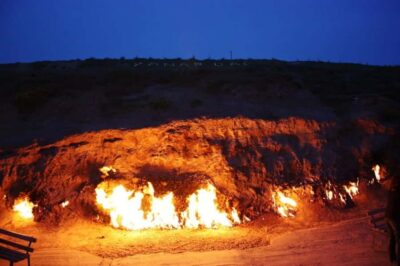
- Stop 7: Yanar Dag burning hills, the day’s final wow moment
- What you should do during this hour
- Transportation, group size, and guide quality: the real make-or-break
- One thing to keep in mind
- Price and value around $29, plus the ticket and lunch question
- My value read
- Who this tour fits best in real life
- Should you book Gobustan and Absheron from Baku?
- FAQ
- How long is the Gobustan-Absheron tour?
- How many people are in a group?
- Where does the tour start and end?
- Is there a guide, and what languages are offered?
- Is lunch included?
- Are the site tickets included?
- Is a vegetarian option available?
- What is the cancellation policy?
Key highlights I’d plan around
- Small group size (max 18) for more direct guide attention
- Mud volcanoes with a surreal, moon-like surface and an optional short trail feel
- Gobustan rock art plus museum context to decode what you’re seeing
- Ateshgah Fire Temple connected to centuries of fire worship stories
- Yanar Dag burning hillside for the day’s strongest “how is this real?” payoff
Other ways to do the petroglyphs and the bubbling mud
- Baku: Gobustan, Mud Volcano, Fire Mount, Temple Lunch Entry
★ 4.9 · 3,246 reviews - BEST Gobustan, Volcanoes & Absheron Fire Tour (Group or Private)
★ 5.0 · 1,254 reviews - Gobustan and Absheron tour (All inclusive)
★ 5.0 · 1,014 reviews - Baku: Gobustan, Volcanoes, Fire Temple and Yanardag Day Trip
★ 4.7 · 433 reviews
A 9 to 11 hour Gobustan and Absheron day trip that actually makes sense
This is a full-day excursion from Baku, scheduled for about 9 to 11 hours, running from a morning start into late evening. That time window is long enough to feel like you went somewhere, but short enough that you’re not eating up your whole trip. You’ll travel by air-conditioned transport and follow a set route built around two distinct zones: Gobustan’s ancient rock heritage and Absheron’s fire-themed cultural sites plus natural features.
At this price point, the big value is not just the sights. It’s the structure. Gobustan is spread out, Absheron has a few key stops, and having a driver and guide keeps you from turning a simple day trip into a navigation project.
What I like about the format
- You get guided context at the sites where it matters most, like the petroglyphs and fire-worship landmarks.
- The tour uses a single meeting point and returns you there, so you’re not solving logistics after a long day.
- The group cap of 18 is real, not a marketing number. Smaller groups tend to move more smoothly, especially on outdoor sites.
One practical consideration
Some parts of this day depend on entry tickets. The information you provided says certain site tickets are not included, but some individual stops list admission as included or free. That’s not a dealbreaker, but it is something to confirm at booking so you do not get surprised when you arrive.
Starting from Baku, then heading straight into the unusual
The meeting point is 1 Azərbaycan Prospekti, Bakı 1005, Azerbaijan, and the tour ends back at the same place. That matters because a day trip like this can feel stressful if you’re always guessing where the group will be. Here, you know the start and end point.
The tour is also listed as using a mobile ticket. That’s handy. Bring your phone with the ticket ready, and you’ll save time at check-in.
English and Russian guides are both offered. Names mentioned in the guide feedback include Nazpəri Həsənzadə (Naz), Nazef, and Emir, and the consistent theme is that guides connected the dots across time, from prehistoric life to later religious traditions. If history talk is your thing, this tour is the right kind.
The fire sights, run by other operators
Stop 1: The first oil well in Azerbaijan, plus living Soviet oil tech
Your first major stop is the world’s first oil well drilled in Azerbaijan and also in the world, drilled in 1846, first producing oil on July 14, 1848. This is a good warm-up for the day because it sets a context for why the Absheron region is so tied to energy and industry.
You’ll also pass pumpjacks built in Soviet days, and the interesting part is that they’re described as still working today. It’s not just a museum moment. It’s industrial history that you can still see in motion.
Why this matters to you
If you only think of Azerbaijan as culture and landscape, this stop gives you a reality check in the best way. It shows how the region’s oil story helped shape the modern world’s oil production. It also makes the later “fire” theme feel less random. This part of Azerbaijan has always been about forces coming up from the ground, whether it’s oil or flame.
Stop 2: Mud volcanoes, moon soil, and quick trail time
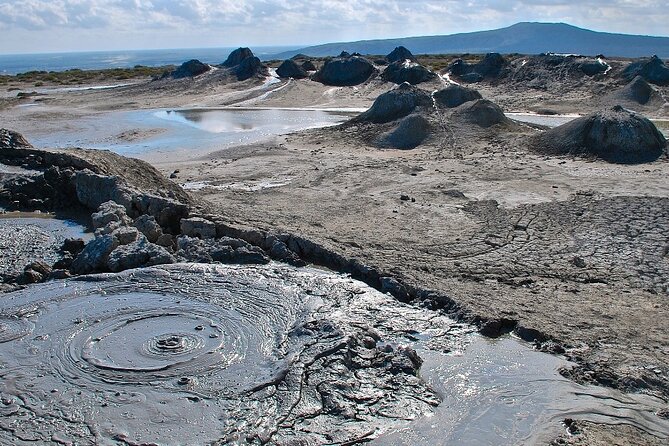
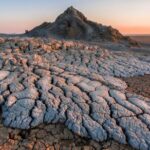
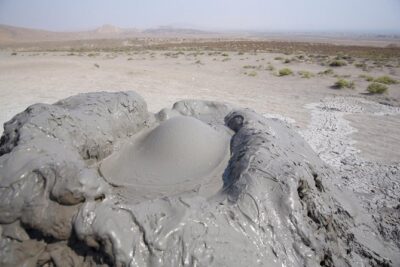
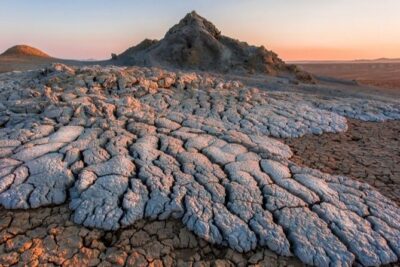
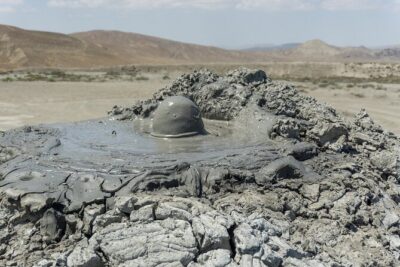
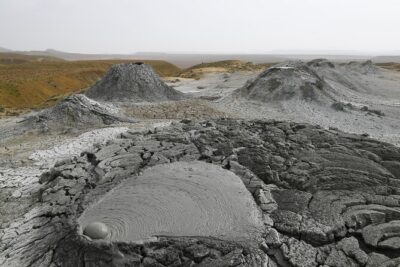
Next up is the mud volcano zone. This area has been active for hundreds of years, and the ground is described as spraying and forming a surreal, moon-like surface. Locals once believed it was a home for jinns in Azerbaijani culture, and that belief story adds a spooky, fun layer to what is already visually strange.
You’ll have about 1 hour at this stop. The route includes a small trail, and that matters because it turns the visit into more than just standing and taking photos. You get a chance to walk a bit and look at how the mud formations spread across the area.
A small bonus: the ride experience
One piece of tour feedback points to a surprise element: you might travel to the mud volcanoes in older four-wheel vehicles. That’s not guaranteed from the general tour description, but it’s the kind of thing that can make the day feel more memorable and less “bus tour.”
Ticket reality check
The overall “not included” list mentions tickets for the Mud Volcanoes Complex, but the stop description says admission is included here. Since those two pieces conflict, your best move is simple: when you book, ask whether mud volcano entry is included for your specific date.
Stop 3: Gobustan rock art, where the guide turns stones into stories
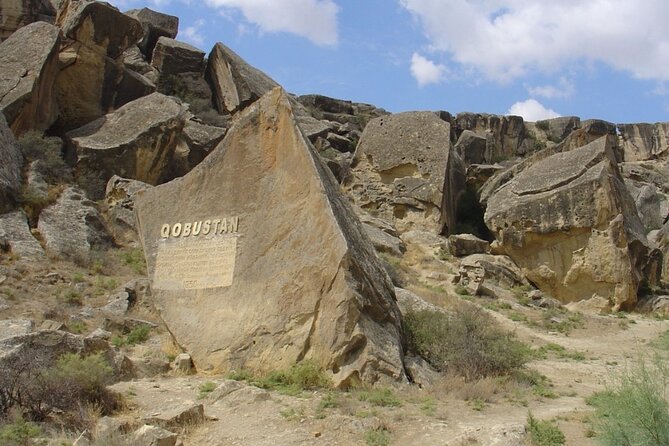
After you leave the mud volcanoes, you move into Gobustan Rock Art. The main attraction is prehistoric rock paintings and petroglyphs spread across the territory. You get around 1 hour here, and the guide role becomes the key ingredient.
Here’s what you should expect from the experience itself:
- You’ll walk the area and view petroglyphs directly.
- You’ll hear a guide narrative about prehistoric human life, including harsh living conditions and survival strategies.
- The focus is on daily life and human evolution, not just dates and facts.
Admission note
In the provided info, this stop says admission ticket is not included. So do not count on this part being covered unless your booking confirmation says otherwise.
How to make the most of this stop
Bring your patience for outdoor walking. Rock art is not always “wow in one second.” It’s more like: look closer, see more, then the story clicks. If your guide is strong, you’ll feel that moment when a drawing stops being decoration and starts being evidence.
Stop 4: The Gobustan Rock Art Cultural Landscape and the museum context
This next stop is about the Gobustan Rock Art Cultural Landscape, and it comes with a museum preview before you continue. The description says this area includes a village site tied to early humans, and you start by visiting the modern museum to see what ancestors’ lives looked like.
This stop is also listed as about 1 hour, and the ticket note here says admission is not included.
Why this museum time is worth it
Rock art without context can feel like a pile of marks. With museum context, you’re better able to interpret the time period and the purpose behind the imagery. Even if you only get a basic framework, it changes how you look at the same stones.
Lunch in Baku: a three-course break that keeps the day from collapsing
After Gobustan, the tour returns to the capital area for a meal at a restaurant described as named Baku Restaurant, located in a park setting. The plan says it’s a traditional three-course lunch with tea.
Here’s the tricky part: the general tour summary says lunch is included, but the separate “not included” list lists lunch as not included. So I treat this as a “confirm before you go” item.
What I’d do
When you book, ask one direct question: is the three-course lunch actually included in your price, or is it an optional add-on? If it is included, great, you save money and time. If it’s not included, you’ll want to plan where you eat, because this is still a long day.
A balanced expectation on timing
Some feedback indicates lunch service can be slow at times. That’s not something you can fully control, but if you tend to hate waiting around, keep your expectations flexible and pack a small snack habit for the afternoon if your stomach runs ahead of the schedule.
Stop 6: Ateshgah Fire Temple, caravanserai stories, and flame myths
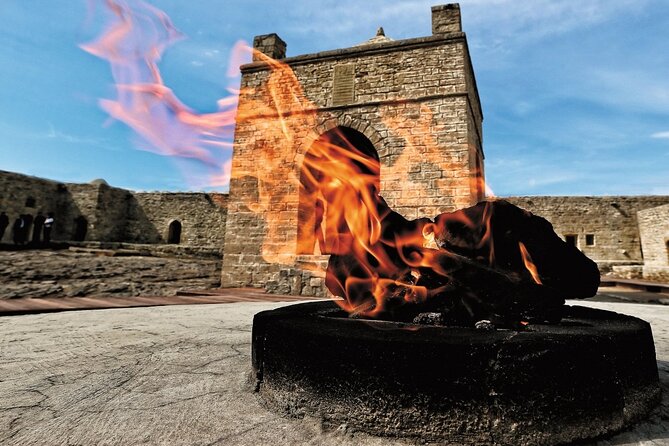
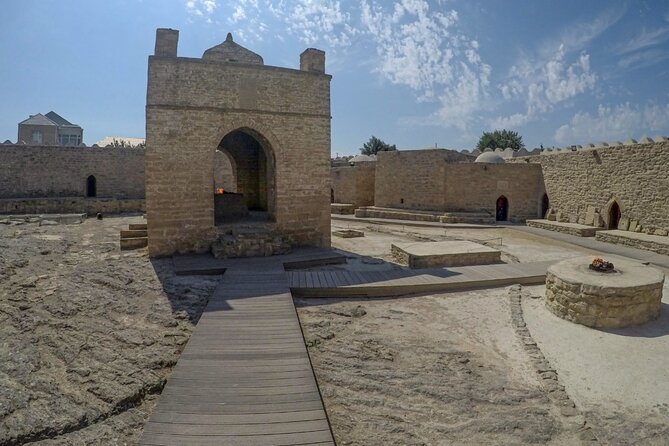
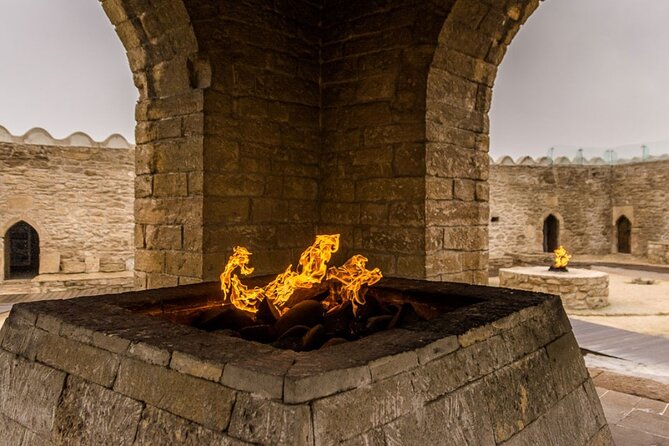
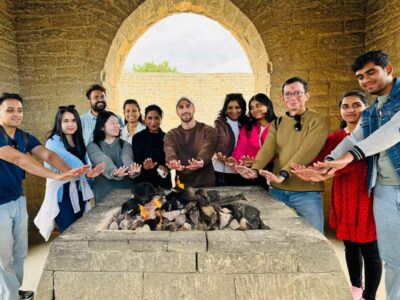
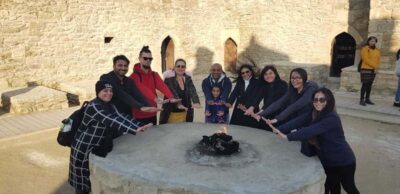
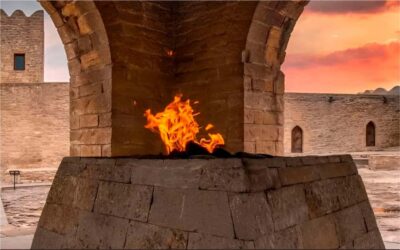
On the Absheron side, the tour heads to Ateshgah, also called the Fire Temple. The storyline goes like this: long ago, Absheron’s lands were described as covered with flames coming out of the ground. The site is linked to fire worship by Hindu Brahmanites and Persian Zoroastrians, with the temple name Ateshgah tied to that tradition.
This stop also includes mention of a caravanserai, built for merchants who needed a place to rest along trade routes. You can expect to hear about day-to-day life of people connected to those older travel routes, and the traditions of fire worshippers.
Time here is listed as about 30 minutes. Admission is noted as not included.
Why this stop works
It connects religion, trade, and how people interpreted natural phenomena. If you enjoy cultural sites where the “why” matters as much as the “what,” you’ll probably like this one.
Also, because time is shorter here, you’ll want to listen closely. When you only have 30 minutes, your guide’s pacing and explanations matter a lot.
Stop 7: Yanar Dag burning hills, the day’s final wow moment
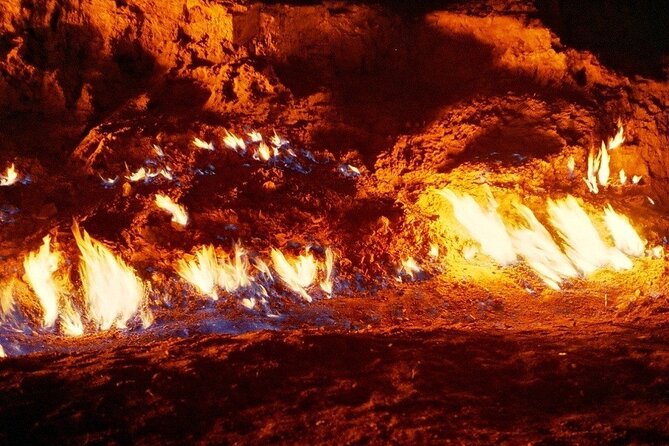
The last major highlight is Yanar Dag, also called Yanardag, meaning Burning Mountain. The plan says flames burst from the earth for many centuries, and the site sits near the top of the mountain. You’ll get an overview of the surroundings and of the fire itself.
You spend about 1 hour at this stop, and then you head back to Baku safely.
Admission is listed as not included for this stop.
What you should do during this hour
Plan to slow down. This is one of those places where you stop taking pictures and just watch for a few minutes. The effect is strongest when you let it be weird without rushing to capture everything.
Transportation, group size, and guide quality: the real make-or-break
This tour is capped at 18 travelers, which is a big deal for a day that includes multiple outdoor walking segments and a couple of shorter timed museum-style stops. Smaller groups can help with:
- Moving through sites faster without feeling like a herd
- Hearing guide explanations more clearly
- Getting quick clarifications when a question pops up
Transport is provided, and the vehicles are described as air-conditioned. That helps on long travel days.
Guide quality seems to be the standout factor in the feedback you shared. Specific guide names that came up include Nazpəri Həsənzadə (Naz), Nazef, and Emir, and the common praise is that they are able to explain how the sites connect across eras. In plain terms, the day feels like a story rather than a list of stops.
One thing to keep in mind
There is also a negative review about an unfriendly, monotone style that hurt the experience. That’s not something you can predict in advance. What you can do is manage your expectations: this tour is still a schedule. If you want maximum flexibility and slower museum time, you might prefer a more customizable private tour.
Price and value around $29, plus the ticket and lunch question
At $29 per person, this is priced like a budget-friendly day trip. That price range is usually where you either get a bare-bones tour or you get decent value through group organization and guide time. Here, you get air-conditioned transport and guided services in English and Russian.
Now, the part you should confirm is what you personally pay at the gate.
From the provided info, the tour does not include tickets for:
- Open-Air Museum
- Fire Temple
- Yanardag
- Natural History Exhibition
- Mud Volcanoes Complex
But the itinerary descriptions list some admissions as included or free for certain stops. This mismatch is exactly why I recommend confirming the inclusions in your booking confirmation.
My value read
- If your booking includes the major site admissions and lunch, you’re getting a lot for the money.
- If not, you’ll still likely have a great day, but your total cost will climb, and you might feel the time pressure more.
Either way, for a first-time day trip from Baku that hits Gobustan and Absheron’s top themes, this price is hard to ignore.
Who this tour fits best in real life
This works well if you:
- Want a first-time overview of Gobustan and Absheron in one day
- Like your history explained in plain language, not just read from placards
- Prefer guided structure and transport over DIY route planning
- Enjoy natural oddities, especially the mud volcano zone and burning hills
It may be less ideal if you:
- Hate feeling rushed and prefer slow museum pacing
- Are very sensitive to guide tone and group timing
- Want fully predictable included costs without any on-site ticket surprises
Should you book Gobustan and Absheron from Baku?
I’d book this if your goal is a single, well-structured day that mixes mud volcanoes, prehistoric rock art, and fire-themed sites without making you plan a thing. The small group cap helps a lot, and the guide approach seems to be the main ingredient behind the high satisfaction rate.
Before you pay, do two quick checks:
1) Confirm what tickets are included for your date, especially around Gobustan and the mud volcano complex. The provided details conflict, so let the booking confirmation be your judge.
2) Confirm whether lunch is truly included as described, because the details provided also list lunch under not included.
If you verify those two items, this tour becomes an easy-value way to see why this corner of Azerbaijan feels both ancient and strangely alive.
FAQ
How long is the Gobustan-Absheron tour?
The tour runs about 9 to 11 hours, starting in the morning and finishing late in the evening.
How many people are in a group?
The tour is capped at a maximum of 18 travelers.
Where does the tour start and end?
It starts at 1 Azərbaycan Prospekti, Bakı 1005, Azerbaijan and ends back at the same meeting point.
Is there a guide, and what languages are offered?
Yes. The tour includes a professional English and Russian guide service.
Is lunch included?
The information provided says lunch is included in the day’s meal plan, but lunch is also listed under not included. Confirm your exact inclusions when booking.
Are the site tickets included?
The not included list names tickets for the Open-Air Museum, Fire Temple, Yanardag, Natural History Exhibition, and Mud Volcanoes Complex. Some individual stop descriptions list admission differently, so confirm on your booking details.
Is a vegetarian option available?
Yes. A vegetarian option is available if you advise at the time of booking.
What is the cancellation policy?
You can cancel for free. You must cancel at least 24 hours in advance for a full refund.
The Rest of Our Azerbaijan Reviews

Ateshgah and Yanar Dag, Keep Reading

Gobustan, Three More Ways
More of Azerbaijan we have been out and written up
- The Magnificent Baku Night Tour★ 5.0 · 3 reviews
- Small-Group Day Trip to Gobustan, Mud Volcanoes, Ateshgah & Yanar Dagh★ 4.5 · 3 reviews
- Private Sheki Tour – Four Regions of Azerbaijan in one day★ 5.0 · 3 reviews
- Full Day Guided Tour of Shamakhi and Gabala★ 5.0 · 3 reviews
- Qobustan Absheron Full Day Tour★ 5.0 · 3 reviews
Gobustan Rock Art & Mud Volcanoes, compared.
 ★ 4.9Gobustan, Mud Volcano, Fire Mount, Temple Lunch EntryFrom $63,246 reviews
 ★ 5.0BEST Gobustan, Volcanoes & Absheron Fire Tour (Group or Private)From $331,254 reviews
 ★ 5.0Gobustan and Absheron tour (All inclusive)From $851,014 reviews
 ★ 4.7Gobustan, Volcanoes, Fire Temple and Yanardag Day TripFrom $29433 reviews
 ★ 4.5Gobustan & Mud, Fire Temple, Burning Mountain (Group & Private)From $10418 reviews
 ★ 4.9Gobustan Absheron Tour Entry Tickets includedFrom $6329 reviews
 ★ 5.0Gobustan-Mud Volcan-Fire Temple and Mountain Tour/Entrance incFrom $30267 reviews
 ★ 4.8Gobustan Mud Volcanoes Temple & Entry tickets includedFrom $9178 reviews
Browse the lists this tour appears in