
REVIEW · GOBUSTAN ROCK ART & MUD VOLCANOES
Gobustan and Absheron trip (Group or Private)
Gobustan and Absheron is the kind of Baku day that changes moods fast, from prehistoric carvings to real flames. You get hotel pickup and a guided route that mixes major sights with a practical pace across the peninsula. If you’re curious why Azerbaijan earns the Land of Fire nickname, this day does not waste time.
I especially like that you visit Gobustan rock art in two parts: the outdoor reserve area and the modern interactive museum. I also love the small-group size (max 17), because you’re not lost in a crowd and the guide can slow down when questions come up, like how mud volcanoes erupt or why Zoroastrianism is tied to fire worship.
One thing to plan for: the mud volcano stop depends on weather, and if conditions force changes, the itinerary can shift. There’s also a real chance you’ll pay extra for site entries and lunch, depending on what fees are active that day.
In This Review
- Key highlights worth your attention
- Small-group tempo from Baku pickup to a full-day route
- Gobustan rock art and the indoor museum that actually explains it
- Mud volcanoes near Baku, and why the ride is part of the point
- Absheron Fire Temple at Ateshgah, then Yanardag’s burning hill
- Ateshgah Fire Temple
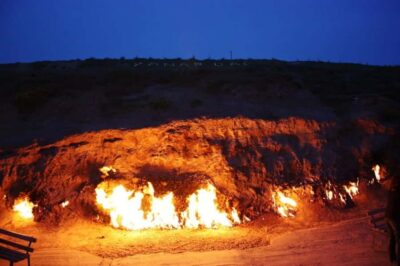
- Yanardag Burning Mountain
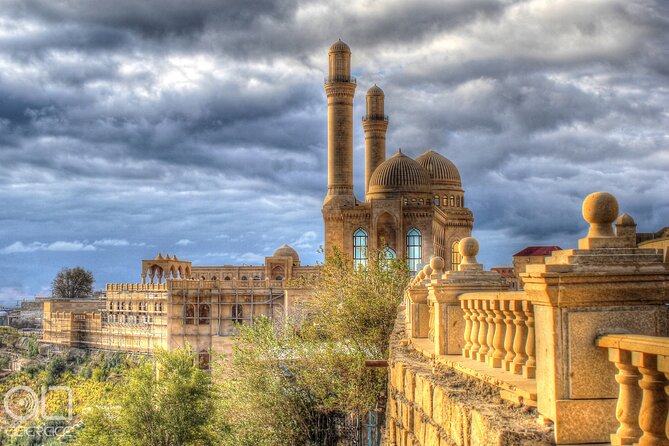
- Bibi-Heybat Mosque, plus a quick Gosha Gala Tower stop
- Gosha Gala Tower
- Bibi-Heybat Mosque
- Price, value, and what to budget beyond the $30 fare
- Who this trip suits best, and who might want something else
- Should you book this Gobustan and Absheron day trip?
- FAQ
- What does the tour include for the $30 price?
- Is lunch included?
- Are entry tickets included for the sites?
- How long is the tour?
- What’s the group size limit?
- What if the mud volcanoes or tour stops are affected by weather?
- Can I cancel and get a full refund?
Key highlights worth your attention
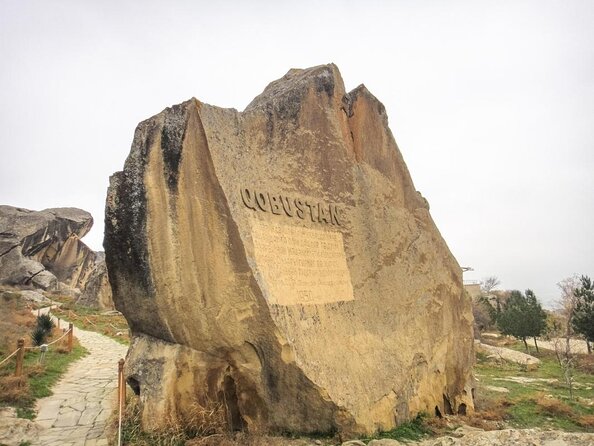
- UNESCO Gobustan rock engravings tied to 40,000 years of human activity (6,000+ rock engravings)
- Interactive Gobustan museum opened after a reconstruction, with lots of archaeological materials and touchscreen info
- Mud volcano access by Soviet SUV-style ride, aiming to get you close to active Yanardagh-type features
- Ateshgah fire temple connection to Persian fire worship traditions, plus its later Hindu and pilgrimage history
- Yanardag Burning Mountain flames, powered by natural gas leaks from beneath the hill
- Bibi-Heybat Mosque history dating back to the late 1200s, with a later recreation of the structure
Other ways to do the petroglyphs and the bubbling mud
- Baku: Gobustan, Mud Volcano, Fire Mount, Temple Lunch Entry
★ 4.9 · 3,246 reviews - BEST Gobustan, Volcanoes & Absheron Fire Tour (Group or Private)
★ 5.0 · 1,254 reviews - Gobustan and Absheron tour (All inclusive)
★ 5.0 · 1,014 reviews - Baku: Gobustan, Volcanoes, Fire Temple and Yanardag Day Trip
★ 4.7 · 433 reviews
Small-group tempo from Baku pickup to a full-day route
This tour runs about 8 hours with hotel pickup and drop-off, which matters in Baku because the city can be a traffic puzzle at the edges of the day. You start near the Old City area and move outward with an air-conditioned vehicle, then break into short stops for the main sights.
The group format is capped at 17 travelers, and the vibe is usually “guided and explained,” not “here’s a ticket, good luck.” That helps at places like Gobustan, where the carvings are easy to admire but harder to interpret unless someone walks you through what you’re looking at.
The biggest practical consideration is pacing. This is a concentrated loop. Each stop is short enough that you’ll see a lot, but long enough that you might still want more time for photos. If you’re the type who wants lingering, you’ll likely feel a small sense of rushing during transitions.
Gobustan rock art and the indoor museum that actually explains it
Gobustan is the anchor of this day. It’s the UNESCO site for rock engravings tied to around 40,000 years of rock art, with more than 6,000 engravings recorded across the reserve. You’re also dealing with more than “pictures on stones.” The area includes remains of inhabited caves, settlements, and burials, which is why the site is so important for understanding how people used this region across long time spans.
What I like about the way this day is structured is that you don’t rely on just one viewing style. You get time around the reserve and then you move into the modern museum complex. The indoor portion is set up to make the site feel less like a scatter of panels and more like an organized story: there are more than 100,000 archaeological materials in the museum collection, and the information center uses touchscreen displays with details in multiple languages.
At a minimum, you should come ready to look up and pay attention to shapes and patterns. Rock art is often about animals, symbols, and hunting scenes. Without guidance, it can feel repetitive. With a good guide, it becomes a timeline of human routines, tools, and belief systems.
Admissions are not included at the Gobustan stops in the provided itinerary details, so budget for that if you want to avoid surprises. Also, the visits at Gobustan are split into multiple segments, which can feel like “two stops with similar themes.” In practice, it works because one segment supports quick orientation and the other supports deeper context.
Mud volcanoes near Baku, and why the ride is part of the point
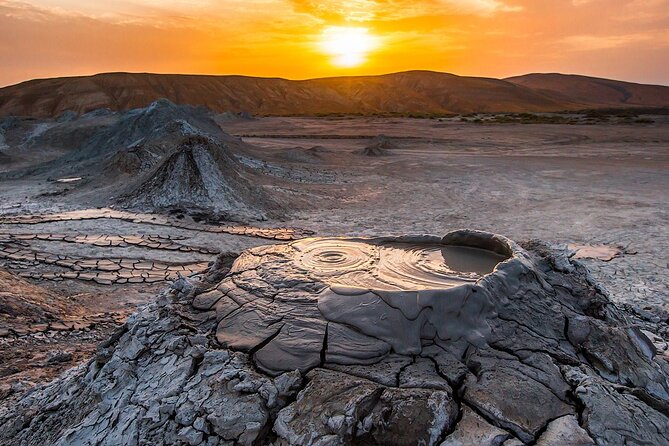
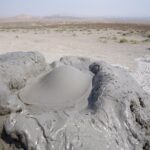
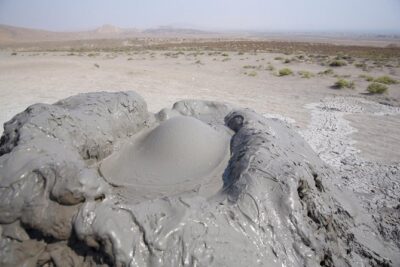
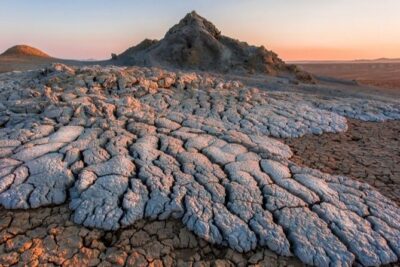
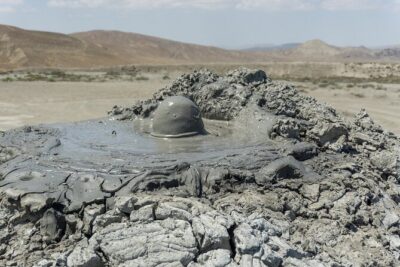
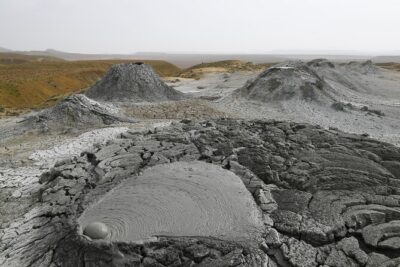
Mud volcanoes are one of those Azerbaijan facts that sounds fictional until you see it. The day focuses on the Gobustan area, where most of the country’s mud volcano activity concentrates. The provided route notes that Azerbaijan has 350 out of the world’s 800 mud volcanoes, and it also shares local names like Yanardagh (burning mountain), gaynacha (boiling water), and bozdag (grey mountain).
The tour approach is also practical. You go with specialized transport because of road conditions, and the itinerary specifies an extra car, described as a Soviet SUV type (Lada 4×4). That matters because the “close distance” part of the experience depends on getting off the main roads safely.
The big variable is that this stop is weather-dependent. If conditions are poor, you may not get the exact access you planned. One caution based on real-world outcomes: if mud volcano access is closed on the day, the tour may adjust. That could include being taken to a different spot, and you should be mentally ready for possible extra local transport costs if a detour is required.
My advice: if you’re visiting for the mud volcano highlight, bring patience. It’s a raw natural feature and access rules can tighten quickly. When it does work, seeing the ground and vents close up is the kind of experience that sticks in your memory far longer than a photo would.
Absheron Fire Temple at Ateshgah, then Yanardag’s burning hill
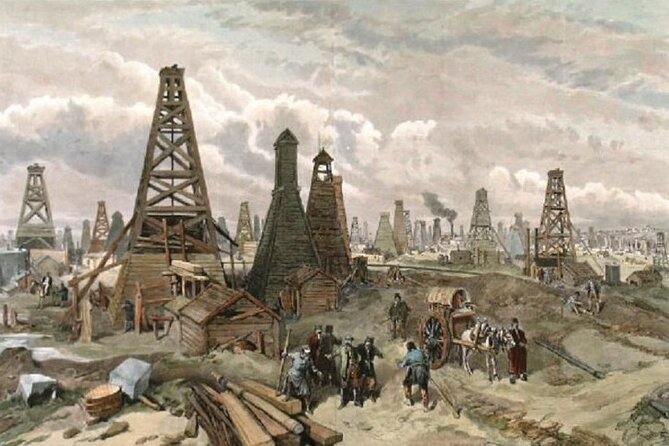
After Gobustan, the day pivots from prehistoric time to Azerbaijan’s “fire” identity. You’ll head into the Absheron region for lunch first, then tour Ateshgah and Yanardag, two sites with a strong connection to fire worship.
The fire sights, run by other operators
Ateshgah Fire Temple
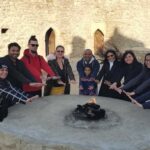
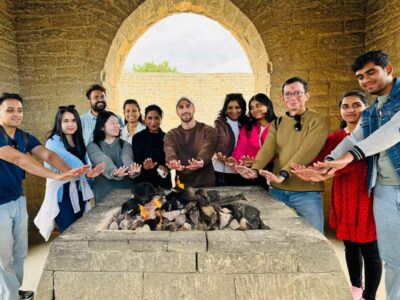
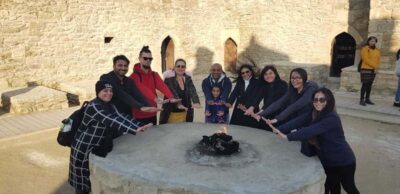
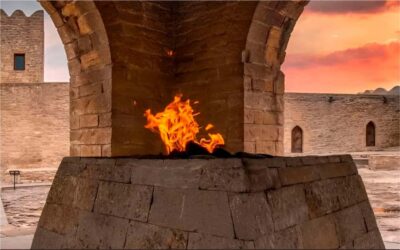
Ateshgah is described as a castle-like temple in Surakhani, a suburb of Baku. The story here is layered. Based on Persian and Indian inscriptions, the temple has been used as a place of worship in traditions linked to Zoroastrianism and Hindu fire worship. The route also notes that naturally burning flames were already present before the structure, and the temple’s form was built in the 17th to 18th centuries. Later, in the early 19th century, it received the form represented today.
Here’s why I think this stop is worth your time: you’re not just seeing ruins or a pretty building. You’re seeing how belief systems travel and adapt. The site became a pilgrimage place for fire-worshipping Hindus until the 1880s, and the temple’s identity stayed tied to fire long enough to remain a recognizable symbol.
One more practical point: admission is listed as not included for Ateshgah in the itinerary details, so check what you’ll pay on arrival.
Yanardag Burning Mountain
Then comes Yanardag, the famous burning hill about 23 km from the Old Town. The key feature is a hill with a constantly burning wall of flames. The provided information explains that tectonic shifts and volcanic material beneath the earth allow natural gas leaks to feed the fire.
This stop has two strengths. First, the visual is immediate. Second, it connects natural geology to human storytelling. The route mentions that Marco Polo observed flames in the area, and the fire is described as having burned for a very long time.
You’ll walk around the foot of the hill where the fire line is, and that gives you the effect of standing near active flames. Time is limited, so if you want the best photos, plan to arrive ready with your camera set and your angles in mind.
Bibi-Heybat Mosque, plus a quick Gosha Gala Tower stop
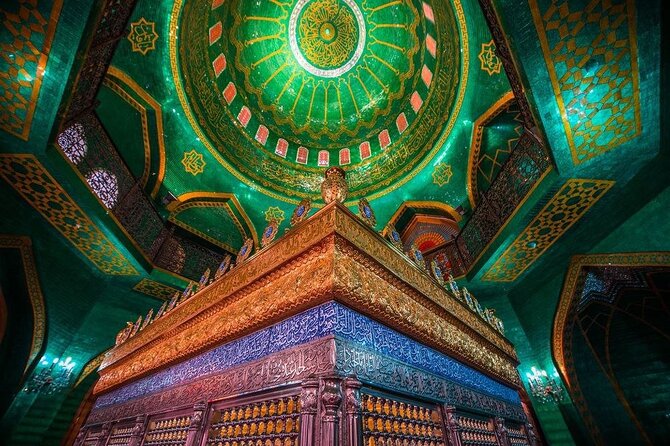
Not every stop in this day is about dramatic visuals. You also get a couple of shorter heritage moments that add balance.
Gosha Gala Tower
You start with a brief stop at Gosha Gala Tower. The schedule lists about 15 minutes, and it’s marked as admission free. The itinerary does not give more details on what you’ll do there, so treat it as a quick orientation or photo stop before the longer drives out to Gobustan and Absheron.
Bibi-Heybat Mosque
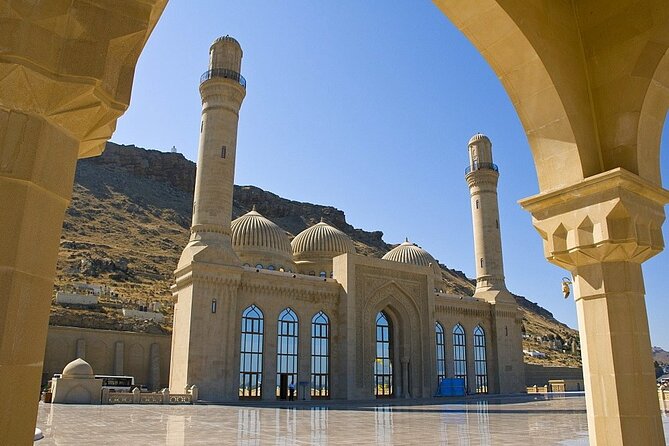
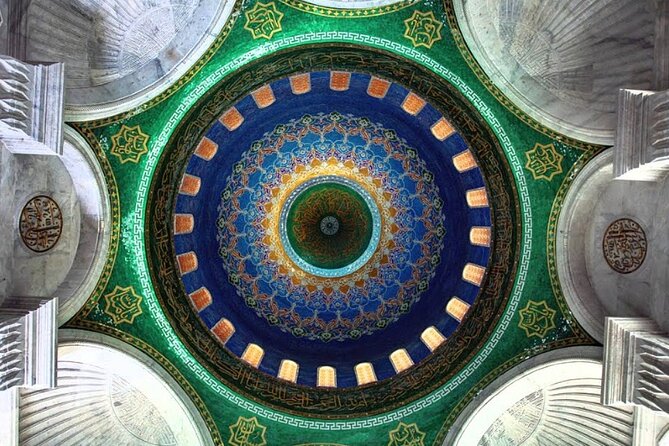
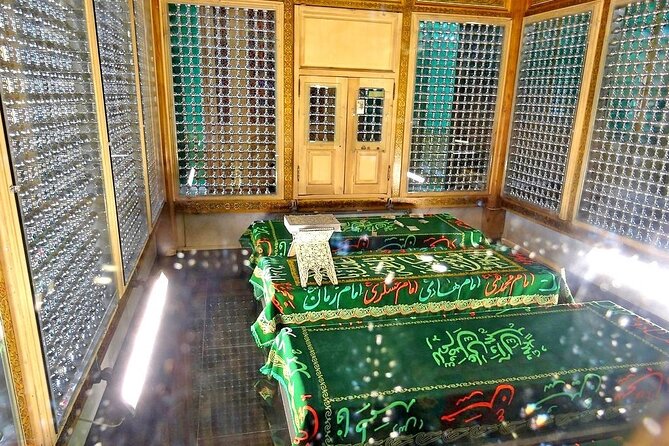
At the end of the day, you visit Bibi-Heybat Mosque, a building originally dated to 1267 to 1300. The route also notes that the mosque includes the tomb of Ukeyma Khanum, a descendant of Muhammad, and that it’s known locally as the mosque of Fatima. It also mentions that the current structure was built in the 1990s as a recreation of the older mosque.
This is a good final stop because it shifts you from geology and fire symbolism to a quieter religious architecture perspective. You’ll likely spend around 15 minutes, so come in with one goal: see the structure clearly, and take in the meaning of how old religious sites are preserved or recreated over time.
Price, value, and what to budget beyond the $30 fare
At $30 per person, this tour is priced like a value day trip, especially because it includes professional English or Russian guide service and hotel pickup and drop-off, plus an air-conditioned vehicle. The fact that it runs about 8 hours also helps. In cities where day tours can nickel-and-dime you on transport, “pickup included” is not a small detail.
But the itinerary and inclusion list also show clear gaps. Lunch is not included in the stated “Not Included” items, and the lunch stop in the schedule says lunch is extra. Some promotional wording may frame lunch as a set meal, but you should treat it as a cost you need to plan for.
Also, the itinerary repeatedly marks admissions at multiple stops as not included. That likely means you’ll pay entry fees for at least parts of Gobustan and for the Absheron sites like Ateshgah and Yanardag, depending on day-to-day requirements.
What that means for you, in plain terms:
- Plan on spending some extra cash for site entries
- Plan on paying for lunch
- Bring a small buffer if you end up with an alternate mud volcano option due to weather
If you do that, the base price makes sense. If you don’t, you might feel like the day costs more than expected once you arrive.
Who this trip suits best, and who might want something else
This is a great fit if you want a one-day hit of Azerbaijan’s two big themed stories:
- the ancient human story at Gobustan rock art
- the Land of Fire identity through Yanardag and Ateshgah
It also suits people who like guidance. The day is full of details that won’t land unless someone explains them. In past group experiences with English-speaking guides such as Seb, Ley, and Nazif, the strong point was interpretation, like how mud volcano eruptions work and how Zoroastrian themes show up at Ateshgah. You may get similar explanation styles depending on your guide.
If you’re the type who wants a slow pace, longer photo stops, or a deep museum session, this itinerary might feel tight. The schedule is designed for coverage, not lingering. In that case, consider pairing this with extra independent time in Baku afterward, so you’re not trying to “do it all” in a single day.
Should you book this Gobustan and Absheron day trip?
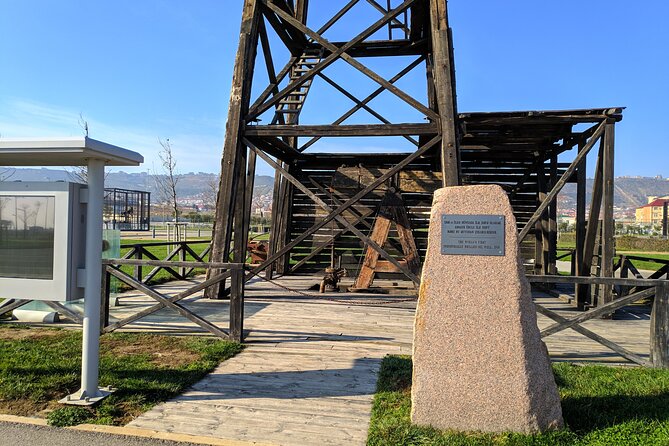
I’d book it if you want maximum variety in one day and you care about understanding what you’re seeing, not just taking a quick snapshot. The route is efficient: UNESCO rock art context in Gobustan, close access to mud volcano terrain when conditions allow, then the fire story of Ateshgah and Yanardag, capped with Bibi-Heybat Mosque.
Skip or rethink it if you hate weather uncertainty. The mud volcano stop depends on conditions, and the day can adjust. Also, if your budget is tight and you don’t want extra spending for admissions and lunch, this may feel better as a “plan ahead” tour rather than a true all-in bargain.
If you do book, go in with this simple game plan: bring money for admissions and lunch, set expectations for a fast pace, and treat the mud volcano segment like the star that needs flexible conditions. When it works, it’s a memorable Baku day with real personality.
FAQ
What does the tour include for the $30 price?
The price includes a professional guide service (English or Russian), an air-conditioned vehicle, and hotel pickup and drop-off.
Is lunch included?
No. Lunch is listed as extra, even though there is a lunch stop at a traditional restaurant during the day.
Are entry tickets included for the sites?
Most site admission tickets are listed as not included in the itinerary details. Expect to pay site fees on top of the tour price.
How long is the tour?
The duration is listed as about 8 hours.
What’s the group size limit?
The tour has a maximum of 17 travelers.
What if the mud volcanoes or tour stops are affected by weather?
The experience requires good weather. If it’s canceled due to poor weather, you’ll be offered a different date or a full refund.
Can I cancel and get a full refund?
Yes. You can cancel up to 24 hours in advance for a full refund. If you cancel less than 24 hours before the experience’s start time, the amount paid is not refunded.
The Rest of Our Azerbaijan Reviews

Ateshgah and Yanar Dag, Keep Reading
Gobustan, Three More Ways
More of Azerbaijan we have been out and written up
- The Magnificent Baku Night Tour★ 5.0 · 3 reviews
- Small-Group Day Trip to Gobustan, Mud Volcanoes, Ateshgah & Yanar Dagh★ 4.5 · 3 reviews
- Private Sheki Tour – Four Regions of Azerbaijan in one day★ 5.0 · 3 reviews
- Full Day Guided Tour of Shamakhi and Gabala★ 5.0 · 3 reviews
- Qobustan Absheron Full Day Tour★ 5.0 · 3 reviews
Gobustan Rock Art & Mud Volcanoes, compared.
 ★ 4.9Gobustan, Mud Volcano, Fire Mount, Temple Lunch EntryFrom $63,246 reviews
 ★ 5.0BEST Gobustan, Volcanoes & Absheron Fire Tour (Group or Private)From $331,254 reviews
 ★ 5.0Gobustan and Absheron tour (All inclusive)From $851,014 reviews
 ★ 4.7Gobustan, Volcanoes, Fire Temple and Yanardag Day TripFrom $29433 reviews
 ★ 4.5Gobustan & Mud, Fire Temple, Burning Mountain (Group & Private)From $10418 reviews
 ★ 4.9Gobustan Absheron Tour Entry Tickets includedFrom $6329 reviews
 ★ 5.0Gobustan-Mud Volcan-Fire Temple and Mountain Tour/Entrance incFrom $30267 reviews
 ★ 4.8Gobustan Mud Volcanoes Temple & Entry tickets includedFrom $9178 reviews
Browse the lists this tour appears in