
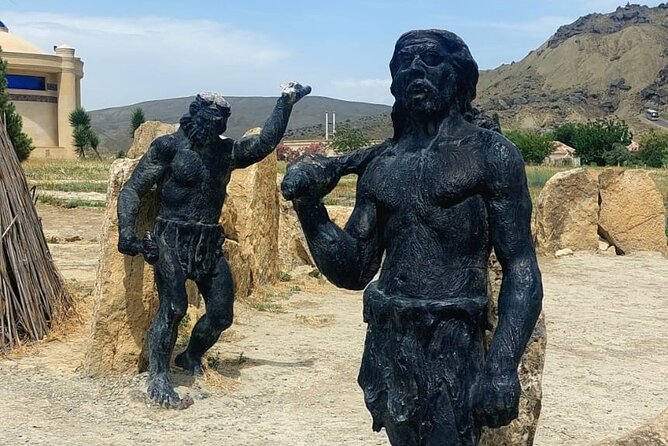
REVIEW · GOBUSTAN ROCK ART & MUD VOLCANOES
Gobustan Magic of Mud Volcanoes and Ancient Petroglyphs
Ancient rock art meets bubbling mud. This half-day trip ties together Gobustan Rock Art and the weird, wonderful Mud Volcanoes, with quick stops at Bibi-Heybat Mosque and the site linked to the world’s first oil well. I love how the guide turns big topics into clear stories, and I love that the schedule hits both ancient life and Azerbaijan’s oil age without dragging you all day. One thing to consider: the whole outing is about 5 hours, so you will be moving at a steady pace and won’t linger forever at any single stop.
In my view, the best value is the combination: tickets and key transport bits are handled for you, and the itinerary is designed for seeing the highlights efficiently. If you prefer slow museum time or long photo breaks, plan on being a bit selective about what you prioritize on the day.
In This Review
- Gobustan Magic and Oil Age Stops, All in One Morning
- Key Things You Should Expect on This 5-Hour Tour
- Gobustan Rock Art Reserve: Petroglyphs, Romans, and Arabic “Autographs”
- Mud Volcanoes: Bubbling Clay, Smoke, and the Off-Road Ride
- Bibi-Heybat Mosque: A Quick Visit With Real Weight
- World’s First Oil Well Site: 1846 and Pumps That Tell a Story
- Price and Value: Is $65.55 a Fair Deal?
- Timing and Logistics: How the Day Feels in Real Life
- Who This Tour Suits Best (and Who Might Prefer Something Else)
- Should You Book Gobustan Magic of Mud Volcanoes and Ancient Petroglyphs?
- FAQ
- How long is the Gobustan Magic of Mud Volcanoes and Ancient Petroglyphs tour?
- What time does the tour start, and where does it meet?
- Is pickup available?
- What is included in the price?
- Are tickets included for all stops?
- Is lunch included?
- Is this a group tour or private?
Gobustan Magic and Oil Age Stops, All in One Morning
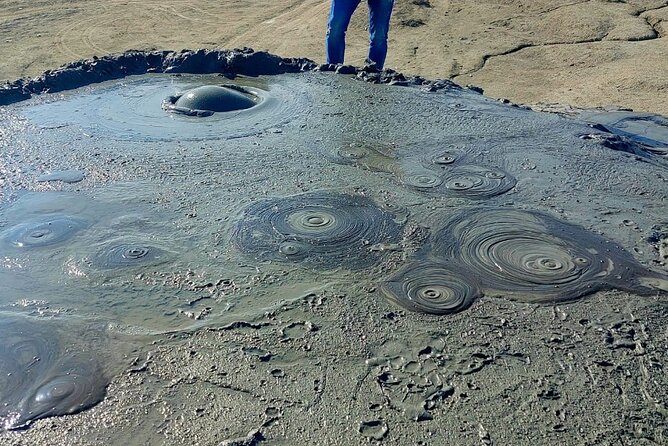
This is a private, group-only tour, so you are not waiting around for other people to catch up. It starts at 9:00 am at Nizami Gardens in Sabayil, Baku, and returns you there at the end. You get pickup offered, an air-conditioned vehicle, bottled water, and a mobile ticket, which makes the day feel organized from the first minute.
The rhythm is straightforward: 2 hours at Gobustan Rock Art, 1 hour for the mud volcano area, then shorter cultural and historical stops. It is a smart format if you want variety, including prehistory, Roman-era graffiti, Islamic architecture, and the early oil story tied to 1846.
From the kind feedback I saw attached to this experience, one theme comes through: organization and warmth from the guide. In particular, the name Mr. Jabrial shows up in the feedback as someone who keeps things easy to follow and makes the stories land. That matters because sites like Gobustan can feel abstract if you only read a sign. With a guide setting the scene, you get the meaning behind the marks and inscriptions.
Other ways to do the petroglyphs and the bubbling mud
- Baku: Gobustan, Mud Volcano, Fire Mount, Temple Lunch Entry
★ 4.9 · 3,246 reviews - BEST Gobustan, Volcanoes & Absheron Fire Tour (Group or Private)
★ 5.0 · 1,254 reviews - Gobustan and Absheron tour (All inclusive)
★ 5.0 · 1,014 reviews - Baku: Gobustan, Volcanoes, Fire Temple and Yanardag Day Trip
★ 4.7 · 433 reviews
Key Things You Should Expect on This 5-Hour Tour
- Gobustan museum ticket included with dedicated time at the rock art reserve
- Off-road car payment included for reaching the mud volcano area
- Bibi-Heybat Mosque and the world’s first oil well site are free entry stops
- Air-conditioned vehicle and bottled water so you stay comfortable between sites
- Private tour format, only your group rides together
- Steady pacing, built for seeing four major stops in one morning
Gobustan Rock Art Reserve: Petroglyphs, Romans, and Arabic “Autographs”
Gobustan Rock Art Reserve is the reason many people choose this tour, and it is easy to see why. You get about 2 hours here, which is enough time to see the main panels, understand the recurring themes, and notice the smaller details that make the site feel alive.
This reserve is known for the largest collection of rock paintings and petroglyphs in the region, made over thousands of years. The scenes are not generic. You will see images tied to daily life and rituals like hunting and fishing, plus ritual dances and stories that include bride kidnapping. Even if you have only a short attention span, you will find something to look at constantly, because the art repeats in ways that show the same community returning to these walls again and again.
One standout detail is the Roman-era element. At the foot of Mount Boyuk-Dash, a centurion named Livus Maximus from the XII Lightning Legion (1st century AD) left an “autograph.” It is described as the easternmost of the Roman inscriptions in that region, and that fact alone gives you an extra layer to the site. You are standing in a landscape that spans local prehistory, then later outside influences.
The guide also points out smaller inscriptions in Arabic, with short phrases like Came, prayed, left, plus images of men in turbans. That mix of local tradition, Roman presence, and later Islamic-era language is why Gobustan feels like a timeline carved into stone. You are not just looking at old pictures. You are tracking who came, what they valued, and how their world overlapped.
What can be tricky: rock art reading needs your attention. The panels can be weathered, and not every mark will look dramatic at first glance. Bring a patient mindset and trust the guide to direct your eyes to the most meaningful sections. If you hate walking outdoors for any reason, this stop is your biggest commitment.
Mud Volcanoes: Bubbling Clay, Smoke, and the Off-Road Ride
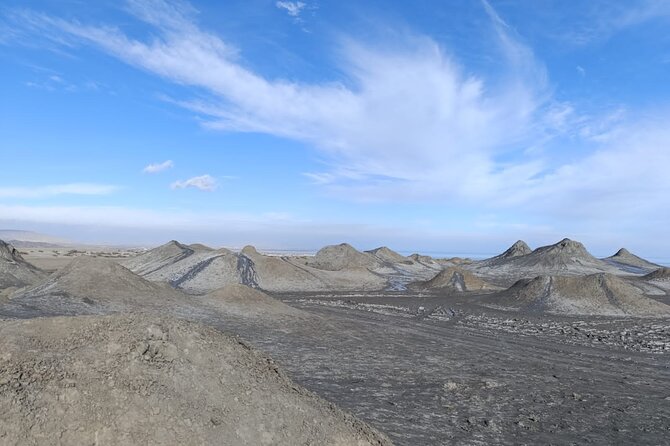
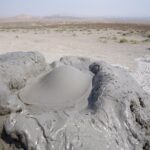
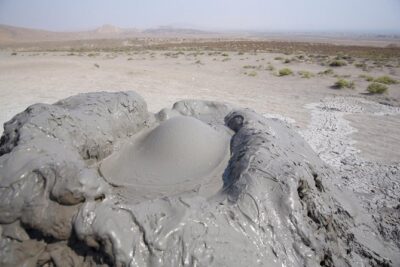
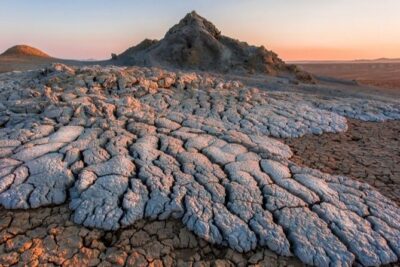
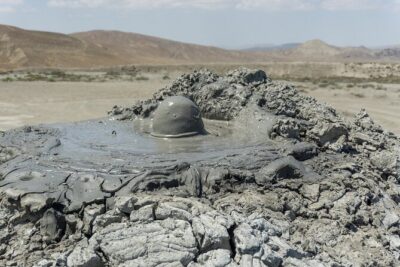
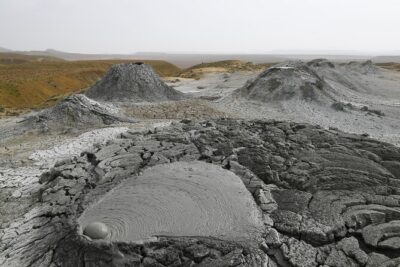
After Gobustan, you head toward the mud volcanoes. Along the way, you might notice small volcanic cones even from a distance, which is a good sign you are in the right place. Sometimes you can see smoke or bubbling clay, and that visual effect is the main payoff here. It looks like something from a science documentary, except you are standing in the real thing.
You get about 1 hour for this stop. That is a practical amount of time because you are not only sightseeing, you are also spending some of that hour adjusting to the terrain and watching the ground activity. You should also expect an off-road component here. The tour includes payment for the off-road car, which helps you avoid spending your morning on the hardest logistics.
What you might like most is how the mud volcanoes connect to the broader oil story of Azerbaijan without needing a textbook. Mud volcanoes are not “oil wells,” but they point you toward the same geologic world that made oil exploration possible later. With a guide explaining the links, the sights start to feel like chapters in one connected story, not separate attractions.
A possible drawback: the itinerary does not include lunch, and this is the kind of stop where you might get warm while standing and looking. Bring your appetite plan for after the tour, or grab a snack before you go if you know you will feel hungry.
Bibi-Heybat Mosque: A Quick Visit With Real Weight
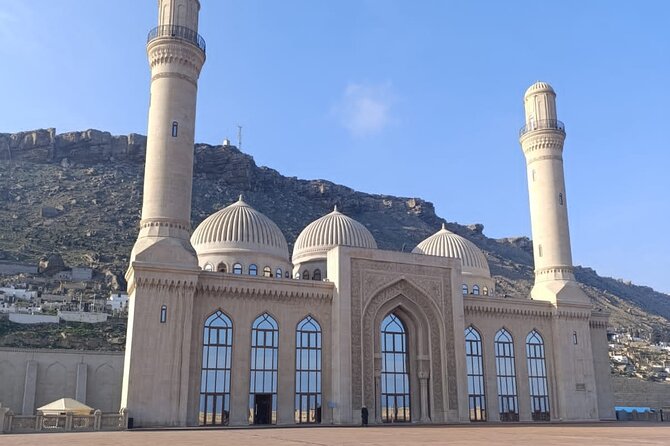
Then comes a shorter stop at the Bibi-Heybat Mosque. You have around 20 minutes, and the mosque entry is free. This is not a “slow contemplation” visit, but it is still worth it because the mosque is described as the pearl of Islamic architecture, and you can feel that even in a short walk-by.
If you only do one thing at this stop, do this: pause long enough to notice the details the guide directs your attention to. Islamic architecture rewards close observation, even when time is limited. The value here is the context. When you understand the mosque’s role and what makes it architecturally significant, the stop turns from a quick photo break into a meaningful anchor for the morning.
The drawback is obvious: 20 minutes can feel short. If you are the type who likes to read every sign and linger inside sacred spaces, this might leave you wanting more. Still, as a complement to the bigger Gobustan and mud volcano sections, it works well as a “taste” stop.
World’s First Oil Well Site: 1846 and Pumps That Tell a Story
The final major stop is linked to the world’s first oil well, drilled in 1846. It is also a quick one, around 20 minutes, and this stop is free entry.
Oil is part of Azerbaijan’s identity, and this site helps you see how quickly the country’s story shifted once drilling began. You will look at oil pumps that are described as reminiscent of Azerbaijan’s oil history. Even if the area is not a full museum experience in the time you have, it still gives you a clear visual cue: this is where the modern oil age becomes real on the ground, not just in a book.
This is the moment where the whole tour clicks. You started with human life painted into stone, then you watched a natural phenomenon driven by geology, then you stepped into Islamic architectural significance, and now you see the industrial turning point tied to 1846. For many people, that chain is what makes this tour memorable.
Price and Value: Is $65.55 a Fair Deal?
At $65.55 per person, this tour is priced in a way that can feel either like a bargain or like a “why not” depending on what you would otherwise pay separately. The main reason it can be good value is that key pieces are included.
Here is what you get included:
- Bottled water
- Air-conditioned vehicle
- Tickets to the Gobustan museum
- Off-road car payment to Mud Volcanoes
Also important: the two last stops (Bibi-Heybat Mosque and the world’s first oil well site) are free, so you are not paying extra admission fees there. The only clear missing piece is lunch, and the tour also notes that all fees and taxes are not included. That means your final total might be affected by what your booking summary shows, so it is worth checking the checkout breakdown.
To think about value in plain terms: you are paying for a guided, timed route that covers a lot of ground in about 5 hours. If you tried to DIY these stops in one day, you would spend time figuring out transport and you might end up paying for individual tickets and possibly an off-road transfer anyway. When the guide handles that, the $65.55 starts to look more sensible.
Timing and Logistics: How the Day Feels in Real Life
With a 9:00 am start and roughly 5 hours total, this is a morning-first outing. That is useful because you get the sites while the day is still fresh. You also avoid the problem of dragging the tour across multiple meal times, since lunch is not included and your schedule does not pretend it is.
You will want to keep a few practical things in mind:
- Wear comfortable walking shoes, because rock art viewing involves moving on uneven ground.
- Bring sun protection, especially for the outdoor stops.
- If you hate tight turns between sites, focus on one or two “must-see” moments in Gobustan and let the guide help the rest fall into place.
The tour is also listed as “near public transportation,” which is helpful if you are the type who likes to confirm you have a backup way to arrive.
One more detail that matters for comfort: this is a private tour, so your group stays together in the vehicle and at the stops. That cuts down on waiting and helps keep the pace consistent.
Who This Tour Suits Best (and Who Might Prefer Something Else)
I think this fits best if you want:
- A guided explanation for Gobustan’s petroglyphs and inscriptions
- A single-day structure that covers prehistory, geology, Islamic architecture, and early oil history
- Efficient time use, without trying to stitch together four separate half-days
It might be less ideal if you:
- Want a long, quiet museum-like experience at one location
- Prefer a tour that includes lunch or longer breaks
- Strongly dislike outdoor walking and photo pauses
If you are traveling with kids, it can still work because the visuals are immediate. Just know that the timing is built for momentum. The guide can likely adjust how stories are told based on age and interests, since the tour is described as adapted to your preferences.
Should You Book Gobustan Magic of Mud Volcanoes and Ancient Petroglyphs?
Book it if you want one morning in Baku that feels like a story with chapters, not a checklist. The biggest selling points are the Gobustan Rock Art time, the mud volcano experience with off-road access handled, and the way the itinerary ties those scenes to Azerbaijan’s later history, including the 1846 oil well reference.
Skip it or reconsider if you need lots of downtime, long indoor time, or lunch included. The tour is efficient by design, and that efficiency is exactly what makes it valuable.
If you are deciding, here is my quick rule: if you like seeing multiple eras in one go, and you appreciate a guide who makes signs and symbols understandable, you will probably feel satisfied when the tour ends back at Nizami Gardens. And with cancellation being flexible up to a day before the start, you have some room to plan confidently.
FAQ
How long is the Gobustan Magic of Mud Volcanoes and Ancient Petroglyphs tour?
It lasts about 5 hours.
What time does the tour start, and where does it meet?
The tour starts at 9:00 am at Nizami Gardens, Sabayil, Baku 1005, Azerbaijan, and it ends back at the same meeting point.
Is pickup available?
Yes, pickup is offered.
What is included in the price?
The tour includes bottled water, an air-conditioned vehicle, tickets to the Gobustan museum, and the off-road car payment to Mud Volcanoes. Mobile ticket is also provided.
Are tickets included for all stops?
Admission to the Gobustan museum is included. The Mud Volcanoes admission ticket is not included, while Bibi-Heybat Mosque and the world’s first oil well site are listed as free.
Is lunch included?
No, lunch is not included.
Is this a group tour or private?
It is a private tour/activity, meaning only your group participates.
The Rest of Our Azerbaijan Reviews

Gobustan, Three More Ways
More of Azerbaijan we have been out and written up
- The Magnificent Baku Night Tour★ 5.0 · 3 reviews
- Small-Group Day Trip to Gobustan, Mud Volcanoes, Ateshgah & Yanar Dagh★ 4.5 · 3 reviews
- Private Sheki Tour – Four Regions of Azerbaijan in one day★ 5.0 · 3 reviews
- Full Day Guided Tour of Shamakhi and Gabala★ 5.0 · 3 reviews
- Qobustan Absheron Full Day Tour★ 5.0 · 3 reviews
Gobustan Rock Art & Mud Volcanoes, compared.
 ★ 4.9Gobustan, Mud Volcano, Fire Mount, Temple Lunch EntryFrom $63,246 reviews
 ★ 5.0BEST Gobustan, Volcanoes & Absheron Fire Tour (Group or Private)From $331,254 reviews
 ★ 5.0Gobustan and Absheron tour (All inclusive)From $851,014 reviews
 ★ 4.7Gobustan, Volcanoes, Fire Temple and Yanardag Day TripFrom $29433 reviews
 ★ 4.5Gobustan & Mud, Fire Temple, Burning Mountain (Group & Private)From $10418 reviews
 ★ 4.9Gobustan Absheron Tour Entry Tickets includedFrom $6329 reviews
 ★ 5.0Gobustan-Mud Volcan-Fire Temple and Mountain Tour/Entrance incFrom $30267 reviews
 ★ 4.8Gobustan Mud Volcanoes Temple & Entry tickets includedFrom $9178 reviews
Browse the lists this tour appears in