
REVIEW · GOBUSTAN ROCK ART & MUD VOLCANOES
Qobustan rock arts, Mud Volcanoes, Fire temple Ateshgah, Yanardag
Fire, flame, and ancient carvings in one day. This excursion strings together real-world gas-burner fire worship at Ateshgah with the UNESCO scale of Gobustan rock art, so the stories feel physical, not just read-off-a-sign. I especially love how the guide connects Zoroastrian beliefs about fire to the exact natural phenomena you’re standing next to.
The best part for me is the pace and comfort. You go in an air-conditioned private vehicle with a professional multilingual guide, and it stays focused instead of turning into a long bus tour. One thing to consider: lunch is not included, and there can be small extra costs for museum tickets.
In This Review
- Key highlights I’d plan around
- Why this Baku fire and rock-art day makes sense
- Ateshgah Fire Temple: when underground gas becomes sacred
- Yanardag’s eternal flame: a tiny stop with big meaning
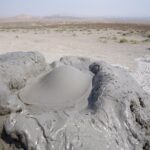
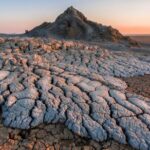
- Mud volcanoes: geology that looks theatrical
- Gobustan National Preserve Museum: UNESCO rock art at human scale
- Price and logistics that actually affect your decision
- The vibe: what it feels like on the day
- Who should book this tour (and who might skip it)
- Should you book this Baku excursion?
- FAQ
- How much does the tour cost?
- How long is the experience?
- Is pickup offered, and is the tour private?
- Do I get a mobile ticket?
- Are museum tickets included in the price?
- Is lunch included?
- What if the weather is poor?
- Is this tour available every day?
Key highlights I’d plan around
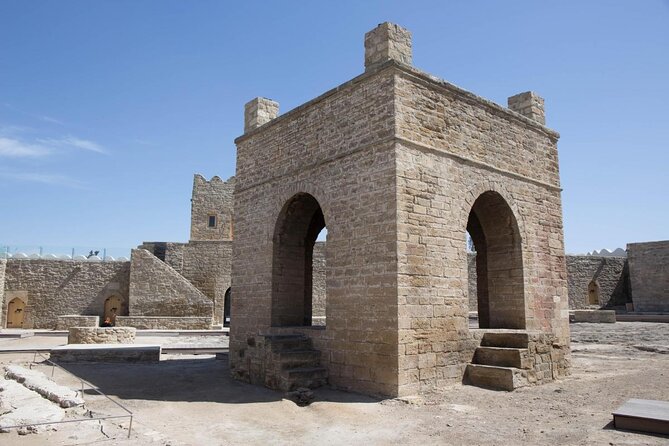
- Ateshgah Fire Temple: an old sacred site tied to Zoroastrians, and later rebuilt in the 17th to 18th centuries by a Baku Hindu community with links to Sikhs
- Yanardag’s eternal flame: a short stop that packs in a big cultural idea, fire as a sign of divine power
- Mud volcanoes: see geology tied to oil and gas, with a sense of how these eruptions can be useful far beyond sightseeing
- UNESCO Gobustan: dense rock art on a massive open-air canvas, plus a museum stop to make sense of what you’re seeing
- Private group up to 7: easier questions, quieter photos, and less waiting than big tours
- Pickup and onboard WiFi: practical comfort for a 9-hour day
Other ways to do the petroglyphs and the bubbling mud
- Baku: Gobustan, Mud Volcano, Fire Mount, Temple Lunch Entry
★ 4.9 · 3,246 reviews - BEST Gobustan, Volcanoes & Absheron Fire Tour (Group or Private)
★ 5.0 · 1,254 reviews - Gobustan and Absheron tour (All inclusive)
★ 5.0 · 1,014 reviews - Baku: Gobustan, Volcanoes, Fire Temple and Yanardag Day Trip
★ 4.7 · 433 reviews
Why this Baku fire and rock-art day makes sense
Baku can be a little tricky for short visits. You get a few days, then you feel torn between architecture, seaside views, and the long list of nearby sites. This is a smart fix because it groups three Azerbaijan themes into one tight route: fire, geology, and prehistoric art.
What makes it especially satisfying is that nothing feels like a random stop. Ateshgah explains why fire mattered to people living here long ago. Yanardag shows the same idea at the scale of a burning mountain. Then the mud volcanoes shift the lesson from spirituality to science, where oilfields and underground gases drive spectacular eruptions. Finally, Gobustan ties it all back to humans, with rock carvings that are not just pretty, they’re evidence of how people lived and recorded life.
Ateshgah Fire Temple: when underground gas becomes sacred
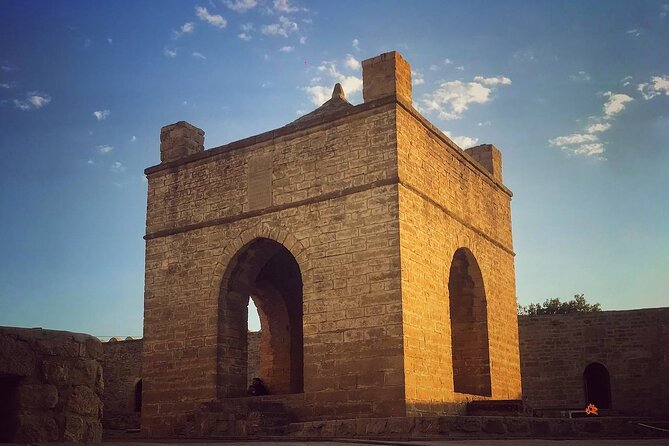
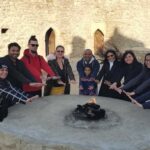
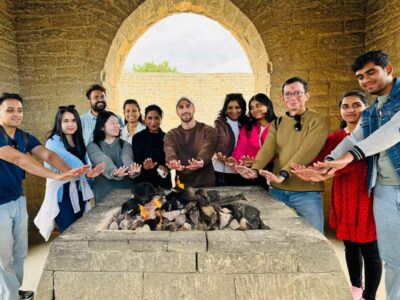
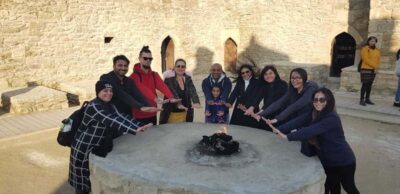
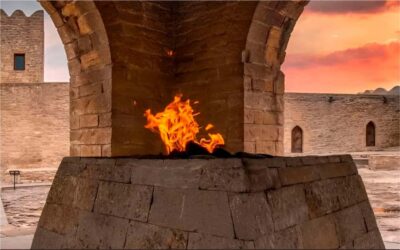
At Ateshgah, the star is the fire you see rising from natural gas outlets. This isn’t the kind of museum fire you have to pretend is real. Here, the flame exists because underground gas reaches the surface and ignites in the open air.
The current temple structure dates to the 17th to 18th centuries, but the site’s importance goes back much earlier. It was a holy place for Zoroastrians, the fire worshippers, and they treated the inextinguishable flame as something more than a natural trick. You also learn how the building you see today reflects layers of community history, including construction by a Baku-based Hindu community connected to Sikhs.
That mix is what I like about Ateshgah. It helps you understand Azerbaijan’s cultural crossroads without getting lost in heavy dates. You get a clear story: fire was meaningful, people kept returning, and later communities shaped the place into a temple form you can recognize today.
Practical note: the stop is short, so don’t expect a long, slow wander. Do your questions early, and use the time you’re given to look carefully at how the site is organized around the flame.
Yanardag’s eternal flame: a tiny stop with big meaning
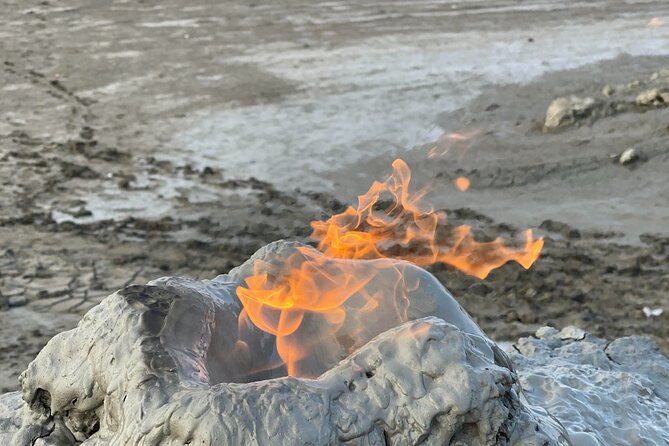
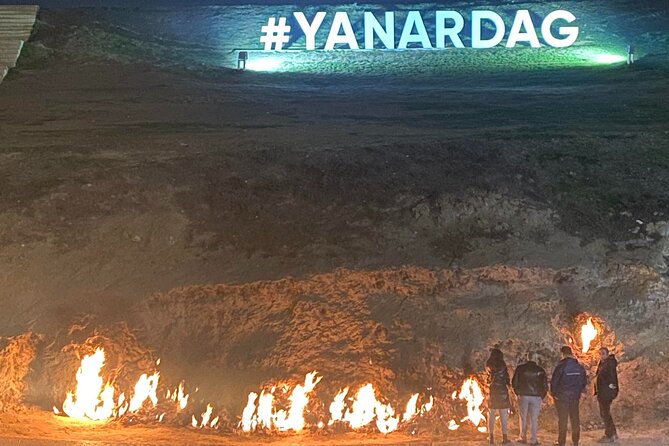
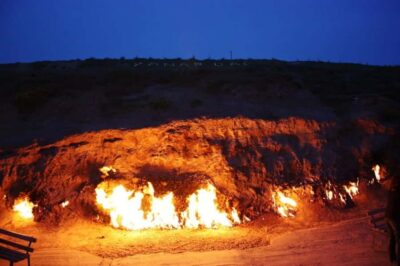
Yanardag is one of Azerbaijan’s most famous “eternal flame” sites, and the reason is simple. You’re at a mountain where fire burns continuously, and the cultural explanation connects directly back to Zoroastrian fire worship.
In older times, people believed that sources of fire were connected to divine power. That belief led to altars and temples, because fire wasn’t just useful, it was spiritual. Standing at Yanardag, you can see why someone would build a tradition around something that feels unstoppable.
This stop is brief, so it works best if you travel in a calm mode. Don’t rush your photos. Instead, slow down for a minute and really match what you’re seeing to the cultural story your guide explains. That is what turns Yanardag from a quick view into a real stop.
Mud volcanoes: geology that looks theatrical
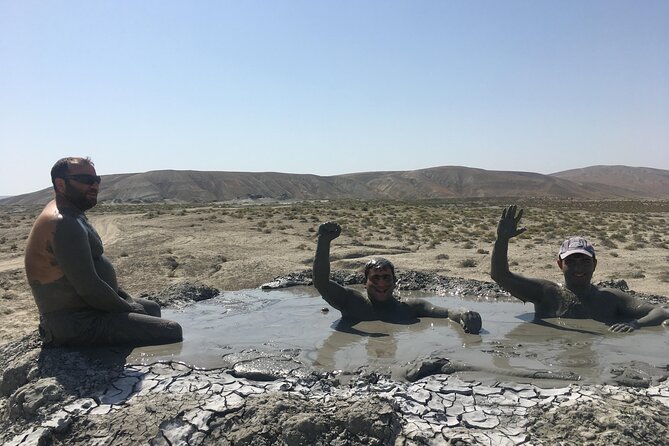
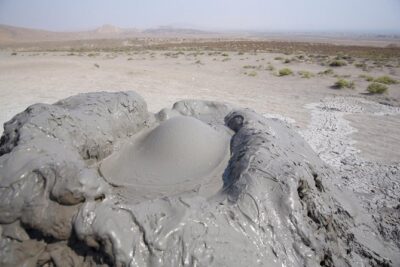
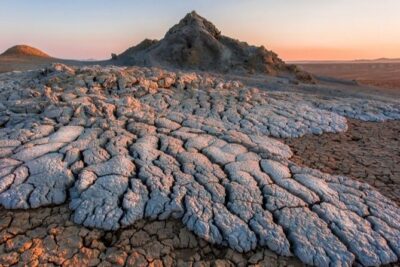
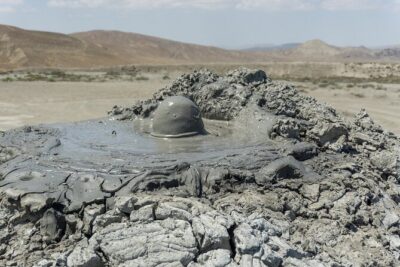
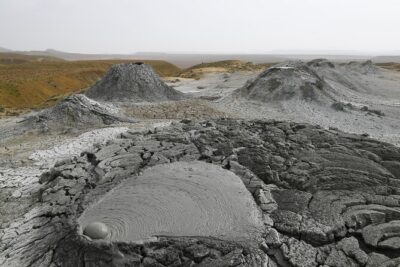
If you like nature that feels a bit too dramatic to be real, mud volcanoes are your moment. Azerbaijan has a huge number of them. The numbers here are eye-catching: 350 of the world’s 800 mud volcanoes are in Azerbaijan.
You’ll also hear the long timeline. Mud volcano activity in this region is said to have started around 25 million years ago. That’s the kind of fact that helps you understand you’re not looking at a recent novelty, you’re looking at a long-running process.
Here’s the practical layer the guide adds. Mud volcanoes are associated with oilfields. That connection matters because it links the landscape to Azerbaijan’s oil and gas reality. On top of that, eruptions of mud, lava-like material, and liquids are used as raw materials in chemical and construction industries, and even in pharmacology.
I also like that the stop gives you more than visuals. There’s a fun note included about NASA geologists studying Mars, which points to why scientists take this kind of terrain seriously. Even without going into deep technical details, you come away understanding that the mud volcanoes are not just scenery. They’re a natural laboratory.
One consideration: this part of the day depends on the conditions you’re in. The tour is described as requiring good weather, so keep that in mind for the mud and outdoor time.
The fire sights, run by other operators
Gobustan National Preserve Museum: UNESCO rock art at human scale
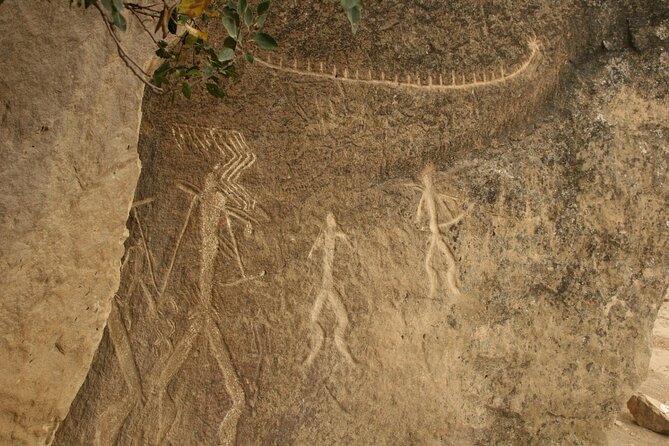
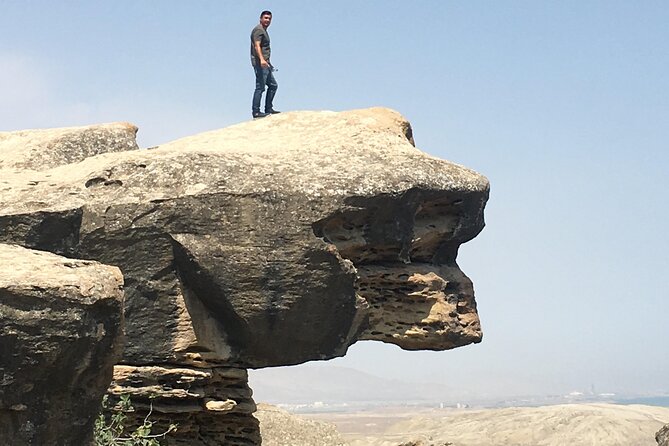
Gobustan is where the tour turns from “wow, fire and nature” to “wow, people and time.” The National Historical-Artistic Preserve is an open-air museum located about 60 km from Baku. It’s on the UNESCO World Heritage list, specifically recognized for the quality and density of its rock art engravings.
The numbers alone are impressive: more than 6,000 drawings on about 1,000 rocks, plus over 100,000 artefacts. But what you should take from those stats is this: the site is packed. You’re not visiting a couple of carvings. You’re walking through a place where humans left marks repeatedly.
The museum stop helps you decode what you’re looking at. Without that context, rock art can feel like abstract shapes. With it, you start seeing patterns and understanding why the area mattered to ancient people who lived here.
This is also an easy place to get real value because it’s both outdoors and interpretive. You get the open-air feel of the preserve, then you use indoor explanation to anchor your understanding before or after the main viewing.
If you’re short on time in Baku, Gobustan is the kind of UNESCO site that can justify a day trip. It’s distinct from the usual city sightseeing and it gives your trip a cultural depth you can’t fake with postcards.
Price and logistics that actually affect your decision
This tour is priced at $250 per group, up to 7 people. On paper, that makes it feel like a small-group deal, not a typical per-person sightseeing price. If your group fills close to 7, it works out to roughly $36 per person. If you’re traveling as 2 or 3, it’s more like you’re paying for convenience and private time rather than the lowest possible cost.
What you’re getting for that price is meaningful:
- Air-conditioned vehicle
- Professional, multilingual guide
- Private transportation
- WiFi on board
- Pickup offered
- Mobile ticket
What you should budget for separately:
- Lunch is not included
- Museum tickets are not included, with a note that total museum tickets cost around $15 USD per person (for the total for one person, as listed)
Timing matters too. The tour runs about 9 hours. That makes it a true day trip, not a quick add-on. It’s also noted that the experience is typically booked about 11 days in advance, so if your dates are tight, it’s smart to reserve earlier rather than later.
As for daily operation, the info lists hours 9:00 AM to 6:00 PM, Monday through Sunday, which gives you flexibility for different travel schedules.
The vibe: what it feels like on the day
Because it’s a private group limited to 7, the day usually stays efficient. You’re not stuck waiting for strangers, and questions feel easy. That matters for places like Ateshgah and Gobustan, where the best part is understanding what you’re seeing.
The tour also keeps a clear rhythm. You do a fire temple first, then a quick flame stop, then you shift to active geology, and finally you land in the UNESCO rock art world. That arc helps you connect the dots between culture, nature, and time.
WiFi and air-conditioning sound like small perks until you remember the total time adds up. A 9-hour day in Baku can be tiring, so having that comfort helps you stay sharp for the outdoor stops.
Who should book this tour (and who might skip it)
You should book if:
- You want a high-contrast day from fire sites to UNESCO rock art
- You like explanations from a local guide and want the context, not just photos
- You’re short on time and want a single route that covers the region’s big themes
You might skip it if:
- You’re hoping for a relaxed, unstructured day with long wandering time at each site. This is more of a tight, guided overview.
- You want lunch included in the price, since you’ll need to plan food on your own.
Should you book this Baku excursion?
I think it’s a great choice for most first-timers because it teaches you something real in a short day. You get Ateshgah’s story of fire and later community rebuilding, Yanardag’s visible eternal flame tied to Zoroastrian beliefs, mud volcanoes that connect nature to oilfields and even applied uses, and Gobustan’s UNESCO rock art that anchors the whole region in human history.
If you’re booking for a couple, it’s still good value for a private day with pickup and a guide. Just plan for lunch and budget for the museum tickets note. And because the tour is weather-dependent, try to choose days when forecasts look kinder.
If you want a single day that feels uniquely Azerbaijani, this is one of the cleaner ways to do it.
FAQ
How much does the tour cost?
It costs $250 per group, up to 7 people.
How long is the experience?
The duration is about 9 hours.
Is pickup offered, and is the tour private?
Pickup is offered, and it’s a private tour. Only your group participates.
Do I get a mobile ticket?
Yes, the tour includes a mobile ticket.
Are museum tickets included in the price?
No. Museum tickets are not included, and the tour notes a total cost of around $15 USD per person for museum tickets.
Is lunch included?
No, lunch is not included.
What if the weather is poor?
The tour requires good weather. If it’s canceled due to poor weather, you’ll be offered a different date or a full refund.
Is this tour available every day?
Yes. The listed operating hours are Monday through Sunday, from 9:00 AM to 6:00 PM.
The Rest of Our Azerbaijan Reviews

Ateshgah and Yanar Dag, Keep Reading
Gobustan, Three More Ways
More of Azerbaijan we have been out and written up
- The Magnificent Baku Night Tour★ 5.0 · 3 reviews
- Small-Group Day Trip to Gobustan, Mud Volcanoes, Ateshgah & Yanar Dagh★ 4.5 · 3 reviews
- Private Sheki Tour – Four Regions of Azerbaijan in one day★ 5.0 · 3 reviews
- Full Day Guided Tour of Shamakhi and Gabala★ 5.0 · 3 reviews
- Qobustan Absheron Full Day Tour★ 5.0 · 3 reviews
Gobustan Rock Art & Mud Volcanoes, compared.
 ★ 4.9Gobustan, Mud Volcano, Fire Mount, Temple Lunch EntryFrom $63,246 reviews
 ★ 5.0BEST Gobustan, Volcanoes & Absheron Fire Tour (Group or Private)From $331,254 reviews
 ★ 5.0Gobustan and Absheron tour (All inclusive)From $851,014 reviews
 ★ 4.7Gobustan, Volcanoes, Fire Temple and Yanardag Day TripFrom $29433 reviews
 ★ 4.5Gobustan & Mud, Fire Temple, Burning Mountain (Group & Private)From $10418 reviews
 ★ 4.9Gobustan Absheron Tour Entry Tickets includedFrom $6329 reviews
 ★ 5.0Gobustan-Mud Volcan-Fire Temple and Mountain Tour/Entrance incFrom $30267 reviews
 ★ 4.8Gobustan Mud Volcanoes Temple & Entry tickets includedFrom $9178 reviews
Browse the lists this tour appears in