
REVIEW · ABSHERON PENINSULA & FIRE TEMPLES
Baku: Atashgah Fire Temple & Burning Mountain Half-Day Tour
It is easy to see why Baku is called the land of fire. In just 3 hours, you get two different gas-fueled sites, plus a guide to connect the dots between faith, geology, and local legend. What I like most is the Ateshgah Fire Temple set up, with that central flame venting from natural gas, and the fact you are not just standing around, you are actually learning what you are looking at. One thing to consider, based on past logistics hiccups, is that start times can be tight, so build in a little buffer.
The best part is how the tour turns two famous stops into one story. Ateshgah, built by Indian merchants in the 18th century, shows you a place that looks like a small fortress and still uses that gas-fed fireplace setup. Then Yanardag, the burning mountain where natural gas leaks from rocks, gives you the outdoors version of the same idea, including the detail that Marco Polo mentioned the flames.
My only caution is timing and organization. If your day is scheduled tightly, you will want to confirm your pickup timing and be ready for the possibility of delays, since some departures have run late.
In This Review
- Key things to know before you go
- Ateshgah Fire Temple: the fortress-like site where fire worship made sense
- What you will see around the central flame
- The 18th-century Indian merchant story, and why it still matters
- Yanardag burning mountain: where the flames are coming from the hillside
- How to get the most from Yanardag in a half-day slot
- Timing, transport, and how the 3 hours usually feel
- Price and value: is $23 a good deal for fire temples and tickets?
- The guide experience: what makes it feel worth it
- Who should book this half-day Fire Temple and Yanardag tour?
- Should you book Baku City Tours for Ateshgah and Yanardag?
- FAQ
- How long is the Baku: Atashgah Fire Temple & Burning Mountain Half-Day Tour?
- What stops are included?
- Is transportation included?
- What languages is the guide available in?
- Is the tour good for solo travelers?
- Is there a private group option?
- Is the tour wheelchair accessible?
- How much does it cost?
- FAQ
- Can I cancel for a refund?
- Are entry tickets included?
Key things to know before you go
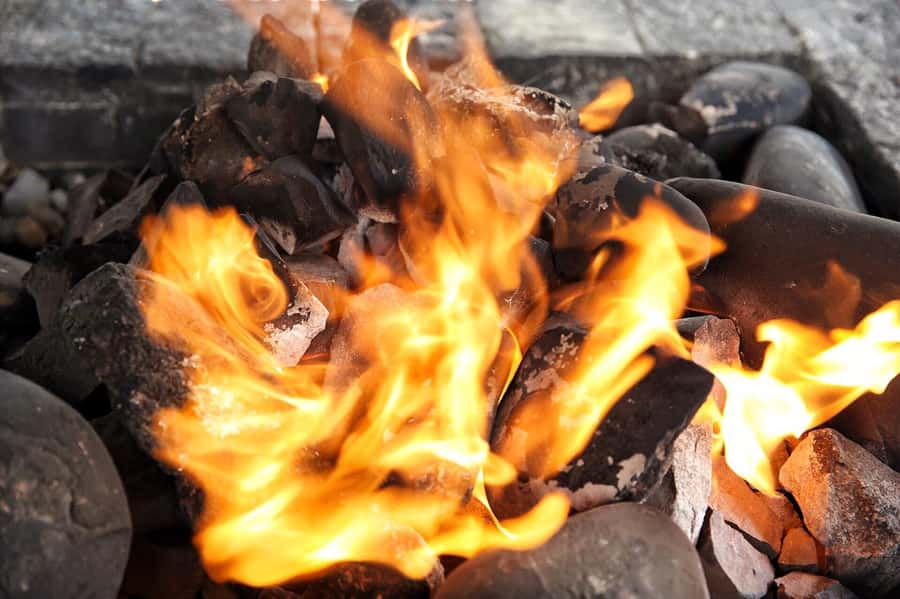
- Ateshgah Fire Temple is about natural gas rituals, not just ruins, with a central flame and smaller rooftop fires
- Yanardag means burning mountain, and the hillside keeps lighting up thanks to gas seeping from the ground
- You get a guide in English or Russian, plus transportation by minivan or van
- The route is efficient: Ateshgah first, then a 35 to 40 minute drive to Yanardag
- Half-day pricing is competitive at $23, especially with entry tickets included
The fire sights, run by other operators
- Baku: Gobustan, Mud Volcano, Fire Mount, Temple Lunch Entry
★ 4.9 · 3,246 reviews - BEST Gobustan, Volcanoes & Absheron Fire Tour (Group or Private)
★ 5.0 · 1,254 reviews - Gobustan and Absheron tour (All inclusive)
★ 5.0 · 1,014 reviews - Baku: Gobustan, Volcanoes, Fire Temple and Yanardag Day Trip
★ 4.7 · 433 reviews
Ateshgah Fire Temple: the fortress-like site where fire worship made sense
The tour starts at Ateshgah Fire Temple, about 21 km east of Baku. This is not a big, spread-out monument where you wander randomly. It feels more like a small fortress, with a stone-fenced courtyard and inner spaces that help you understand how the place worked as a controlled religious site.
If you like your sightseeing to have a purpose, this stop delivers. The guide helps you connect the setting to the big idea here: a permanent flow of natural gas from beneath the ground. That is the reason the fireplace setup keeps working, and it is also the reason people cared so much about the flame itself.
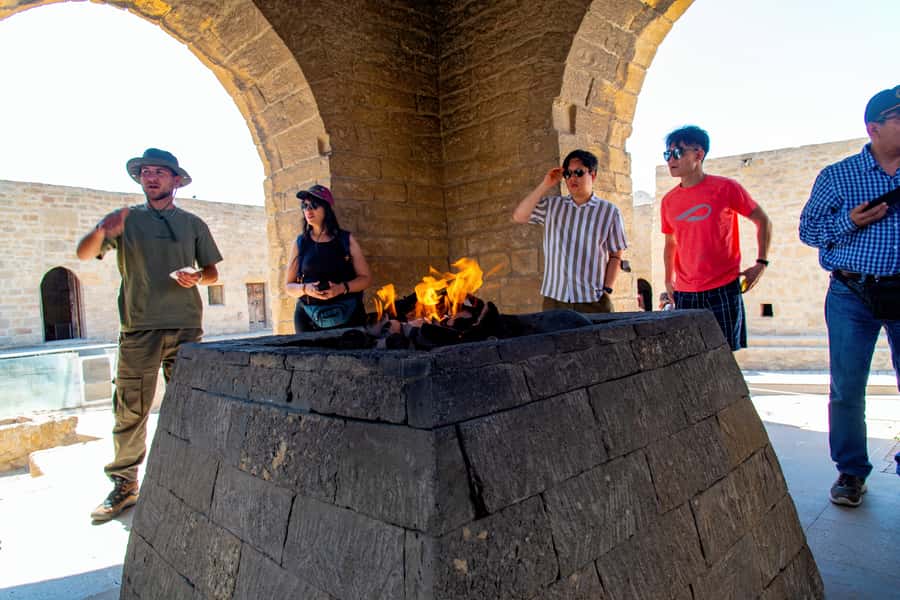
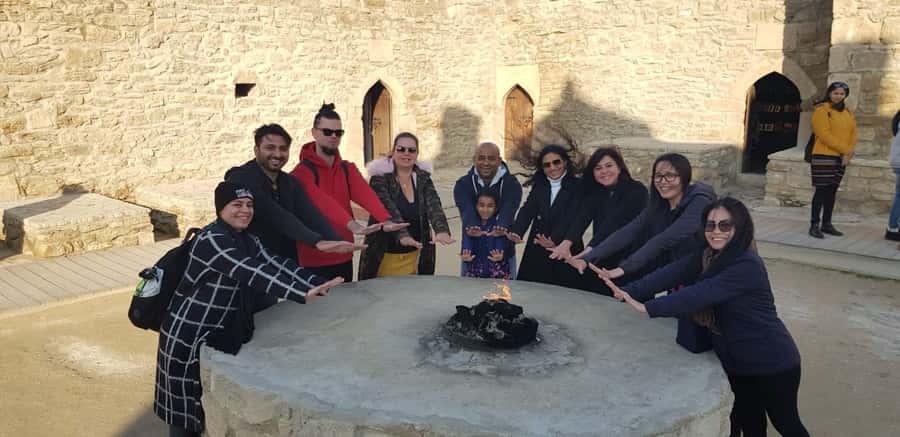
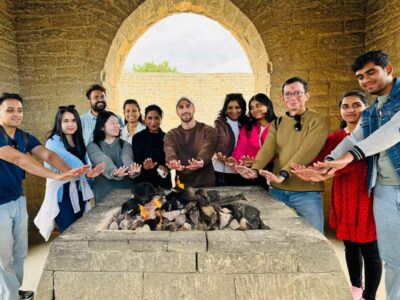
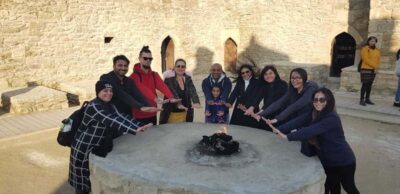
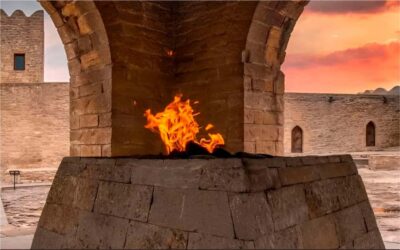
Even visually, it is distinctive. The main fireplace is in the center, and it is connected to natural gas ventilation, so the fire is not just symbolic. On the pavilion roof corners, there are four smaller fires, which makes the whole place feel designed, not improvised. You are seeing a system.
What you will see around the central flame
The centerpiece is that central fire area, lit through the natural gas flow. Around it, you will notice smaller cells and enclosed areas inside the stoned-fenced courtyard. The idea is that ascetic believers and pilgrims circulated around the temple fireplace while maintaining their routines.
This is one of those stops where your brain needs a minute to switch gears. You might arrive expecting a quick photo stop, but the structure invites you to watch the layout. The cells make the site feel lived-in, like people had roles and movement patterns. And because the fire is continuous, the space has a different energy than a normal temple where lights are lit by people.
A practical tip: bring your camera plan. There are compelling angles from the courtyard and from roofline perspectives that show the smaller fires. If you are the kind of photographer who hates rushing, take a moment early to choose where you will stand for the central flame shot.
The 18th-century Indian merchant story, and why it still matters
Ateshgah is tied to Indian merchants who built the temple in the 18th century. That detail matters because it changes how you read the site. You are not just looking at a local attraction, you are seeing evidence of cross-cultural connections tied to trade routes and shared beliefs.
The tour helps you understand why fire worship could take root here. Natural gas was already present, and the temple architecture gave a religious framework to something rare and powerful. It also makes the site feel more like a historical snapshot of how people made meaning from the natural world.
If you enjoy places where faith and science collide in real time, this stop will click. You can literally stand near the fireplace and grasp how the environment shapes belief without needing a lecture that runs too long.
Yanardag burning mountain: where the flames are coming from the hillside
After Ateshgah, you drive to Yanardag State Historical, Cultural and Natural Reserve, usually about 35 to 40 minutes away. This is the nature counterpart to the temple stop. If Ateshgah is structured and built, Yanardag is raw and outdoors.
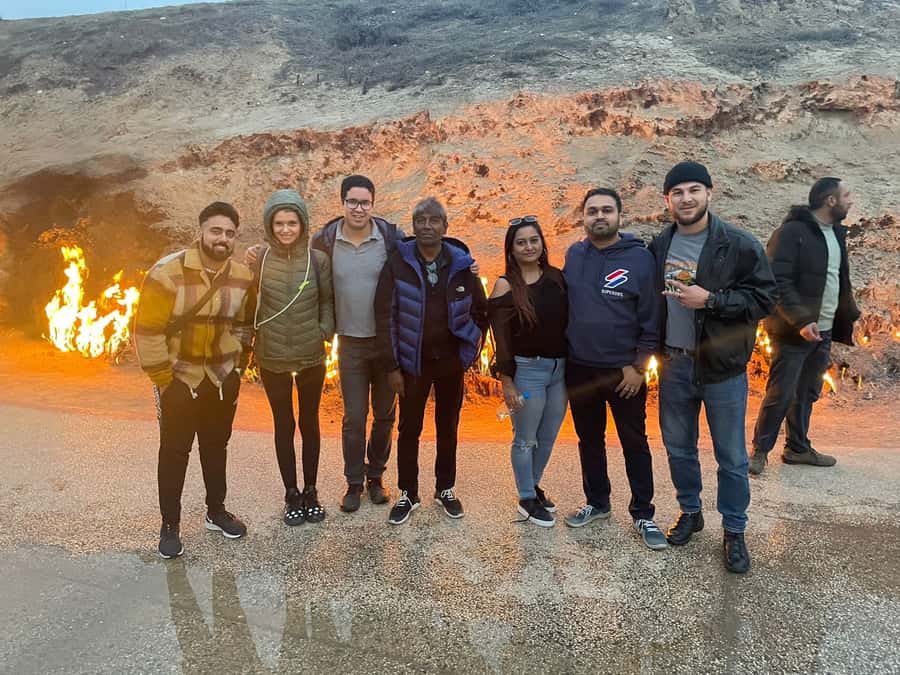
Yanardag literally means burning mountain, and the main attraction is a hill with a consistently burning wall of flames. The cause is straightforward in concept, even if you cannot see it yourself: tectonic shifts and volcanic material below the earth help natural gas leak from the rocks.
That is why the fire looks so stubborn. It is not a one-time effect. The flame has been described for centuries, including mention by Marco Polo during his travels in the Baku area. The point of the tour is that you get the continuity, the sense that this is a natural phenomenon that humans have watched and mythologized for a very long time.
Other Azerbaijan mornings and afternoons
How to get the most from Yanardag in a half-day slot
Yanardag can feel magical at first glance, then a little confusing if you do not know what you are looking at. The guide’s job here is to give you a mental map: where the gas source is coming from in general terms, why the flames keep burning, and how people learned to live with it, commercially and spiritually.
Since this is only a half-day tour, you will not have hours for unhurried wandering. So I recommend you treat Yanardag like a focused photo and observation session. Look for vantage points that show the flame wall clearly, then take your time reading what the guide tells you about the gas leakage and why it persists.
Also, dress for the outdoors. Weather around the Absheron peninsula can change fast. Even if you do not freeze, you might feel wind. Wear shoes that handle uneven ground, and plan to spend at least part of the time with your camera up.
Timing, transport, and how the 3 hours usually feel
The whole tour runs about 3 hours, including transport. That is the biggest selling point for people who do not want a long day but still want something memorable. The route is simple: Ateshgah first, then Yanardag.
Transportation is in a minivan or van, and the tour is designed to keep things moving. For me, that is ideal in Baku, where the distance between stops can add up if you are going independently.
Here is the reality check. Some departures have had serious organization issues, like late departures, last-minute changes to grouping, and even long waits at pickup locations. That does not mean every trip is like that, but it does mean you should plan your day with a margin, especially if you have another ticketed activity right after.
If you are going solo, that is usually fine. When a tour runs smoothly, solo travelers often get an easy, low-stress day, because you do not need to figure out transport and local logistics. Just be ready to communicate calmly if things shift.
Price and value: is $23 a good deal for fire temples and tickets?
At $23 per person, the price feels like good value when you consider what is included: an English-speaking guide, transportation by minivan or van, and access to both sites. The tour also includes entry tickets.
The math is straightforward. Two separate attractions plus a guided explanation plus transport in a half-day window for around a couple of dozen dollars is hard to beat in many cities. You save time and effort, which is a real cost, not just convenience.
That said, value only works if timing is reliable. If your pickup is delayed and your visit windows shrink, the experience can feel shorter than it should for the money. So the key is to book it if you can stay flexible, not if your day is locked to the minute.
The guide experience: what makes it feel worth it
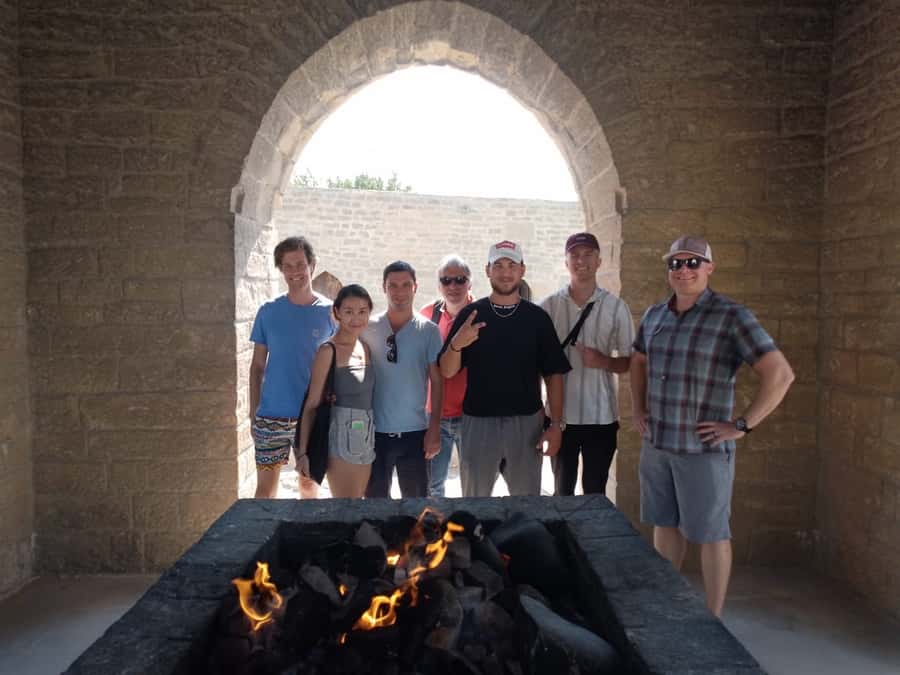
The strongest part of this tour, when it goes well, is the guide. The format is not a silent drive-by. You get a live guide in English or Russian, and the goal is to explain what you are seeing, not just recite dates.
I like guided tours most when they help you interpret details you would otherwise miss. Here that means explaining why the natural gas matters, how the fireplace design works at Ateshgah, and why the flames at Yanardag keep going. It turns the day from scenic to meaningful.
Even when logistics are messy, many people still come away saying the guides were friendly and informative. That is a good sign. It suggests the content is strong, and the main risk is operational, not educational.
Who should book this half-day Fire Temple and Yanardag tour?
This tour is a great fit if you want a compact, high-impact introduction to Absheron. It is especially good for:
- First-time visitors who want the headline attractions without a full-day commitment
- People who enjoy hands-on, cause-and-effect sightseeing, like natural gas shaping religious and cultural behavior
- Solo travelers who prefer not to coordinate transport and entry on their own
It is less ideal if you are the type who hates delays, or if you have tight connections that cannot tolerate a late start. In that case, you will want to choose the time slot that best matches your schedule and keep your next plans flexible.
Should you book Baku City Tours for Ateshgah and Yanardag?
I would book this tour if you want a smart, time-efficient way to see both Ateshgah and Yanardag with a guide who helps you understand the big story. The price is reasonable for what you get, and the sites are genuinely different from each other, which keeps the day from feeling repetitive.
Skip it or plan carefully if your schedule is unforgiving. If pickup timing is important for you, I recommend you double-check your exact pickup time the day before and keep buffer time for moving parts.
Overall, this is one of those Baku experiences that makes the city make sense. You leave with fire explained, not just photographed.
FAQ
How long is the Baku: Atashgah Fire Temple & Burning Mountain Half-Day Tour?
The tour duration is 3 hours.
What stops are included?
The tour includes Ateshgah Fire Temple first, and then Yanardag State Historical, Cultural and Natural Reserve.
Is transportation included?
Yes. Transportation is included, using a minivan or van.
What languages is the guide available in?
The live tour guide is available in English and Russian.
Is the tour good for solo travelers?
The tour is described as suitable for people who prefer solo travel, since it provides guided structure and transportation.
Is there a private group option?
Yes. Private group is available.
Is the tour wheelchair accessible?
Yes. The tour is wheelchair accessible.
How much does it cost?
The price is $23 per person.
FAQ
Can I cancel for a refund?
Yes. Free cancellation is offered if you cancel up to 24 hours in advance for a full refund.
Are entry tickets included?
The tour includes entry tickets for the sites.
More Azerbaijan Trips We Reviewed
The Rest of Our Azerbaijan Reviews

Ateshgah and Yanar Dag, Keep Reading
More of Azerbaijan we have been out and written up
- The Magnificent Baku Night Tour★ 5.0 · 3 reviews
- Small-Group Day Trip to Gobustan, Mud Volcanoes, Ateshgah & Yanar Dagh★ 4.5 · 3 reviews
- Private Sheki Tour – Four Regions of Azerbaijan in one day★ 5.0 · 3 reviews
- Full Day Guided Tour of Shamakhi and Gabala★ 5.0 · 3 reviews
- Qobustan Absheron Full Day Tour★ 5.0 · 3 reviews
Absheron Peninsula & Fire Temples, compared.
 ★ 4.9Gobustan, Mud Volcano, Fire Mount, Temple Lunch EntryFrom $63,246 reviews
 ★ 5.0BEST Gobustan, Volcanoes & Absheron Fire Tour (Group or Private)From $331,254 reviews
 ★ 5.0Gobustan and Absheron tour (All inclusive)From $851,014 reviews
 ★ 4.7Gobustan, Volcanoes, Fire Temple and Yanardag Day TripFrom $29433 reviews
 ★ 4.5Gobustan & Mud, Fire Temple, Burning Mountain (Group & Private)From $10418 reviews
 ★ 4.9Gobustan Absheron Tour Entry Tickets includedFrom $6329 reviews
 ★ 5.0Gobustan-Mud Volcan-Fire Temple and Mountain Tour/Entrance incFrom $30267 reviews
 ★ 4.8Gobustan-Absheron Tour with Hotel PICK UP and DROP OFFFrom $6170 reviews
Browse the lists this tour appears in